
Business energy for florists Sort your flower shop's next energy contract when it suits you.
Upload your latest electricity bill. George reads it in seconds and tells you whether you're in your switching window and what to do next.
- Result in seconds
- No account needed
- No sales calls
Bill check
Read by George in seconds
- Unit rate
- 28.4p/kWh
- Standing charge
- 62.0p/day
- Contract ends
- 28 Mar 2027
Result
In your switching window
You're ready to continue with Meet George.
Too early? Ask George to remind you when it's time.
Updated
How much electricity does a flower shop use?
- Median shop (all kinds)
- 7,900 kWh a year
- Estimated annual cost
- £3,030
There's no UK figure for florists alone. The closest is DESNZ's median for shops of all kinds, 7,900 kWh a year in 2024, which can't show what a chiller or cold room adds. Not sure what yours uses? Upload your bill and George reads it for you.
The figure is DESNZ's median for every kind of shop building, from kiosks to supermarkets, so treat it as a rough guide for a flower shop.
How we calculated this
The median shop in England and Wales used 7,900 kWh of electricity in 2024, according to DESNZ's building energy statistics (ND-NEED). DESNZ's "shops" covers every kind of shop building, from kiosks and hairdressers to supermarkets, and it has no separate category for florists, so the figure can't show what a chiller or cold room adds. Costs use the provisional Q2 2026 average paid by businesses using up to 20,000 kWh a year (38.36p per kWh, every charge except VAT, including Climate Change Levy that shops using up to 1,000 kWh a month don't pay).
Sources: DESNZ, ND-NEED 2026 (2024 data), table 14A; DESNZ, non-domestic energy prices, table 3.4.2 (Q2 2026)
How switching works with Meet George
A quick bill check first, so you only sign up when switching makes sense. Then you switch yourself, on the platform we built.
Step 1 · The bill check
See if you can switch in seconds
- Upload a recent electricity bill. No account needed.
- George reads it in seconds and tells you whether you're in your switching window and what to do next.
- Too early? Ask George to remind you when it's time.
No sales call, and no waiting for a reply.
Step 2 · Switch on Meet George
Do the whole switch yourself, online
- 01
Create your account
Sign up on Meet George. Nobody needs to call you.
- 02
Compare the contracts available to your business
Our 1p/kWh fee is shown separately on every quote.
- 03
Sign online
Your new supplier takes over from the agreed start date.
The whole switch happens on Meet George, not over the phone.
Four things worth checking before your next energy contract
Most of the answers are on your latest bill.
Is each bill over or under the VAT limit?
HMRC averages each bill over every day it covers, closed days included, and a chiller keeps running on those days, so check each bill against the 33 kWh a day limit.
Look for: The VAT rate on each bill, and the kWh it covers divided by the number of days it covers.
Read more Show less
Under the limit, about 1,000 kWh a month, HMRC treats the supply as domestic use, with a lower VAT rate than 20% and no Climate Change Levy. It counts all the electricity one supplier provides at your premises, and judges each bill on its own, not your year. The median shop of any kind averages about 660 kWh a month across a year, so check the kWh and the VAT rate on each bill rather than assuming you're under.
Sources: HMRC, VAT Notice 701/19, section 5.2; HMRC, VAT Fuel and Power Manual, VFUP2310; HMRC, Excise Notice CCL1/3, paragraph 2.5; DESNZ, ND-NEED 2026 (2024 data), table 14A
Does your chiller run through the night?
Ofgem says a microbusiness meter is likely to be single rate or two rate. With two, some of your chiller's overnight use may be charged at the cheaper off-peak rate.
Look for: One unit rate or two on your bill. If there are two, check how many kWh are charged at each.
Read more Show less
Ofgem's 2022 business energy advice, written with Citizens Advice and Energy UK, calls two-rate meters Economy 7. On a multi-rate tariff, Ofgem explains, you pay one rate in a set off-peak period and a higher one at peak times, so when you look at new contracts, compare both rates and how your chiller's use splits between them. There's no official figure for what a flower chiller uses, so your own bills are the best guide to what yours adds.
Sources: Ofgem and partners, non-domestic energy advice (2022), p.27 'Am I eligible for a smart meter?'; Ofgem, How your electricity or gas bill is calculated
Do you work from a studio at home?
If you make up flowers in a studio at home, Ofgem says you're probably on a domestic energy contract. Meet George is for business energy only.
Look for: Whether your supplier treats the account as a home (domestic) one or a business one. If the bill doesn't say, ask them.
Read more Show less
You'd switch it the way you switch your home energy, so check with your supplier which contract you're on. If you later take on a shop, Ofgem says there's no cooling-off period on a business contract, so check the terms and fees before you sign.
Sources: Ofgem, Get a business energy contract; Ofgem, Switch your business energy supplier; Ofgem, Managing business energy costs in an uncertain market (blog)
Is the energy contract in your shop's name?
If your landlord pays the supplier and recharges you, the contract may be theirs to switch. If it's still in the last occupier's name, tell the supplier you've moved in.
Look for: Whose name is on the bill, and what your lease says about utilities and who pays the supplier.
Read more Show less
Ofgem's 2022 advice for business tenants, written with Citizens Advice and Energy UK, gives two more cases where a landlord could be responsible: energy included in your rent, or a landlord looking after the supply between tenancies. If paying the supplier is your responsibility, you can choose your own, even if the lease names a default one, but check for clauses saying you must tell your landlord before you switch. If you've taken over, Ofgem says the business moving out should tell the supplier too, and until your own contract starts you're on a deemed contract, which usually costs more.
Sources: Ofgem and partners, non-domestic energy advice (2022), p.31 'If you are a tenant'; Ofgem, Change of tenancy for businesses; Ofgem, Get a business energy contract
Not sure what contract you're on?
Upload your latest bill. George reads it in seconds and tells you where you stand.
Worth reading next

How we're paid
Our 1p/kWh fee on gas or electricity, who pays it and how it shows on every quote.
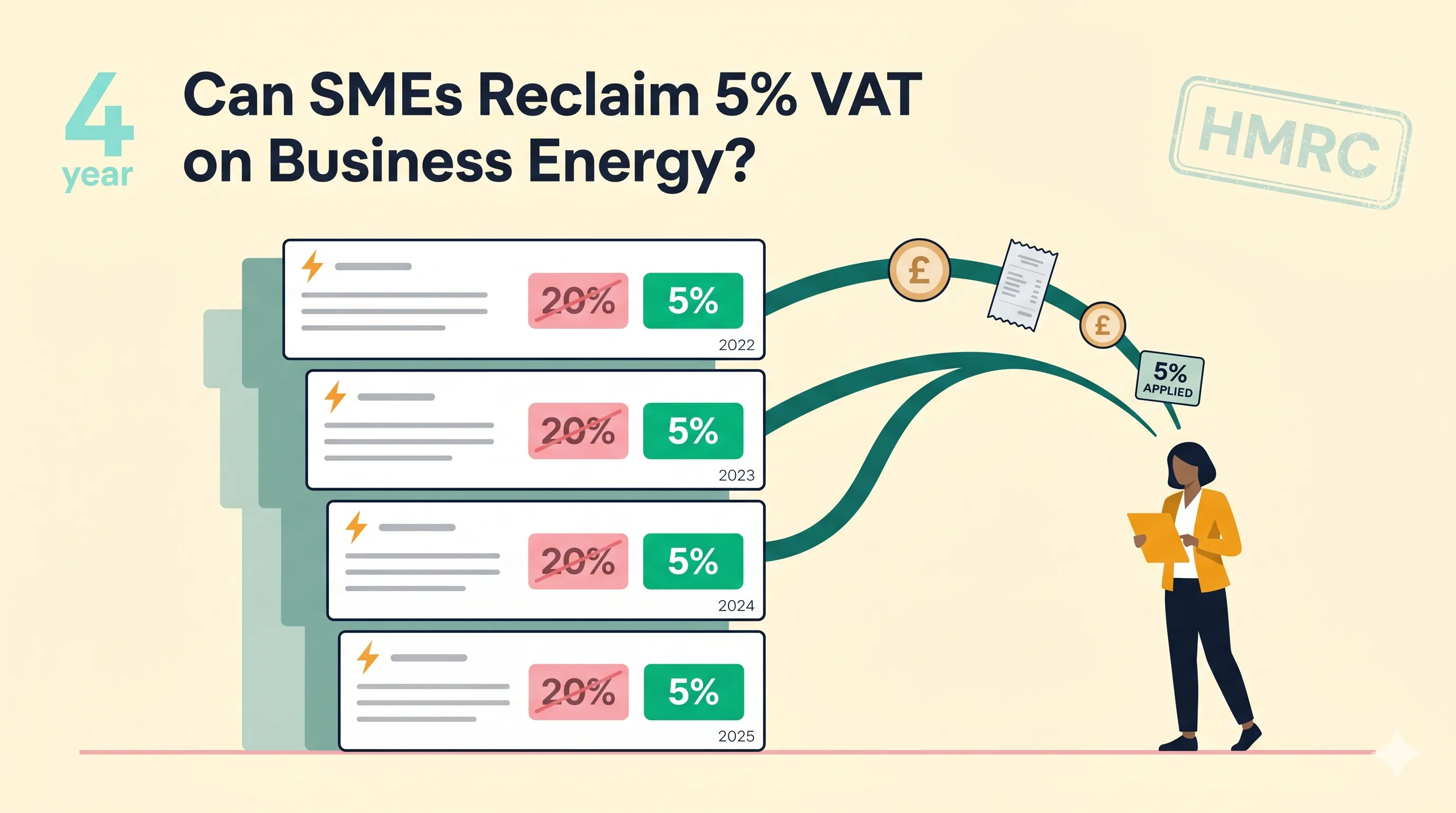
Charged the wrong VAT rate?
How to get your supplier to refund VAT charged at 20% on bills that qualified for a lower rate.
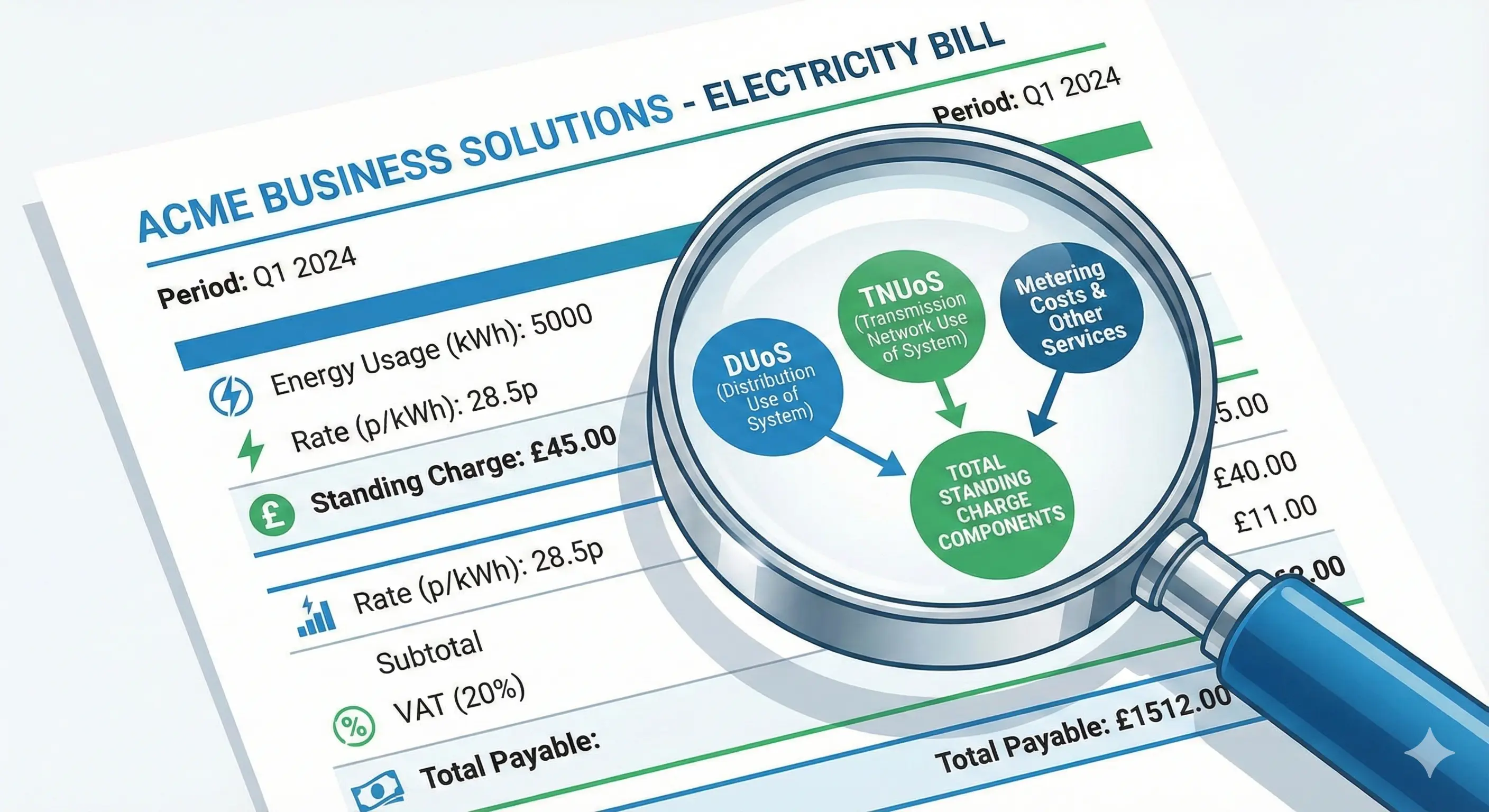
Standing charges explained
The daily charge you pay whether the shop's open or closed.
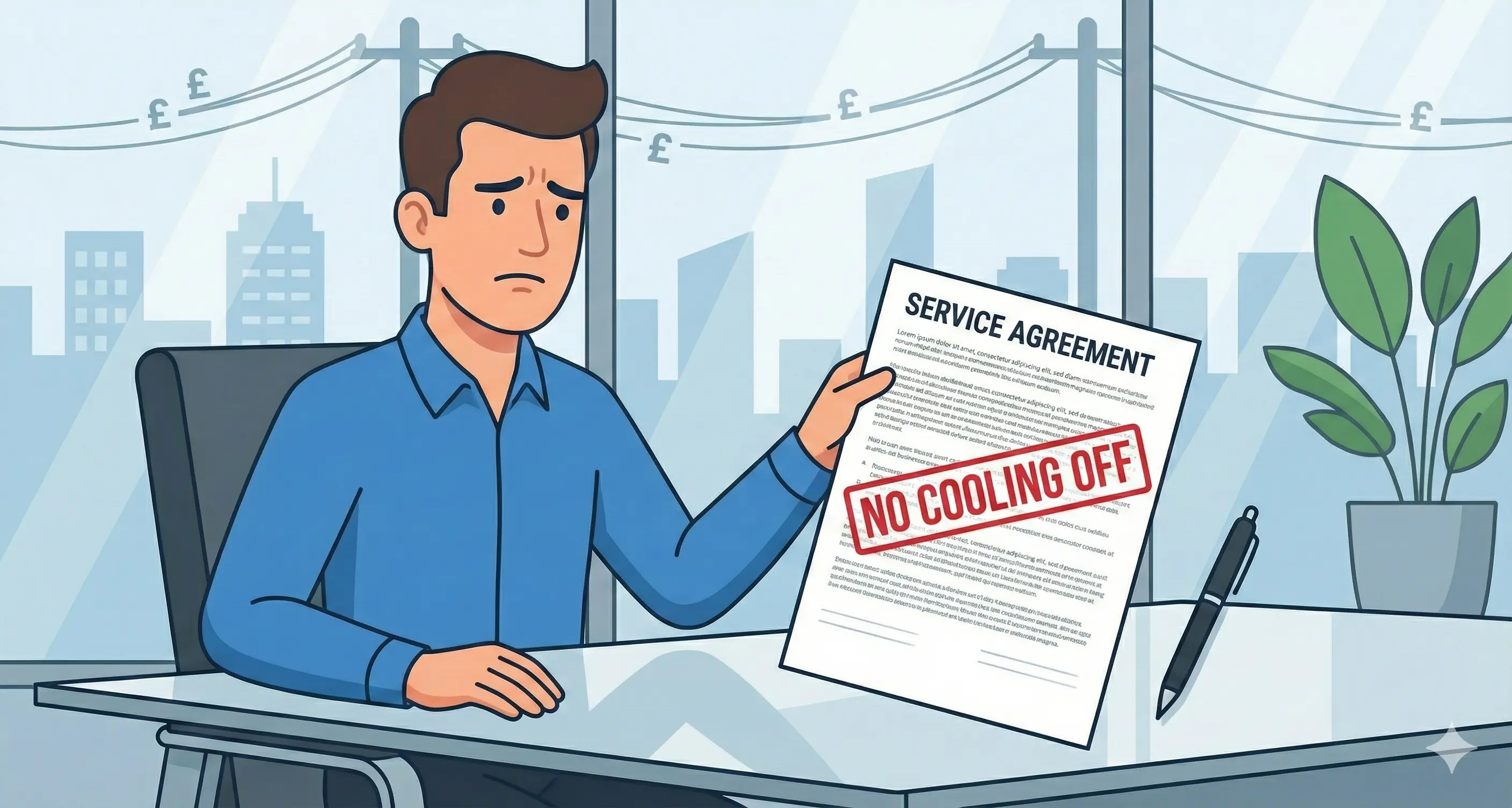
Can you cancel a business energy contract?
No cooling-off period, exit fees and what to check before you sign.
Questions florists ask
How much electricity does a florist use?
DESNZ doesn't publish a figure for florists. The closest is its median for all shops in England and Wales: 7,900 kWh of electricity in 2024, from its building energy statistics (ND-NEED). That covers every kind of shop building, from kiosks to supermarkets, so it can't tell you what a flower chiller or cold room adds. Your bill shows what your shop actually uses.
What's the average electricity bill for a flower shop?
There's no official figure for florists. At the median for all shops, 7,900 kWh a year, a shop would pay about £3,030 a year before VAT, or £250 a month, at the provisional Q2 2026 average paid by businesses using up to 20,000 kWh a year (38.36p per kWh, including every charge except VAT). Your contract matters too: Ofgem says deemed and out-of-contract rates are usually more expensive than a fixed-term contract.
Does a flower chiller push up my electricity bill?
Yes, but there's no official figure for how much a florist's chiller or cold room adds. Refrigeration is the biggest use of electricity across DESNZ's broad small shops category, but DESNZ's building survey put that down to refrigerated food cabinets in the shops that have them, so it isn't a florist figure either. Carbon Trust guidance on refrigeration says warm air getting in through open doors is the biggest way a cold room's load is affected, so keeping the door shut helps. Your bills show what your whole shop uses, chiller included.
Should my flower shop pay 20% VAT on electricity?
It depends on each bill. HMRC treats electricity averaging no more than 33 kWh a day (1,000 kWh a month) as domestic use, so there's no Climate Change Levy, no certificate needed and a lower VAT rate instead of 20%: 0% in Great Britain from 1 October 2026 to 31 March 2027, then 5% again, and 5% in Northern Ireland. HMRC works the average out over every day each bill covers, days you're closed included, so each bill is judged on its own, not on your whole year. If a bill averages 33 kWh a day or less and still shows 20%, ask your supplier to correct it. Gas has its own limit, 145 kWh a day, and stays at 5% within it.
I run my floristry business from home. Do I need a business energy contract?
Not necessarily. Ofgem says that if you work from home, you're probably on a domestic energy contract, and you'd switch it the way you switch your home energy. Check with your supplier to make sure. Meet George is for business energy only. If you later take on a shop, bear in mind Ofgem says there's no cooling-off period on a business energy contract, so check the terms and fees before you sign.
I've just taken over a flower shop. What happens to the energy?
Tell the current supplier as soon as you can, with a meter reading if you can take one: Ofgem says both the business moving in and the one moving out should. The supplier can ask for evidence such as your lease, or property sale documents or title deeds if you bought the building, and reviews it within 10 working days. You're responsible for any energy you use before your own contract starts, and moving in without arranging one puts you on a deemed contract, at rates Ofgem says are usually higher than negotiated ones.
My landlord pays the electricity. Can I switch supplier?
Not directly. If your landlord pays the supplier and recharges you through the service charge or rent, the contract is likely to be theirs, so start the conversation with them. If paying the energy bill is your responsibility under the lease, the 2022 business energy advice Ofgem wrote with Citizens Advice and Energy UK says you can still switch, even if the lease ties you to a default supplier. Check it for clauses saying you must tell your landlord before you switch, or return the supply to a particular supplier when you leave.
When can my flower shop switch energy supplier?
If you're on out-of-contract or deemed rates, now: Ofgem says you can switch to a new supplier at any time. Check first that your contract didn't renew you onto a new fixed term, and how much notice you need to give. On a fixed contract, most suppliers won't let you leave before the end unless you've agreed a termination clause or pay an exit fee, but fixed contracts have a switching window, which opens a few months before the end, for you to renew or tell your supplier you're leaving. Your current supplier can also object, for example if you owe it money. The bill check looks for your contract end date and tells you in seconds whether it's time to line up your next contract.
What does Meet George cost a florist?
A flat 1p per kWh, and you only pay it if you switch through Meet George. For a shop using the all-shops median of 7,900 kWh a year, that's £79 a year. The same 1p per kWh applies to gas. Electricity switches happen online; gas isn't on the platform yet, so for now our team arranges gas contracts with you directly. You pay the fee through your energy supplier, and it's itemised on every quote, never buried.
Sources (14)
DESNZ, ND-NEED 2026 (2024 data), table 14A; DESNZ, non-domestic energy prices, table 3.4.2 (Q2 2026); DESNZ, Energy Consumption in the UK 2026, table U6; DESNZ (formerly BEIS), Building Energy Efficiency Survey 2014-15, retail report and tables; Carbon Trust, Refrigeration: a guide to energy and carbon saving opportunities (2019), p.7; HMRC, VAT Notice 701/19, section 5.2; HMRC, VAT Fuel and Power Manual, VFUP2310; HMRC, Revenue and Customs Brief 10 (2026); HMRC, Excise Notice CCL1/3, paragraph 2.5; Ofgem, Get a business energy contract; Ofgem, Switch your business energy supplier; Ofgem, Change of tenancy for businesses; Ofgem and partners, non-domestic energy advice (2022), p.31 'If you are a tenant'; Ofgem, Managing business energy costs in an uncertain market (blog)
Your flower shop's next energy contract, sorted when it suits you.
Upload your latest bill. George reads it in seconds and tells you what to do next. If you're ready to switch online, you can continue with Meet George.
- Result in seconds
- No account needed
- No sales calls


