

TL;DR: Key Takeaways
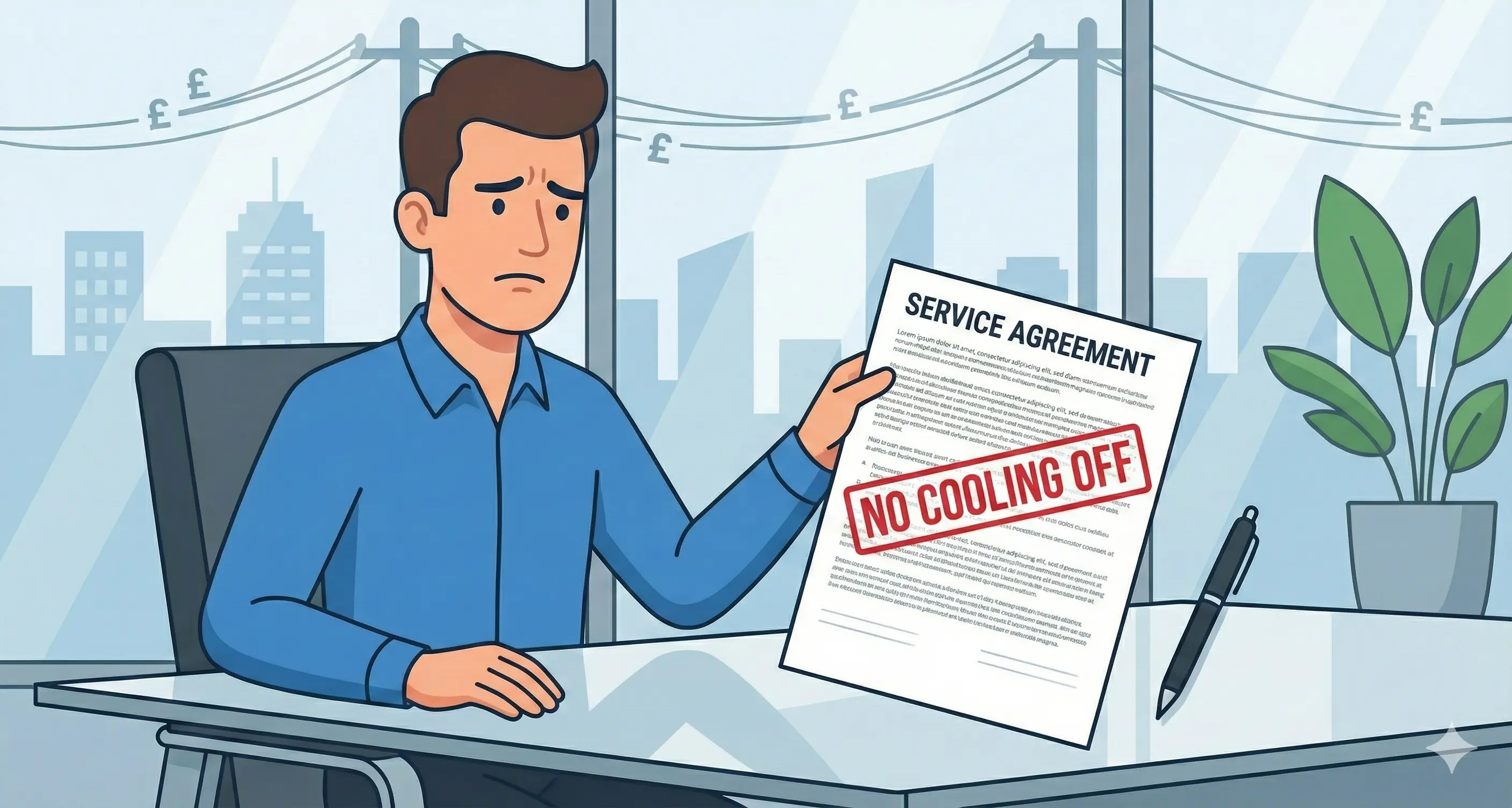
The Shock: Business energy contracts have NO cooling-off period. Once signed, you’re locked in - even verbal agreements over the phone are legally binding.
The Cost: Exit fees use “Mark to Market” calculations. A business paying £2,000/month with 18 months left could face fees up to £36,000.
The Exit Route: Moving premises triggers the standard Change of Tenancy process. Most suppliers won’t charge exit fees for legitimate moves.
The Trap: Level 2 LOAs let brokers sign contracts without showing you the terms. Only sign Level 1 LOAs.
The Defence: Before signing anything, check for Mark to Market clauses in the termination section. Meet George scans contracts for these hidden traps.
The “Cooling-Off” Myth - Read This First
This is the most common shock for business owners.
At Home: You have a legal 14-day “cooling-off period” to cancel any energy contract for any reason.
At Work: You have zero days.
In the UK, B2B energy contracts are considered commercial agreements. The consumer protections you’re used to simply do not apply.
The Letter of Authority Danger
Many business owners confuse the Letter of Authority (LOA) with the contract itself. There are two types:
Level 1 LOA: Allows a broker to talk to suppliers and access your data, but NOT sign contracts for you.
Level 2 LOA: Gives the broker power to sign contracts on your behalf. If you sign this, the broker can switch you without showing you the final contract first. This is how digital renewal traps work - brokers use Level 2 authority to auto-renew you onto expensive contracts years after your original sign-up.
⚠️ Warning
Once a contract is signed - whether by you or by a broker with a Level 2 LOA - you are locked in for the full duration. Even a “Recorded Verbal Agreement” over the phone is legally binding. If you said “Yes” to the terms on a call, you cannot simply change your mind tomorrow.
Learn more about the dangers of Level 2 LOAs
Moving Premises? Understanding Change of Tenancy
When you move out of your business premises, the standard process for transferring responsibility is called Change of Tenancy (CoT).

What Change of Tenancy Actually Does
A Change of Tenancy is the standard contractual mechanism used when a business moves in or out of premises. When you move out (an “outgoing CoT”):
- You notify the supplier of your move date
- You provide final meter readings
- You submit evidence of the move (lease surrender, solicitor’s letter)
- Your account is closed and a final bill raised for the period you occupied the site
Most suppliers will not charge early termination fees when the contract ends because you have legitimately moved out. However, you must check your own contract terms, as conditions can vary between suppliers.
What Happens If You Don’t Complete CoT Properly?
If you don’t tell your supplier you’ve left, or don’t complete the CoT process correctly, they may:
- Continue to hold you liable for the energy supply
- Bill you on expensive “deemed” or out-of-contract rates
- Only release you when they are formally notified by the new occupant
What To Do When Moving
- Start the CoT process around 30 days before moving - suppliers need time to process the change
- Provide proof of the change in occupancy (lease surrender, solicitor’s letter, or new lease agreement)
- Submit final meter readings on your move-out date
- Confirm the exact requirements with your supplier, as these can differ between providers
- Do not let them auto-transfer your rates to your new building without checking the market first
External Resources:
- Citizens Advice: Dealing with energy supply when moving premises (opens in new tab)
- Ofgem: Business Consumer Guidance (opens in new tab)
How Much is an Exit Fee? The “Mark to Market” Trap
If you aren’t moving and you just want to leave because you found a cheaper price, the cost is usually astronomical.
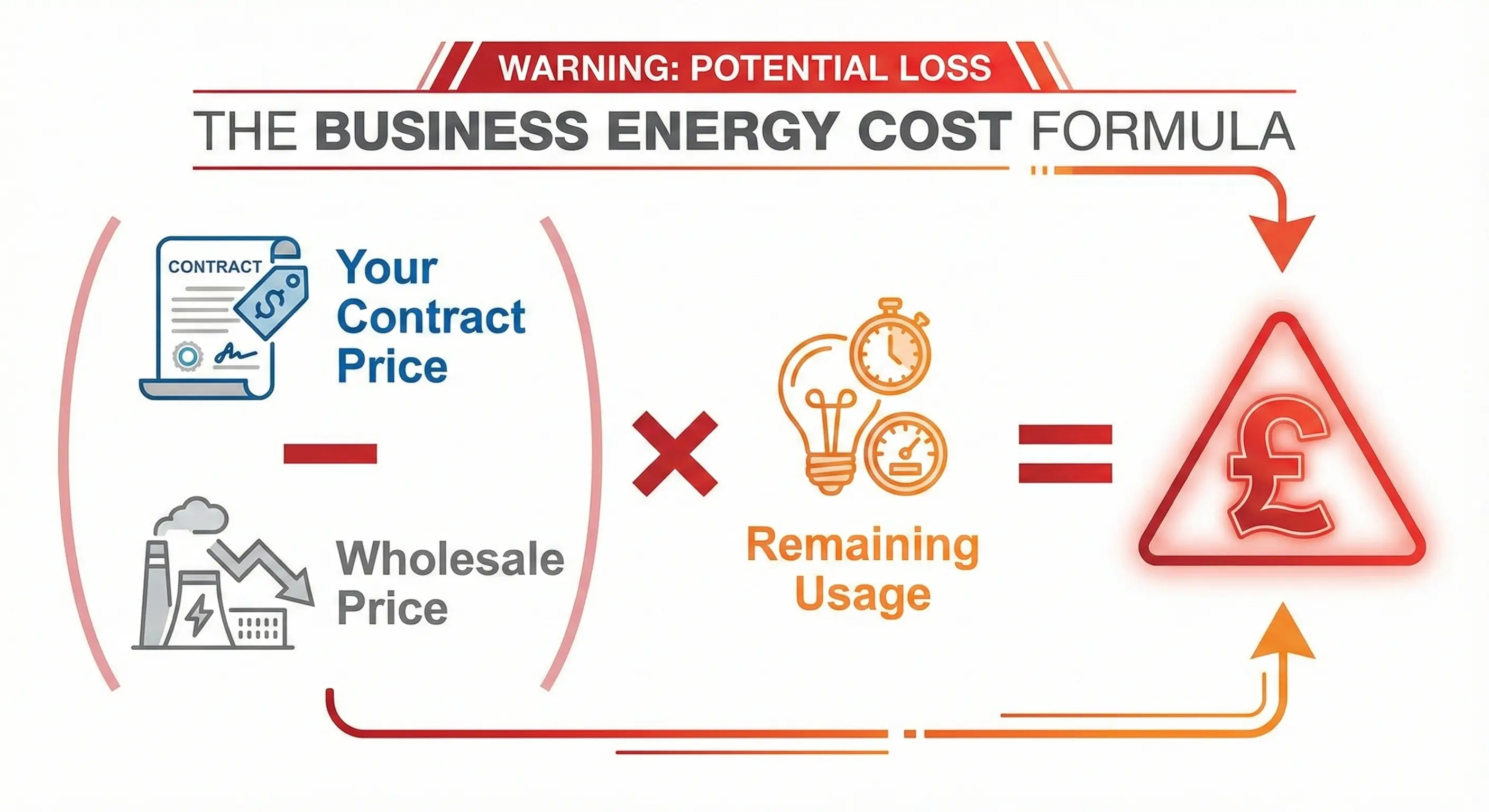
Many UK business energy suppliers don’t just charge a small admin fee for early termination - they charge for “Mark to Market Loss.” This reflects the profit the supplier would have made had you stayed for the full term. The exact wording and formula sit in your own contract’s Terms & Conditions, so always read the termination clause before signing. For general guidance on business energy contracts, see Ofgem’s business consumer guidance (opens in new tab).
What Does Mark to Market Mean?
The supplier calculates the profit they would have made from you, and charges you for it.
The Formula:
(Your Contract Price - Current Wholesale Price) x Your Total Remaining UsageThe Risk: If wholesale prices have dropped since you signed, the fee INCREASES.
Example Calculation
| Factor | Value |
|---|---|
| Your Monthly Spend | £2,000 |
| Time Remaining | 18 months |
| Potential Exit Fee | Up to £36,000 |
That’s potentially 100% of the remaining contract value.
The £36,000 figure above is an illustration, not a supplier-published number. It is a worked estimate of the worst case where the Mark to Market charge reaches the full remaining value of the contract (£2,000 x 18 months). Your actual exit fee depends on the formula in your own contract and where wholesale prices sit on the day you leave, so treat it as a ceiling to check against, not a quote.
Is It Worth Paying the Exit Fee to Switch?
There is a simple way to weigh it up: switching early only makes sense if the money you would save over the time left on your contract is bigger than the exit fee you would pay to leave. In short - (annual saving on the new deal) x (years remaining) versus your exit fee.
The saving side is easy to estimate. Say a business uses 120,000 kWh a year and a new deal would save around 2p/kWh:
- Annual saving: 120,000 kWh x 2p = £2,400 per year
- Years remaining: 18 months = 1.5 years
- Total saving over the remaining term: £2,400 x 1.5 = £3,600
The exit fee is the part only you can fill in - and it varies enormously. A Mark to Market charge can be large if wholesale prices have fallen since you signed, small if they have barely moved, or close to nothing if prices have actually risen (because the supplier is not losing the margin it priced in). There is no single answer, so get your real exit fee from your contract or by asking your supplier, then compare it against your total saving: if the fee is lower than the saving, switching wins; if it is higher, you are usually better waiting for your renewal window.
As a rule of thumb, breaking a fixed contract early only tends to pay off when you have a long time left and an unusually big price gap - but run your own numbers rather than assume it either way.
The “Market Closing” Sales Tactic
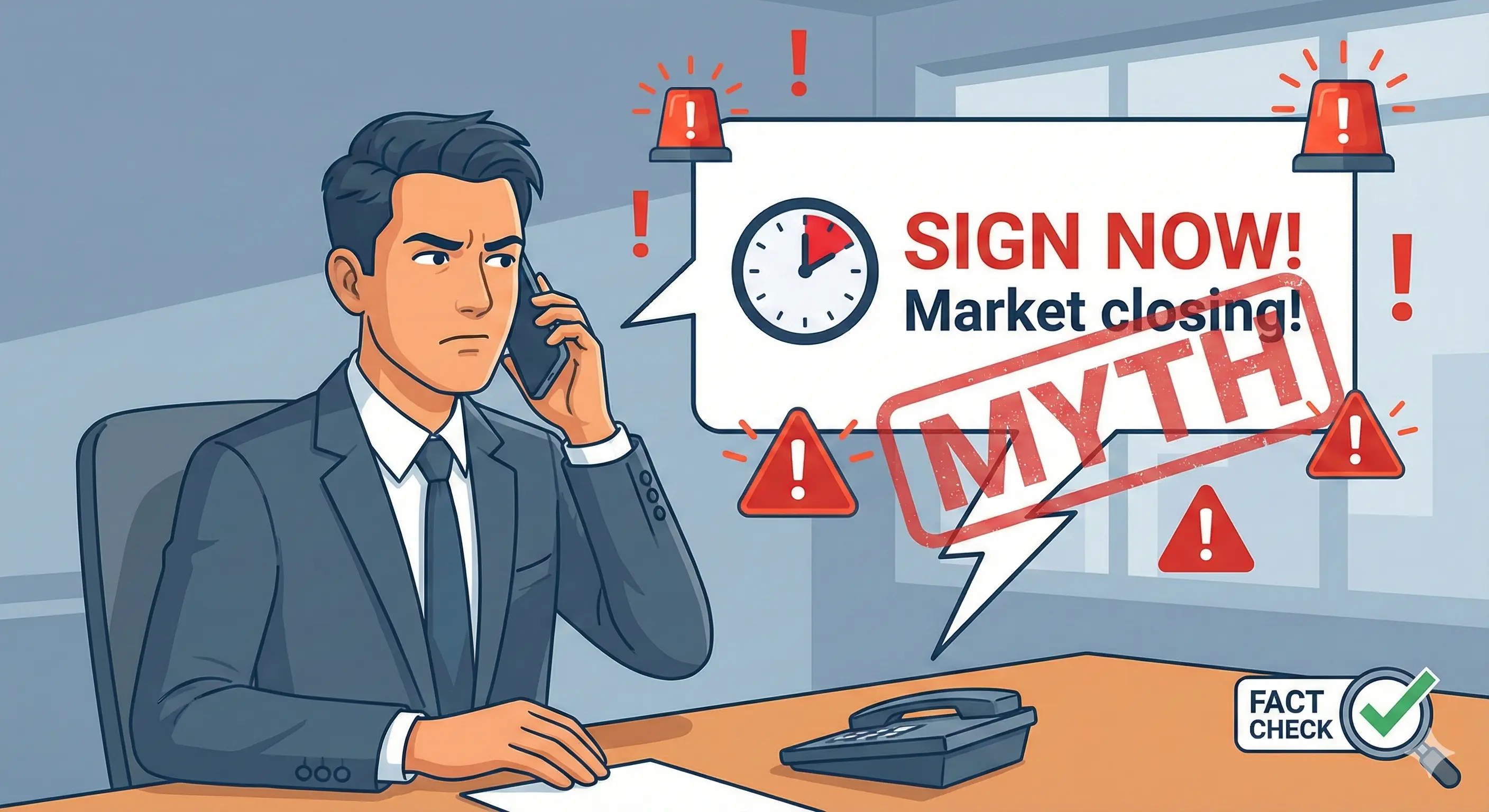
If exit fees are so high, why do people sign bad contracts? Often, it’s because a salesperson told them:
“The market is closing! You must sign today to lock in this price!”
This is likely false. For most small businesses using standard 03/04 meters, suppliers use “Price Books.”
How Price Books Actually Work
- These are massive spreadsheets of tariff rates for every region in the UK
- Suppliers typically update these monthly or quarterly
- They rarely change daily unless the market is in extreme volatility
While larger “00” (half-hourly metered) clients might get bespoke daily pricing via API or tenders, small businesses usually have weeks, not hours, to decide.
The Lesson: If a broker says you have to sign “right now,” they are likely trying to lock you in before you check a comparison site. This kind of pressure selling is why broker complaints to the Energy Ombudsman rose 112% in 2024 - and why understanding the difference between good and bad brokers matters before you sign anything.
When Are Exit Fees Banned? Micro & Small Business Rules
Ofgem has tightened the rules to protect smaller companies.
Microbusiness Protections (Fewer than 10 employees)
- Suppliers can no longer require you to give “termination notice” at the end of your fixed term
- If your contract ends and you switch, they cannot charge you a fee just because you “forgot to email them”
Small Business Protections (Updated December 2024)
New protections extend to “Small Businesses” (fewer than 50 employees or turnover under £6.5m) under Ofgem’s Non-Domestic Market Review decision (opens in new tab):
- While suppliers can still charge exit fees for leaving mid-contract, they must now provide clearer renewal notices
- If a supplier rolls you onto expensive deemed rates after your contract ends, you can typically leave that variable rate with 30 days’ notice and no exit fees
External Resource:
Can I Leave if “Terms Change”? Material Detriment
Rarely, a supplier might change their terms in a way that disadvantages you - for example, changing payment terms from 30 days to 7 days.
If this causes you “Material Detriment,” you may have a legal right to exit without penalty.
However: This is legally complex and suppliers will likely fight it. You would usually need to:
- Raise a formal complaint with your supplier
- Escalate to the Energy Ombudsman (opens in new tab) if unresolved
Summary: How to Avoid the Exit Fee Trap
The only way to win against exit fees is to avoid them before you sign.
Before Signing Any Contract
- Never sign on the first call. The “urgent deadline” is usually a tactic
- Check the “Termination Clause.” Does it allow you to leave if your business closes? What’s the Mark to Market formula?
- Only sign Level 1 LOAs. Never give a broker power to sign contracts without your approval
- Use Meet George. Before you sign anything, upload the contract PDF to our platform. We scan the fine print for Mark to Market clauses and hidden exit fees so you know exactly what you’re signing
If You’re Already Locked In
- Check if you’re moving premises - this is your free exit route
- Wait for your renewal window - typically 1-6 months before contract end
- Calculate the exit fee - compare against staying in the contract
Ready to avoid the exit fee trap on your next contract? Learn how to switch business energy suppliers properly with full transparency and no nasty surprises.


