

TL;DR: Key Takeaways
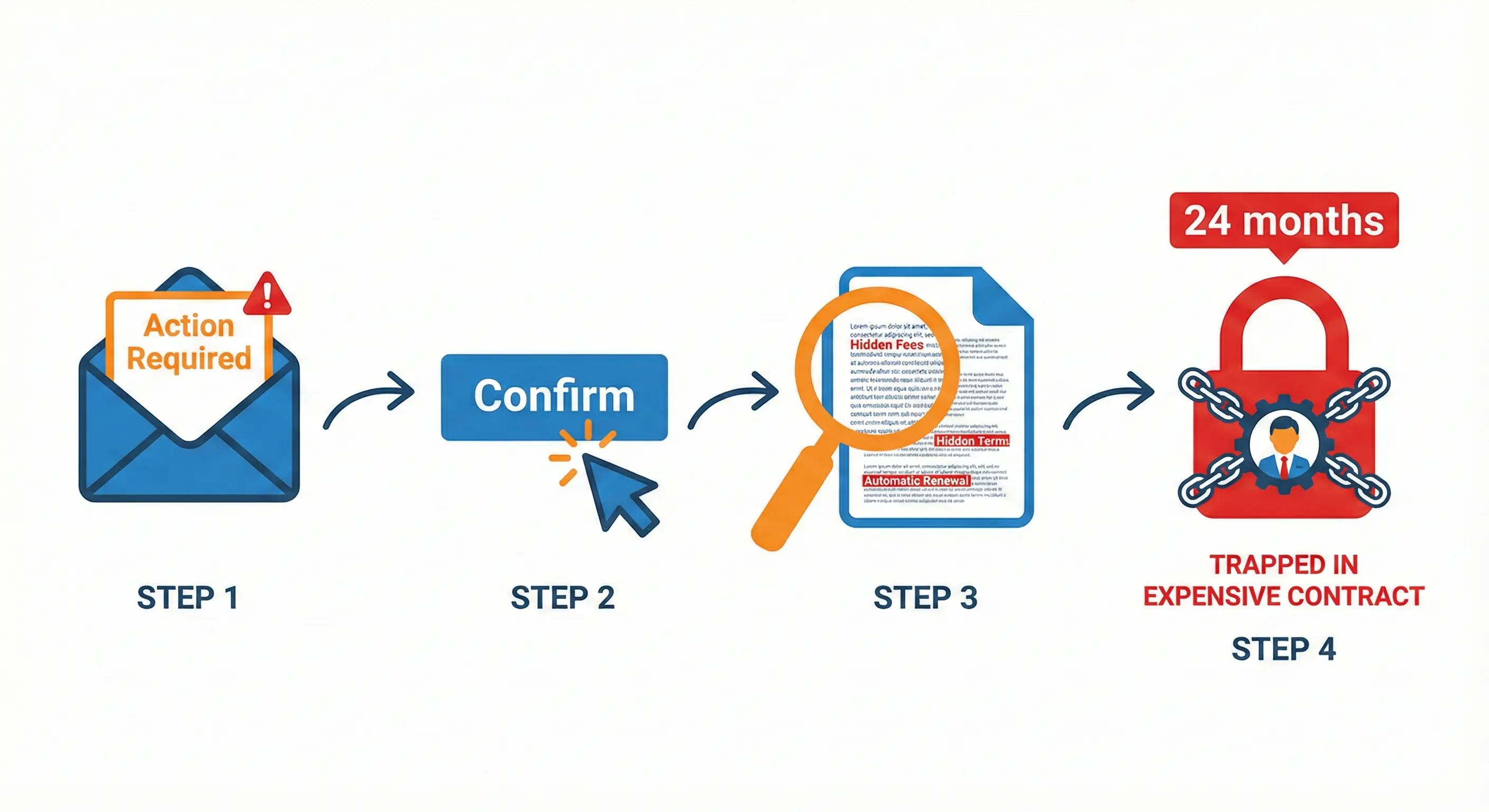
The One-Click Trap: Clicking “Confirm” on a supplier or broker email can legally bind you to a new 24-month fixed-term contract. Unlike domestic consumers, business customers have no cooling-off period once the digital handshake is made.
Level 2 LOA Danger: If you ever signed a Level 2 Letter of Authority, a broker can legally renew your contract without showing you the terms first. Revoke these third-party permissions immediately.
The 30-Day Rule: For Microbusinesses, Ofgem rules mean suppliers cannot lock you into another fixed term automatically. Out-of-contract rates must be cancellable with 30 days’ notice.
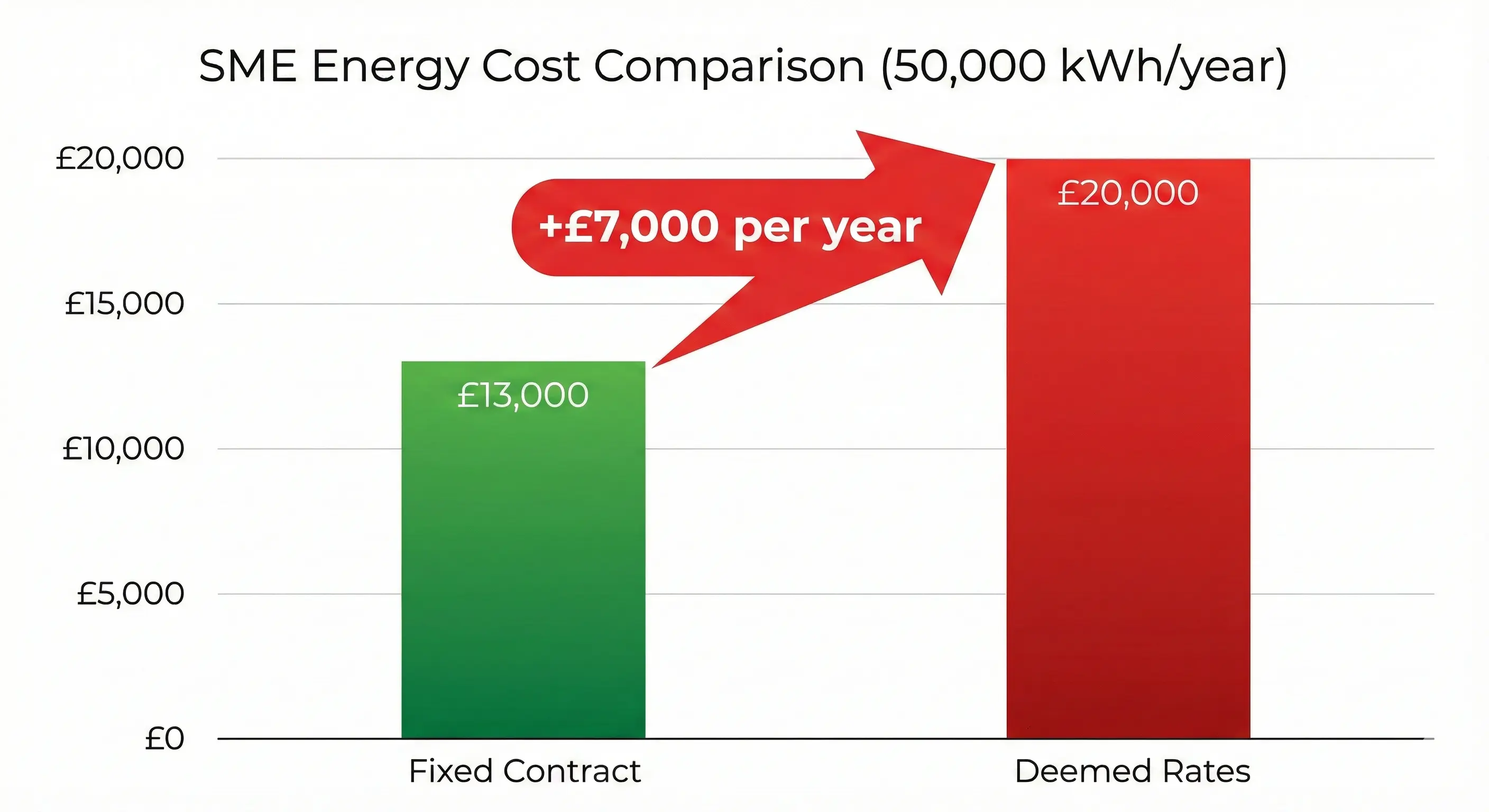
Doing Nothing Costs More: Falling onto Deemed Rates after your contract ends can cost 30-60% more than negotiated rates. For a business using 50,000 kWh/year, that is potentially £7,000 extra annually.
Prevention is Everything: Set calendar reminders 6 months before your contract end date. Do not wait for supplier letters - be proactive about your renewal window.
What is a “Digital Renewal” Trap?
In the old days, getting stuck in a bad energy contract required a signature. Today, it just requires a click.
UK business energy suppliers and brokers have shifted tactics. They are using “Digital Renewal” journeys - automated emails, portal notifications, and time-sensitive links - to lock SMEs into expensive contracts with minimal friction. This contract rollover strategy catches thousands of businesses off guard every year.
A “Digital Renewal” is when a supplier or broker sends you an electronic notification (email or portal link) framing a contract extension as a simple administrative task.
The Trap:
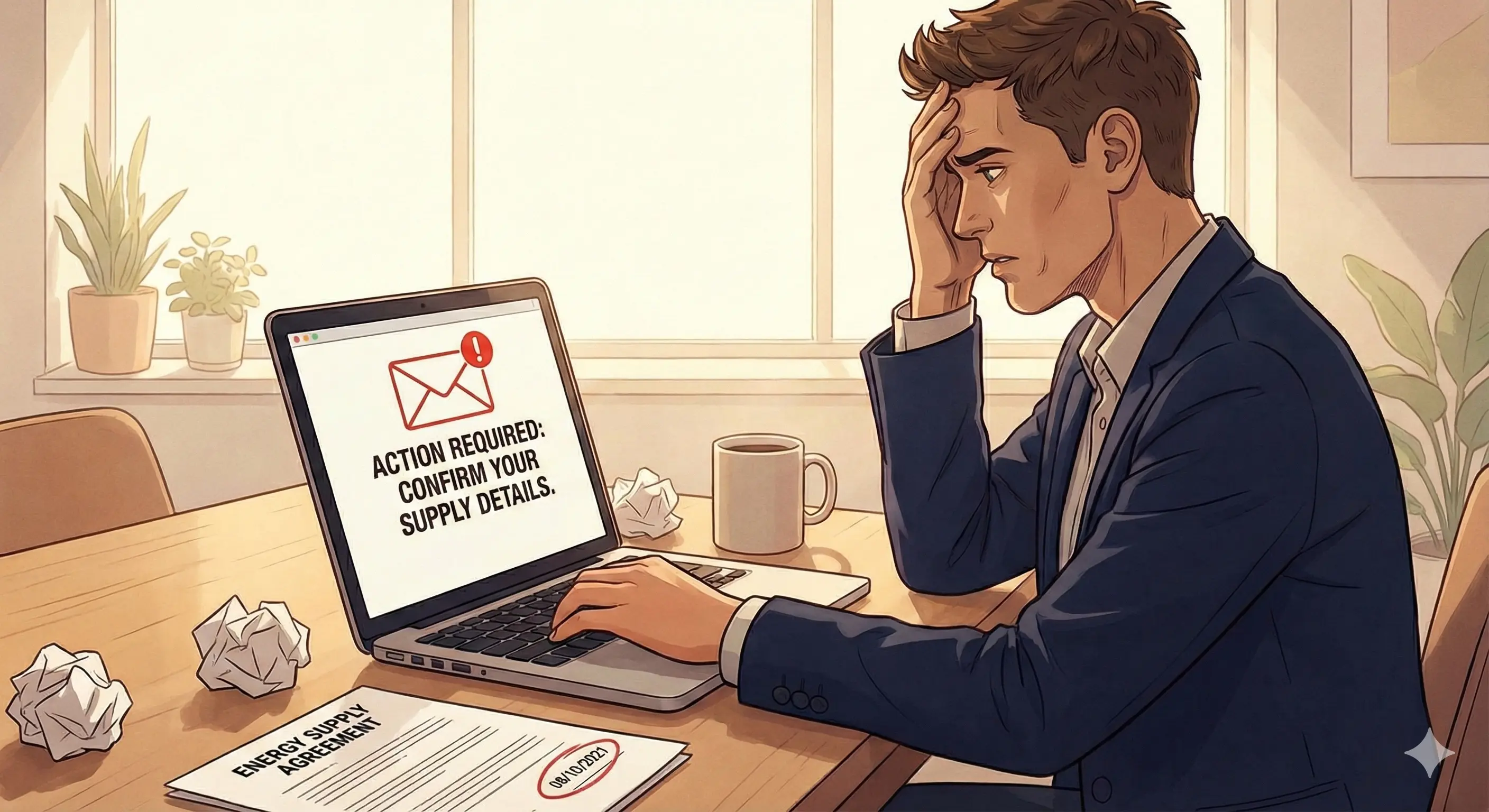
You receive an email: “Action Required: Confirm your supply details for 2025.”
You click a link, check a box to “confirm details,” and hit submit.
The Reality: You effectively e-signed a new 24-month contract. Buried in the T&Cs was a clause opting you into new rates, often with a significant broker commission baked in. This is why understanding undisclosed broker commissions is so important - and it’s one of several red flags hiding in business energy contracts.
Why it is dangerous: Unlike domestic consumers who get a 14-day cooling-off period under consumer protection law, business energy contracts are binding the moment you click. There is rarely a way to back out once the digital “handshake” is made.
The Rules: Are They Allowed to Do This?
Yes, but the rules are tightening. The regulatory landscape for energy procurement and contract renewals is shifting in favour of businesses.
For Microbusinesses (The “SLC 7A” Protection)
If you are a Microbusiness (fewer than 10 employees, annual turnover under €2 million, or annual consumption under 100,000 kWh electricity), Ofgem’s Standard Licence Condition 7A gives you specific rights around contract termination and renewal:
No “Stealth” Rollovers: Suppliers can no longer lock you into another long fixed term automatically if you do nothing. This was a major change to prevent automatic contract extensions without explicit consent.
The 30-Day Rule: If your contract ends and you have not renewed, they can move you to “Out of Contract” rates, but these must be cancellable with 30 days’ notice. They cannot lock you in for another year without your express consent.
The New “Subscription Trap” Law (DMCC Act 2024)
The Digital Markets, Competition and Consumers Act 2024 (opens in new tab) is changing the game. It targets “subscription traps” where businesses are locked into recurring payments through misleading practices.
While primarily consumer-focused, it signals that “Informed Consent” is now the legal standard. A pre-ticked box is no longer enough. You must actively agree to the renewal terms. As Harper James Solicitors explain (opens in new tab), businesses need to be far more careful about how auto-renewal provisions are presented.
The “Bear Traps” to Watch Out For
Trap 1: The “Auto-Renewal by Proxy” (The Level 2 LOA)
This is the most common way businesses get caught. Years ago, you might have signed a Letter of Authority (LOA) to let a broker check your rates. Understanding what a Letter of Authority actually authorises is critical to protecting your business.
The Danger: If you signed a Level 2 LOA, you gave that broker “Signing Authority.” They can legally sign a renewal on your behalf without showing you the contract first - a form of broker signing authority that many business owners do not realise they have granted. This practice is one reason broker complaints to the Energy Ombudsman rose 112% in 2024.
The Safe Option: A Level 1 LOA only allows a broker to read your data and fetch quotes. They cannot sign for you.
The Fix: Revoke Level 2 LOAs immediately. Check whether your broker has signed the TPI Code of Practice - only 52 of 2,700+ UK brokers have committed to transparency standards. Send a formal email to your supplier stating:
“I revoke all previous Letters of Authority. No third party is authorised to renew my contract without my direct written confirmation.”
Trap 2: The “Renewal Window” Panic
Most contracts have a specific Renewal Window - often 60 to 120 days before your contract ends. This is the critical period for energy contract negotiation.
If you miss this window, your supplier might reject your switch request, claiming you are “too late” to leave. This is why proactive contract management is essential.
Action: Put a recurring calendar invite for “Energy Contract Review” 6 months before your end date. Do not wait for their letter. As Energy Problems UK notes (opens in new tab), most businesses only realise they have been rolled over when they see their new bill.
Trap 3: The “Deemed Rate” Drift
If you refuse to renew but do not switch away, you fall onto Deemed Rates. This is one of the most expensive mistakes an SME can make, as we explain in our guide on what deemed rates are and how to avoid them.
The Cost: These out-of-contract tariffs are often 30-60% higher than negotiated fixed rates.
The Calculation: For a small business using 50,000 kWh/year, the difference between a 26p fixed rate and a 40p deemed rate is £7,000 per year in additional energy costs.
| Scenario | Rate | Annual Cost (50,000 kWh) | Difference |
|---|---|---|---|
| Fixed Contract | 26p/kWh | £13,000 | - |
| Deemed Rates | 40p/kWh | £20,000 | +£7,000 |
The Lesson: “Doing nothing” is the most expensive option when it comes to business electricity and gas contracts.
Actionable Steps: How to Protect Your Business
Step 1: Audit Your Digital Footprint
- Search your inbox for “Energy Renewal,” “Contract Confirmation,” or “Supply Update.”
- Check if you have inadvertently clicked a “Confirm” link in the last 6 months.
- Review any e-signature or digital consent forms you may have completed.
Step 2: Send the “Opt-Out” Email Now
You do not need to wait until your contract ends to state your intentions. Send this formal notice to your supplier today:
“Please accept this email as formal notice that I do not wish to renew my current electricity contract automatically. I intend to shop the market when my window opens. Please confirm receipt and provide my contract end date.”
Step 3: Centralise Your Contract Data
Stop relying on scattered emails and paper documents.
- Upload your bill or contract to Meet George.
- We scan the document to extract your contract end date (if it is visible on the bill - otherwise, upload the contract PDF and we will find it there).
- Once extracted, we set the reminders for you so you never miss a window again.
For a complete walkthrough of the switching process, see our guide on how to switch business energy.
The Future of Consent (And Why We Are Different)
The industry knows the current LOA system is broken. That is why the Retail Energy Code (REC) (opens in new tab) is developing a “Consumer Consent” module, set to launch by 2027, to act as a central digital registry for permissions and supplier switching authorisation.
We are not waiting for 2027. At Meet George, we have already built the solution:
Digital Level 1 LOA: We extract your business info and present a clear, readable digital document with no hidden clauses.
You Sign, We Do Not: You sign it on-screen (no tick boxes, no tricks). Full transparency on every contract term.
Zero Signing Authority: Our LOA explicitly states we have Level 1 authority only. We exist to inform you, not to sign on your behalf.
We believe you should hold the pen, always. That is why we are transparent about how we are paid and why we will never take signing authority over your energy supply.
Summary: Vigilance is Your Only Defence
The “Digital Renewal” era makes it easier to sign a contract, but harder to spot the cost. Contract rollover traps are becoming more sophisticated, but so are the tools to fight them.
- Read before you click. Every “confirm” button could be a binding e-signature.
- Revoke old Level 2 permissions. Check your broker authority status today.
- Never assume “doing nothing” is safe. Inaction leads to deemed rates or auto-renewal.
If you want to understand more about your rights when cancelling contracts, read our guide on whether you can cancel a business energy contract.
Unsure if you have been trapped? If you clicked a link and are worried you accidentally renewed, email the confirmation email or contract to hello@meetgeorge.co.uk. We can analyse the terms and tell you if you have a valid exit route or negotiation options.
Ready to take control of your energy switching? Back to the main guide: How to Switch Business Energy


