

TL;DR: Key Takeaways
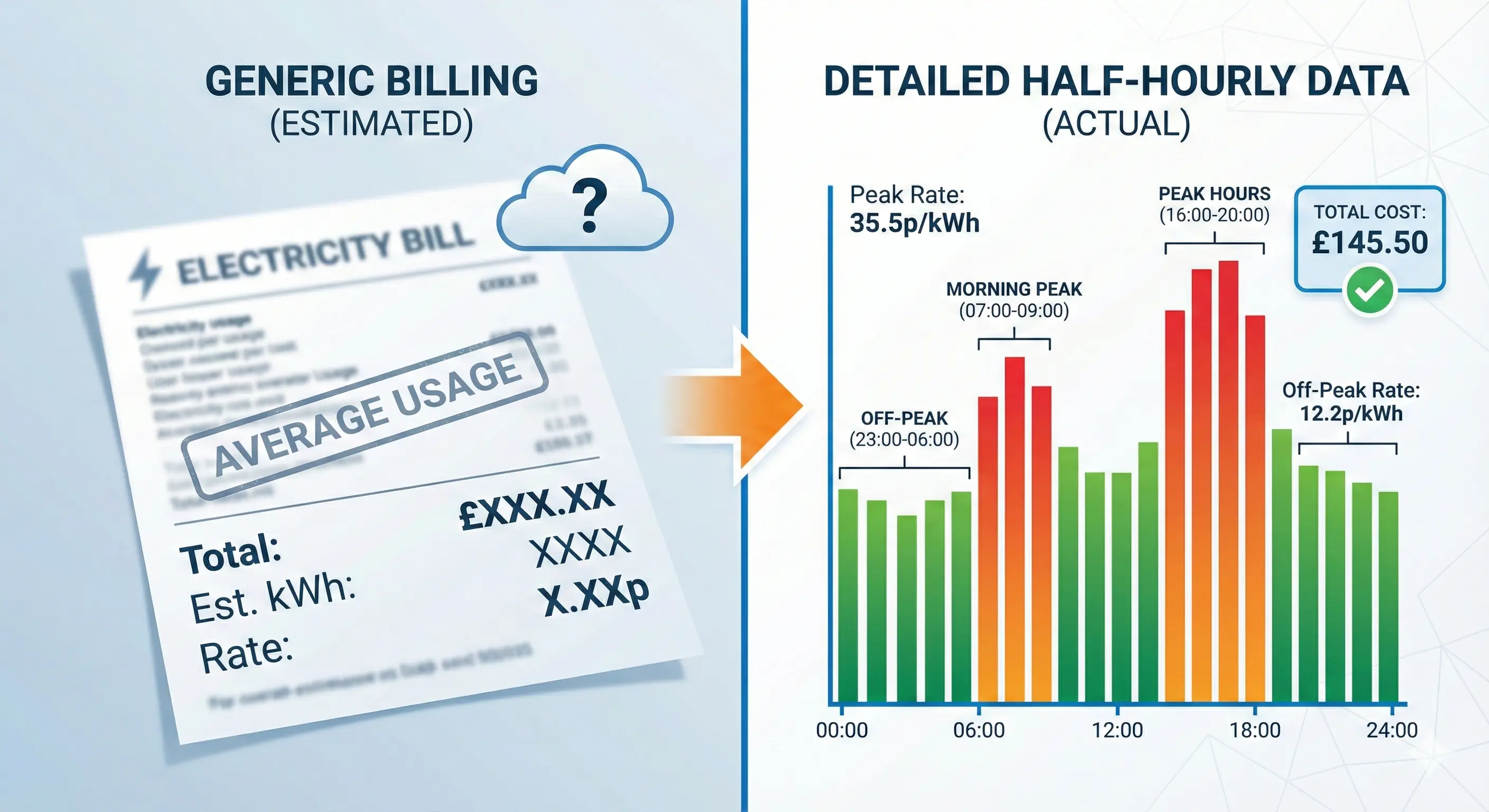
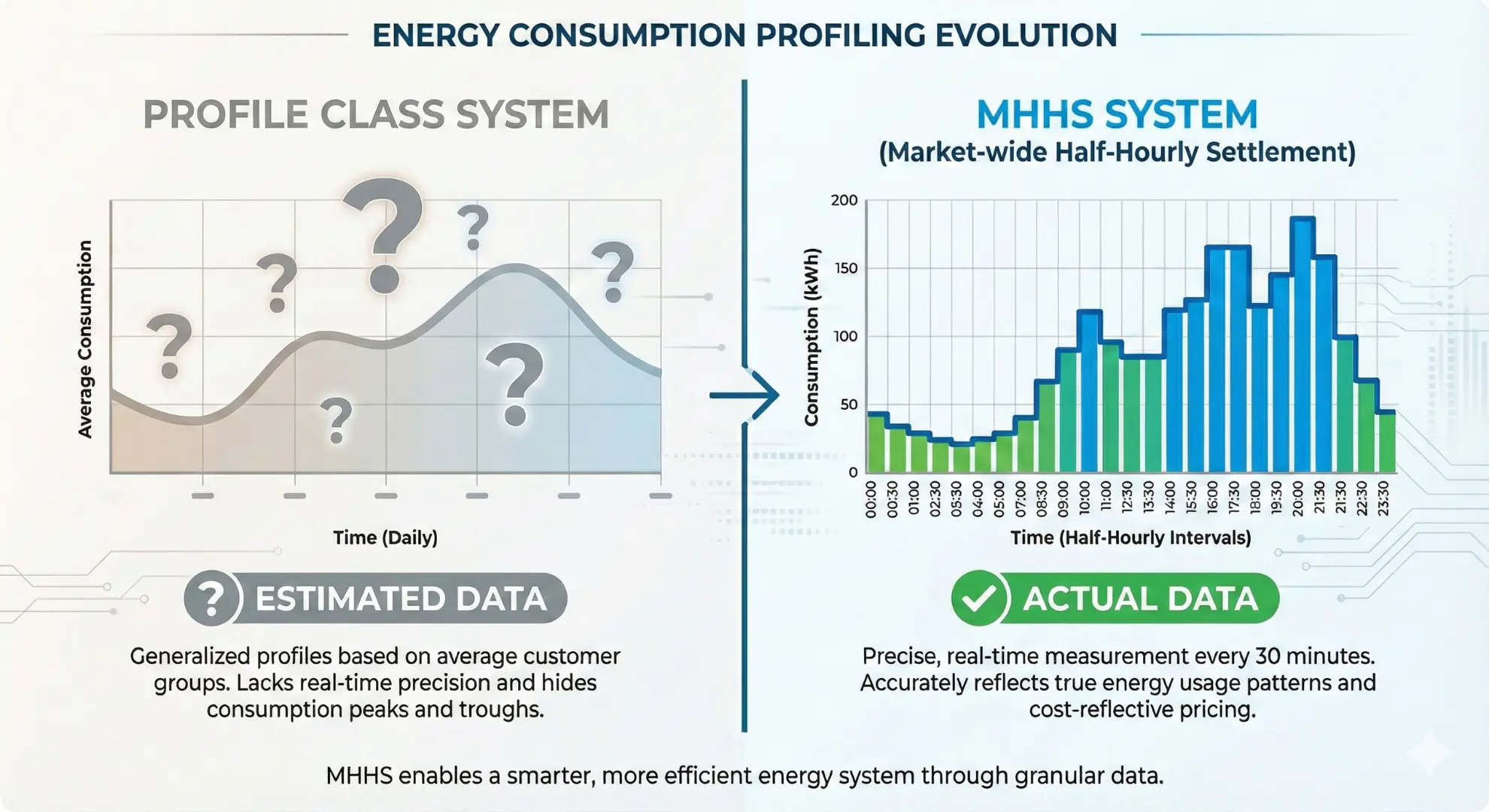
The Change: Moving from “Profile Classes” (estimates) to “Half-Hourly Settlement” (actuals).
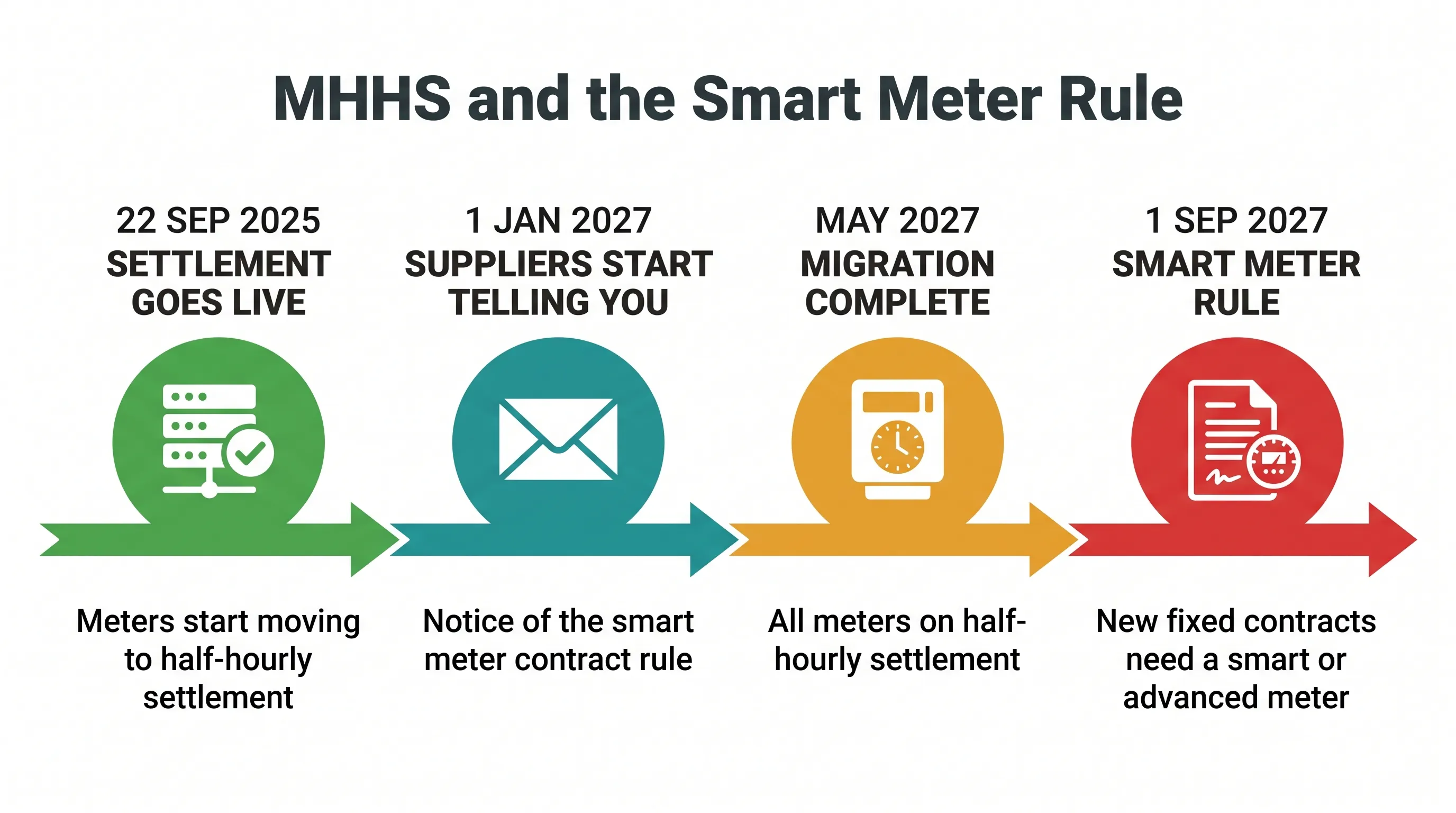
The Date: Migration to half-hourly settlement began on 22 September 2025, and Elexon (opens in new tab) expects to complete it in May 2027.
The Smart Meter Rule: From 1 September 2027, new fixed-term contracts for small and medium business sites must include a term that the customer has, or agrees to have, a smart meter or advanced meter installed (DESNZ (opens in new tab)).
The Risk: If you have “spiky” usage during peak times (4 PM - 7 PM), your costs could rise as estimates are replaced by real-time pricing.
The Solution: You don’t need to understand the physics of the grid. You just need a platform that understands your data.
Definition: Market-wide Half-Hourly Settlement (MHHS)
MHHS is a UK regulatory programme that requires all electricity meters to be settled based on actual half-hourly consumption data rather than estimated profiles. Since September 2025, suppliers have begun to know exactly when you use power and price accordingly. Businesses with off-peak usage patterns may see costs fall, while those with peak-time consumption (4-7 PM) may see rates rise. The change aims to create a “Smart Grid” where prices reflect the true cost of generation at any given moment.
What is MHHS? (The “Netflix” Analogy)
Think of the current system like Broadcast TV. Everyone pays the same TV licence, regardless of what they watch or when they watch it. The costs are smeared across the population.
MHHS is Netflix. The grid will know exactly what you used and when you used it, down to the 30-minute window.
Old Way (Profile Class 03/04): Suppliers buy energy based on a generic “shape.” They hedge their bets, adding a risk premium to your unit rate to cover the uncertainty.
New Way (MHHS): Suppliers buy energy based on your actual half-hourly data.
This is driven by Ofgem and delivered by Elexon. Their MHHS programme page (opens in new tab) details the full rollout plan. Their goal is a “Smart Grid” where prices reflect the true cost of generation. If the wind is blowing at 2 AM, power should be cheap. If everyone turns on the kettle at 6 PM, power should be expensive.
The Death of Profile Class 03 & 04
Currently, most SMEs are classified as Profile Class 03 (Non-Domestic Unrestricted) or 04 (Non-Domestic Economy 7).
Under MHHS, these profiles effectively disappear for settlement purposes. The scale is significant: 2.2-2.3 million Profile Class 03 and 04 meters will migrate to half-hourly settlement between September 2025 and May 2027, with the major supplier migration window running August-November 2026. This is the largest structural change in UK electricity markets since privatisation. Ofgem estimates MHHS will deliver £1.5-4.5 billion in net benefits by 2045 through more accurate billing and enabling time-of-use tariffs.
Programme status: The MHHS rollout is already 6.5 months behind schedule due to what Elexon describes as “underestimated complexity” and industry unpreparedness. This delay reflects the sheer scale of migrating millions of meters to a fundamentally different settlement system - but the direction of travel is certain, even if the exact timing shifts.
Your meter may technically keep the “03” label on the bill, but in the background, it is being treated as a half-hourly settled meter (similar to the “00” meters used by large businesses with high energy usage - greater than 100,000 kWh per year).
Why This Creates “Winners and Losers”
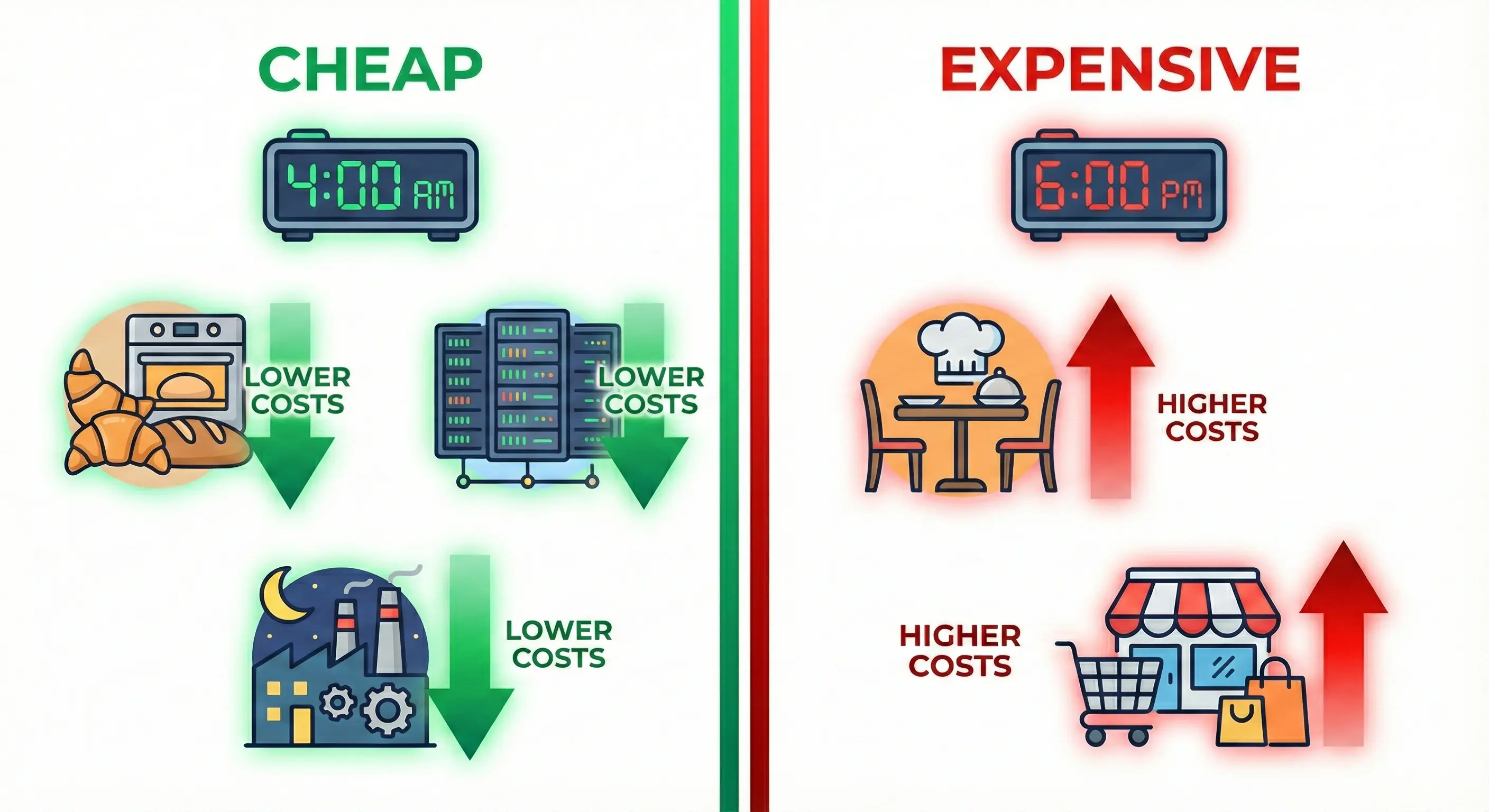
The Winners: Businesses with flat loads or those operating off-peak (e.g. night shifts, automated servers, bakeries starting at 4 AM). You have likely been subsidising “peaky” businesses for years. Your rates should logically fall.
The Losers: Businesses with intense “Peak” usage (e.g. a restaurant firing up electric ovens at 6 PM). Previously, you were “profiled” as average. Now, your supplier sees the true cost of serving you. Expect your contract renewal offers to reflect this higher risk.
The “Bear Traps” for Business Owners
1. The 2027 Smart Meter Rule
The Department for Energy Security and Net Zero (DESNZ) confirmed a new rule on 1 September 2026: from 1 September 2027, when suppliers enter into new fixed-term contracts with small and medium business sites, the contract must include a term that the customer “has, or agrees to have, smart or advanced meters installed”. Suppliers must start telling customers about the change from 1 January 2027.
The Real Reason: This isn’t just about supplier risk - it is about Grid Visibility. To manage a Net Zero grid running on wind and solar, the National Grid needs to see supply and demand in real-time. If your business doesn’t have a smart meter, you are a “black hole” in their data.
What it means for you: You don’t need a smart meter already fitted to sign a fixed contract - agreeing to have one installed is enough. A binding consumer protection code also applies from 1 September 2027, and DESNZ says it ensures customers are “not penalised where the delay to the smart meter installation is outside of the customer’s control”. If you have no fixed contract when yours ends, you stay on your supplier’s out-of-contract rates until you agree one.
2. The “Passthrough” Shock
Some brokers may push you onto “Passthrough” contracts where network charges (DUoS) are billed based on actuals. Understanding the difference between good and bad brokers is essential before signing any contract.
The Trap: Under MHHS, network charges are allocated precisely to Red/Amber/Green time bands. If you don’t understand your load shape, a “cheap” unit rate contract could explode with hidden network charges during peak hours.
3. The “Legacy Meter” Worry (SMETS1)
Do you have an older smart meter (SMETS1) that went “dumb” when you switched supplier?
The Fix: Don’t panic. The Data Communications Company (DCC) (opens in new tab) is currently rolling out a remote software update to upgrade these meters. They will become fully smart again without you needing to change the hardware.
Free Smart Meter Upgrades - You’ve Already Paid For It
Many business owners assume getting a smart meter involves costs or hassle. The reality is simpler.
Is the upgrade free? Yes. Almost every major UK supplier (British Gas, E.ON, SSE, etc.) installs smart meters for small businesses at no upfront cost. The cost is socialised across the market via standing charges, so you have technically already paid for it - you might as well get the hardware.
How to request one:
- Call your current supplier’s business line
- Ask for a “non-domestic smart meter installation”
- They will schedule an engineer visit (typically 30-60 minutes)
- No disruption to your supply during installation
Why do it now? From 1 September 2027, new fixed contracts for small and medium sites will require a smart or advanced meter, or your agreement to have one installed. Getting it done before your next renewal means one less condition to deal with when you sign.
How Meet George Helps (We Handle The Complexity)
MHHS is a good thing for the grid, but it is a headache for business owners. You shouldn’t need a degree in data science to pay your electricity bill.
Meet George is making your switching experience simpler.
Forensic Data Extraction: When you upload a bill, our AI extracts your MPAN and accesses your half-hourly data directly from the grid.
Load Shape Analysis: We analyse when you use power. Are you a “peaky” user? Do you have an “04” Economy 7 profile?
Automated Rate Matching: Our engine pulls the most eligible quotes for your specific profile. We filter out the tariffs that punish your usage shape and showcase the ones that reward it.
Free Upgrade Guidance: If our analysis shows you are missing a smart meter, we guide you to request a free upgrade from your supplier (a standard service included in your standing charge).
The grid is getting more complex. Your switching experience should get simpler.
The Strategic Response: On-Site Generation and Storage
If your business operates during peak hours and you cannot shift your usage, there is another option: stop drawing from the grid during expensive periods altogether.
On-site solar panels and battery storage allow you to generate and store cheap power during the day, then use it during the 4-7 PM peak when grid electricity is most expensive. Under MHHS, this strategy becomes significantly more valuable because the price differential between peak and off-peak is no longer hidden in averages - it is real and measurable.
The Maths: If peak electricity costs 35p/kWh and off-peak costs 15p/kWh, every kWh you self-generate or discharge from a battery during peak hours saves you 20p. For a business using 50 kWh during the evening peak, that is £10/day or £3,650/year in avoided grid costs.
The Double Win: Beyond bill reduction, businesses with batteries and flexible loads can now earn revenue by participating in Demand Side Response (DSR) programmes. The same regulatory changes enabling MHHS have opened flexibility markets to SMEs. Your battery is not just a cost-avoidance tool - it can become an income-generating asset.
If MHHS is going to penalise your peak usage, the smart response is to ensure you are not drawing from the grid during those expensive windows. Learn how DSR can turn your energy bill into income.
What You Should Do Now
Step 1: Check Your Profile Class
Find your MPAN on your electricity bill (the “S” box). The first two digits on the top line are your Profile Class. If it’s 03 or 04, you’re currently on estimated billing that will change under MHHS.
Step 2: Request a Smart Meter Upgrade
Contact your current supplier and request a free smart meter installation. Major suppliers like British Gas, E.ON, and SSE install these at no upfront cost - the cost is already socialised in your standing charge.
Step 3: Analyse Your Load Shape
Understand when you use power. Are you “peaky” (high usage 4-7 PM) or “flat” (consistent throughout the day)? This determines whether MHHS will help or hurt your costs.
Step 4: Switch Before Renewal
Use a platform like Meet George to compare quotes that match your specific load profile. Avoid tariffs that punish peak usage if that’s when you operate.
The Bottom Line
For decades, UK small businesses have been billed on a “guesstimate.” That ends in 2025.
If you look at your electricity bill today, find the “S” box (your MPAN). The first two digits on the top line are likely 03 or 04. This code tells the grid: “We don’t know exactly when this business uses power, so we’ll just assume they are average.”
This system has shielded inefficient businesses for years. If you used massive amounts of power at 5 PM (the most expensive time of day), you paid the same rate as a business using it at 2 PM.
MHHS changes that. The question is whether you’re positioned to benefit - or pay the price.
Ready to understand your load shape? Learn how to switch business energy suppliers the right way, or discover how MHHS affects volume tolerance and billing in more detail.
Sources & Further Reading:
- Market-wide Half-Hourly Settlement Programme (Elexon) (opens in new tab)
- Ofgem MHHS Decision & Full Business Case (opens in new tab)
- Non-Domestic Smart Meter Rollout: Government Response (GOV.UK) (opens in new tab)
- National Grid ESO: Network Charging Information (opens in new tab)
- Data Communications Company (DCC) (opens in new tab)


