TL;DR: The Revelation
The Discovery: Uswitch, MoneySuperMarket, Compare the Market, Confused.com, and GoCompare - the UK’s five biggest comparison sites - all route their business energy customers to the same company: Bionic.
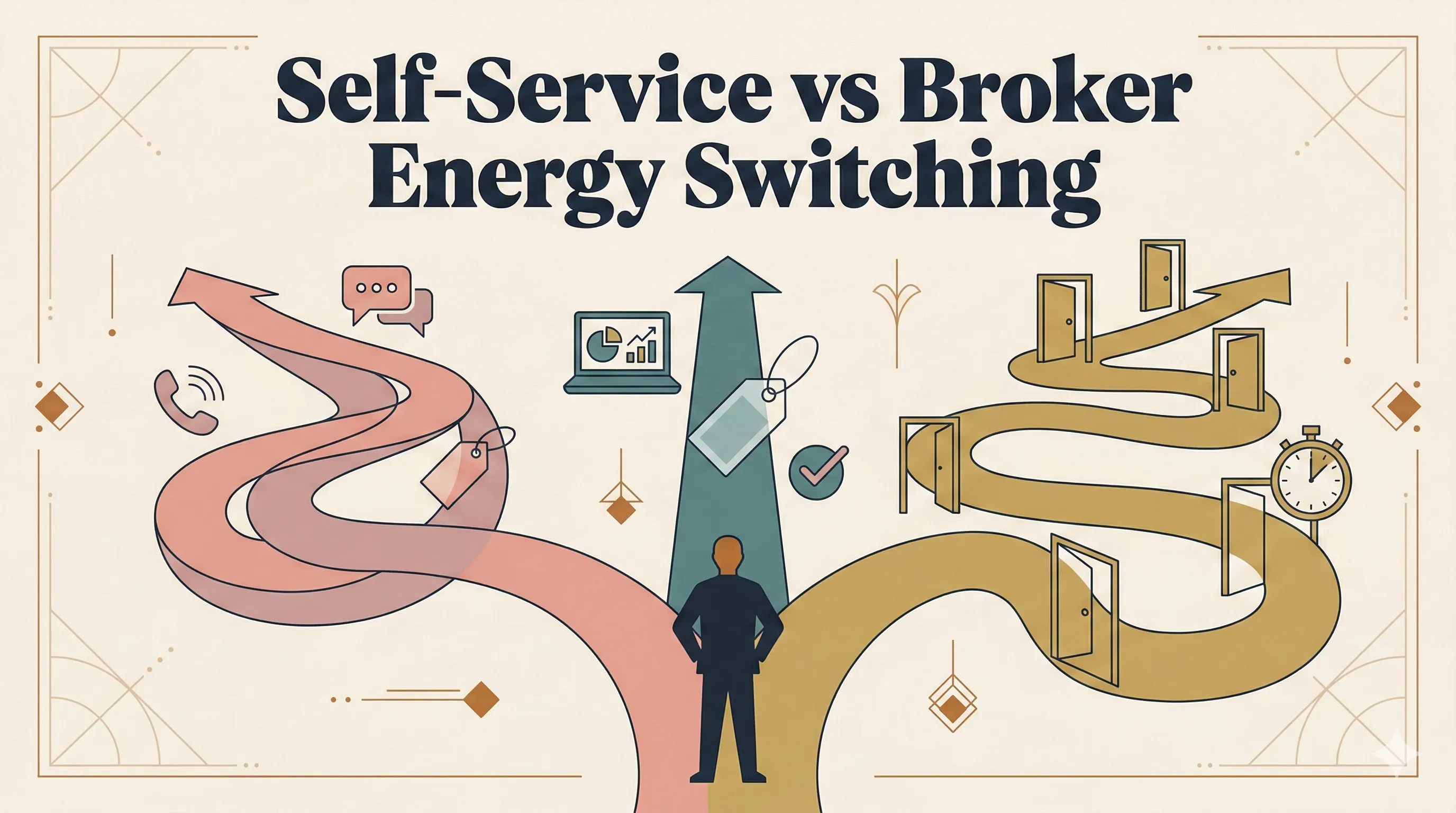
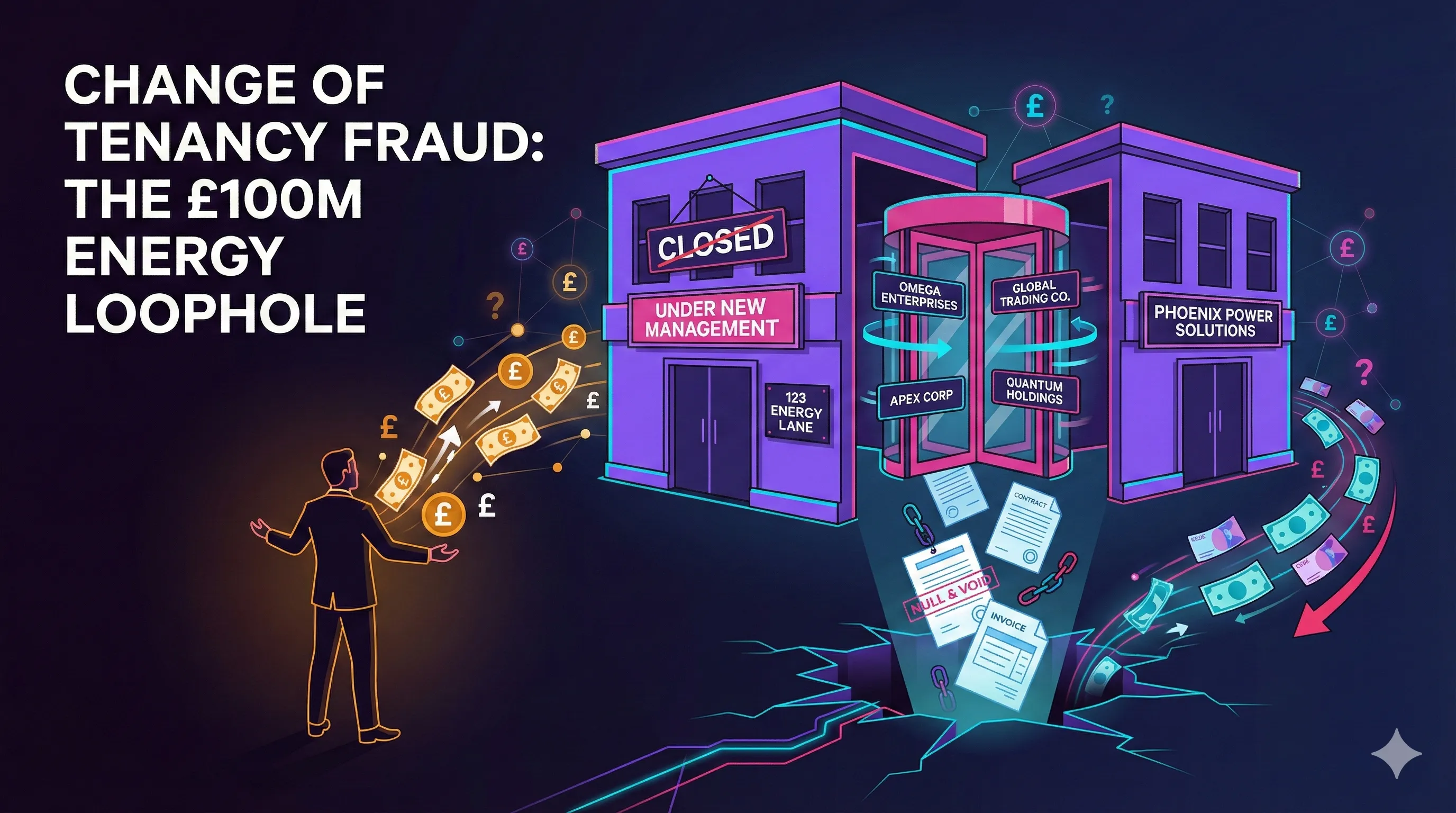
What This Means: When you “compare” business energy on any of these sites, you’re not actually comparing different services. You’re entering different front doors to the same room. The branding differs, but the experience - including the sales calls, commission structure, and auto-renewal practices - is identical.
Why It Matters: UK business owners believe they’re shopping around when they try multiple comparison sites. In reality, they’re just giving the same broker (Bionic) multiple chances to close a sale.
The Alternative: If you want a genuinely different experience as a UK SME, you need to step outside the comparison site ecosystem entirely.
The Smoke and Mirrors of Business Energy Comparison
For years, UK businesses have trusted comparison sites to find competitive energy deals. The premise seems simple: enter your details, see quotes from multiple suppliers, pick the best one. It’s how millions of UK households switch their home energy every year.
For home energy, this works reasonably well. You get instant online quotes, you can compare tariffs side-by-side, and you can switch without speaking to anyone.
Why does domestic comparison work so smoothly? Because the comparison sites have direct agreements with energy suppliers. There are no credit checks for domestic customers - your postcode qualifies you for every deal shown. No rejections. The Ofgem price cap sets a ceiling on standard variable tariffs, making pricing relatively predictable. And the product is standardised: one meter, one bill, same gas and electricity as everyone else on your street.
The comparison sites built their entire business model around this simplicity. Enter your postcode, see your options, click to switch.
Business energy is completely different.
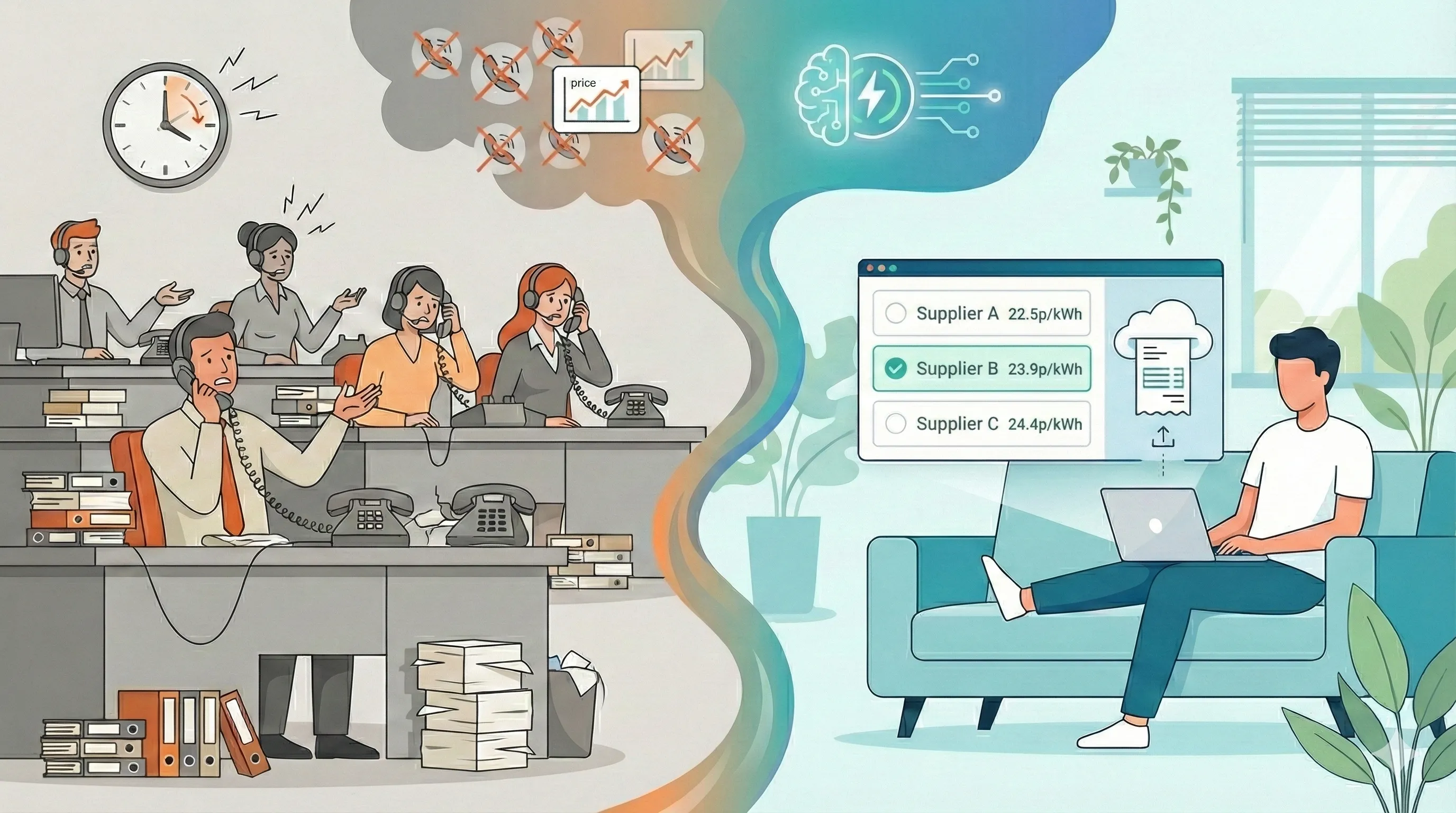
When you visit any of the UK’s major comparison sites for business energy, something peculiar happens. Instead of seeing quotes on screen, you’re asked for your phone number. Instead of comparing online, you’re told an “energy expert” will call you.
And here’s what most SME owners don’t realise: that call comes from the same company, regardless of which site you used.
The Bionic Connection
In 2020, Starling Bank announced a partnership with Bionic for their business marketplace. Their press release contained a revealing detail: Bionic “powers comparison sites such as MoneySuperMarket and Uswitch” for business energy switching.
This wasn’t an exaggeration. Subsequent research confirms that all five major comparison sites - Uswitch, MoneySuperMarket, Compare the Market, Confused.com, and GoCompare - partner with Bionic for their business energy services.

This means:
- Same quotes - All sites access Bionic’s supplier panel
- Same sales team - Bionic’s call centre handles all enquiries
- Same commission structure - Uplift built into rates
- Same auto-renewal practices - The controversial “Do It For You” clause (enabled by Level 2 LOAs)
- Same customer experience - Phone-based, broker-assisted switching
The only real difference? The logo on the website - and the small “Powered by Bionic” text in the footer that most users never notice.
Why This Matters for UK Business Owners
Understanding the comparison site ecosystem isn’t just industry gossip - it has real implications for how you approach energy switching as a UK business.
1. You’re Not Actually “Comparison Shopping”
When UK SME owners try multiple comparison sites to find the best deal, they believe they’re casting a wide net. In reality, they’re giving the same broker multiple opportunities to call them.
One MoneySavingExpert forum user (opens in new tab) discovered this firsthand: “All the brokers (Uswitch, ComparetheMarket, GoCompare, etc.) use the same energy broker company called Bionic… you invariably end at Bionic.”
Another user noted the frustration: “The screen says it will offer you the best prices - all the prices and company logos are blurred out - and an ‘Energy Expert’ calls you on your phone.”
2. You Can’t Avoid the Sales Call
Unlike domestic energy comparison, where you can complete a switch entirely online, business energy through these sites requires speaking to a salesperson.
This isn’t a design flaw - it’s the business model. Bionic operates as a traditional broker with phone-based sales. The comparison sites are essentially lead generation tools that feed into Bionic’s call centre.
For time-pressed business owners who prefer digital self-service, this is a fundamental limitation.
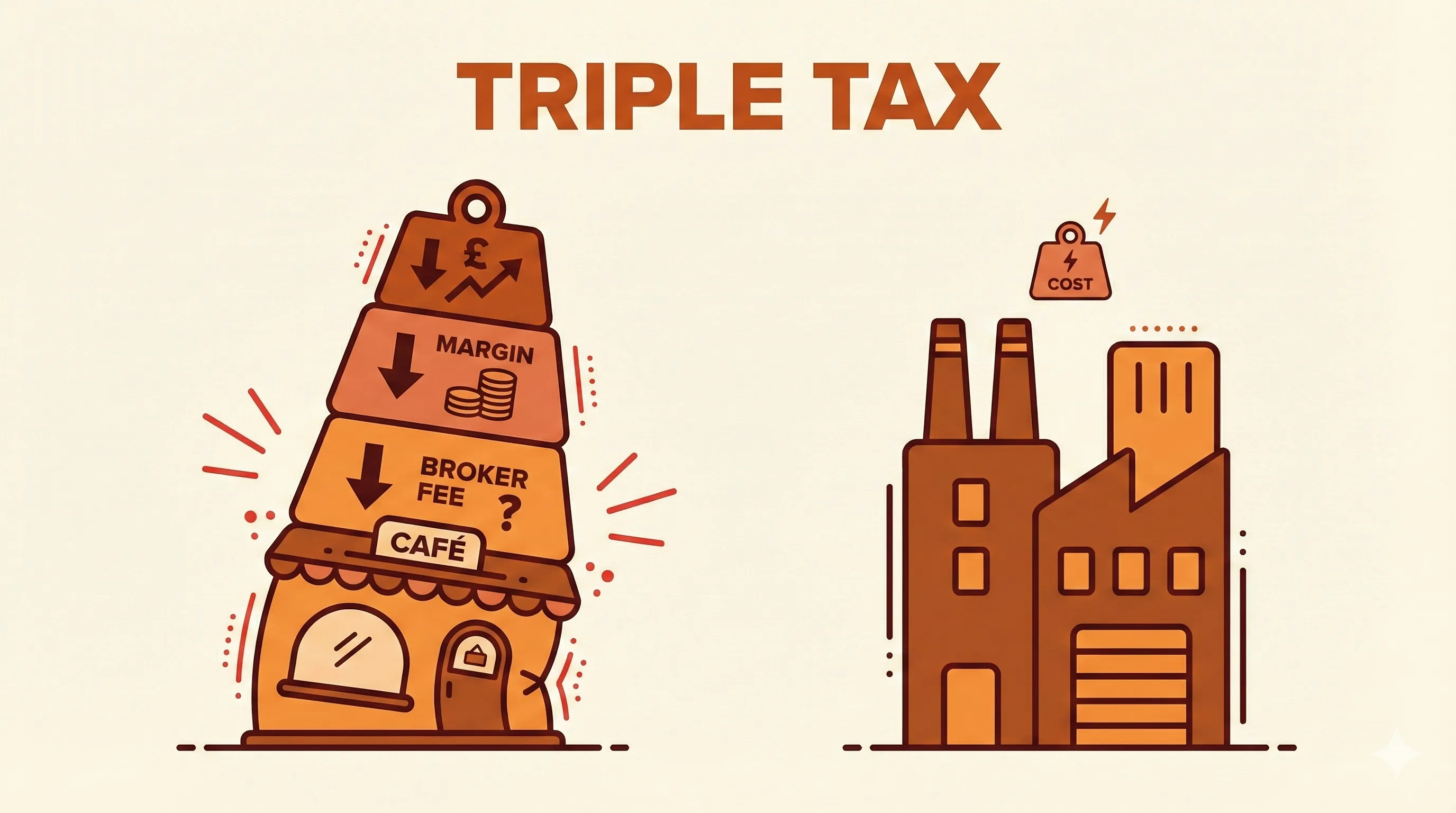
3. Commission Is Hidden in the Same Way
All Bionic-powered sites use the same pricing model: commission is built into your unit rate. Whether you come through Uswitch, MoneySuperMarket, Compare the Market, or Confused.com, the approach is identical.
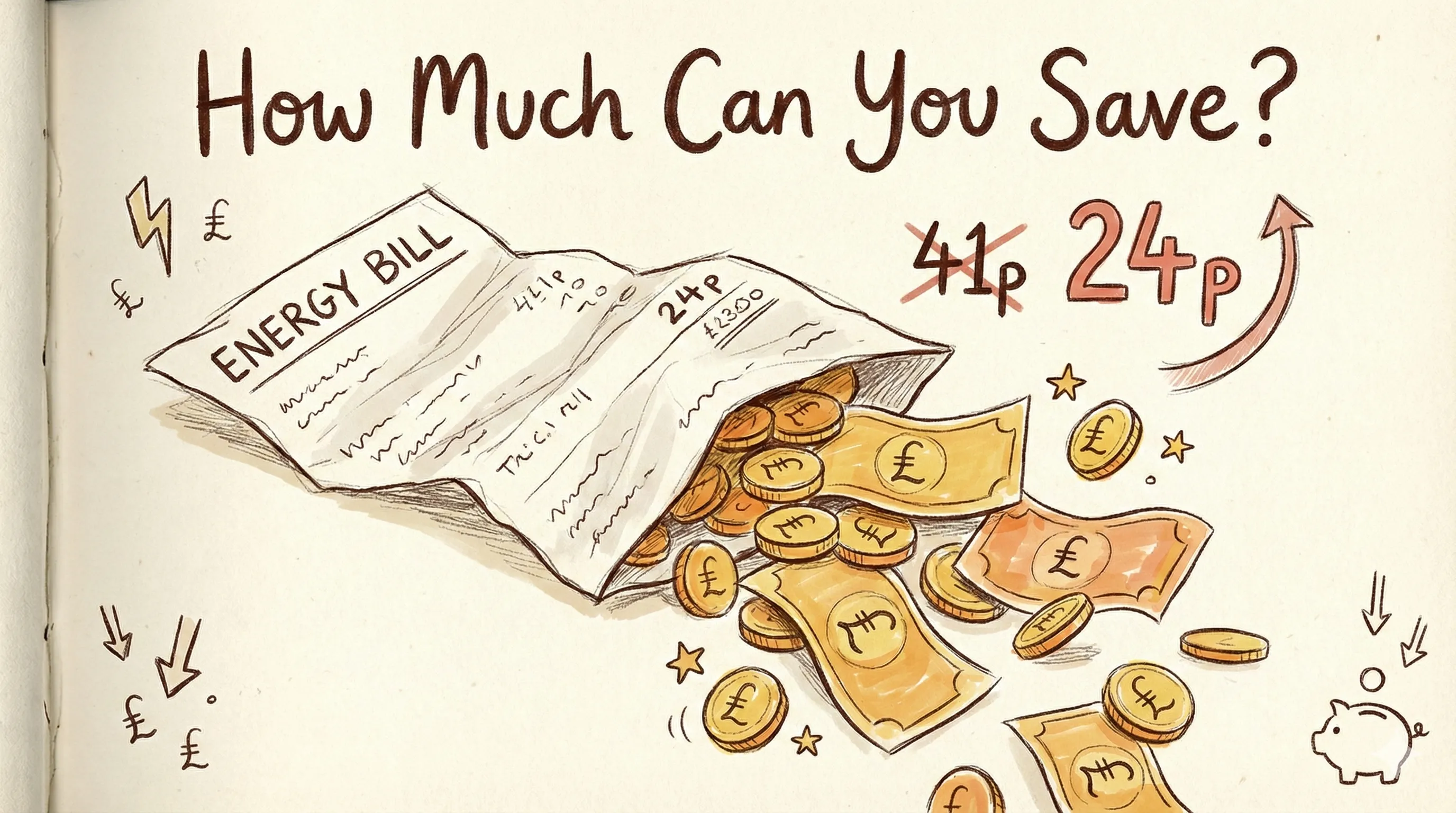
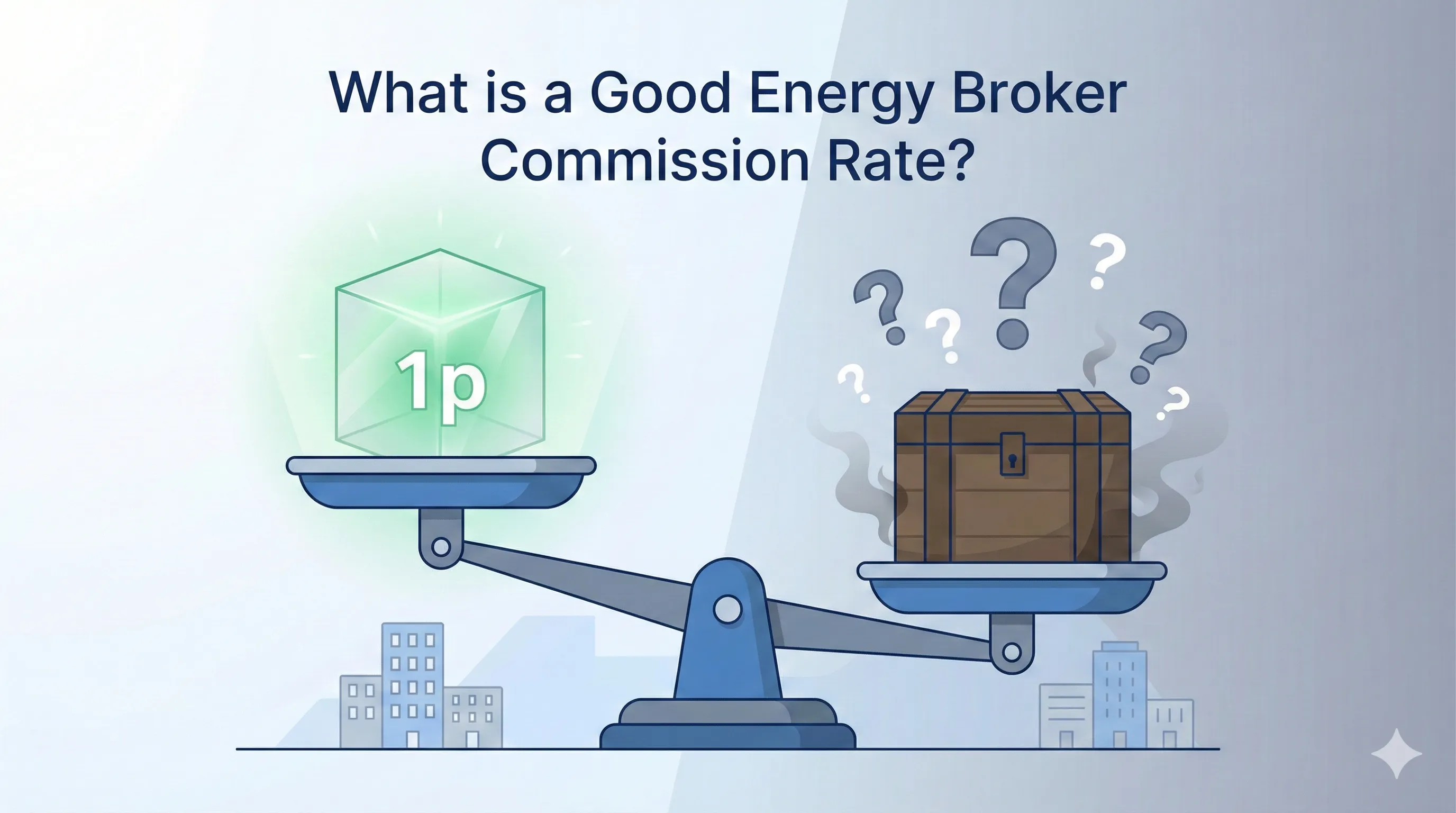
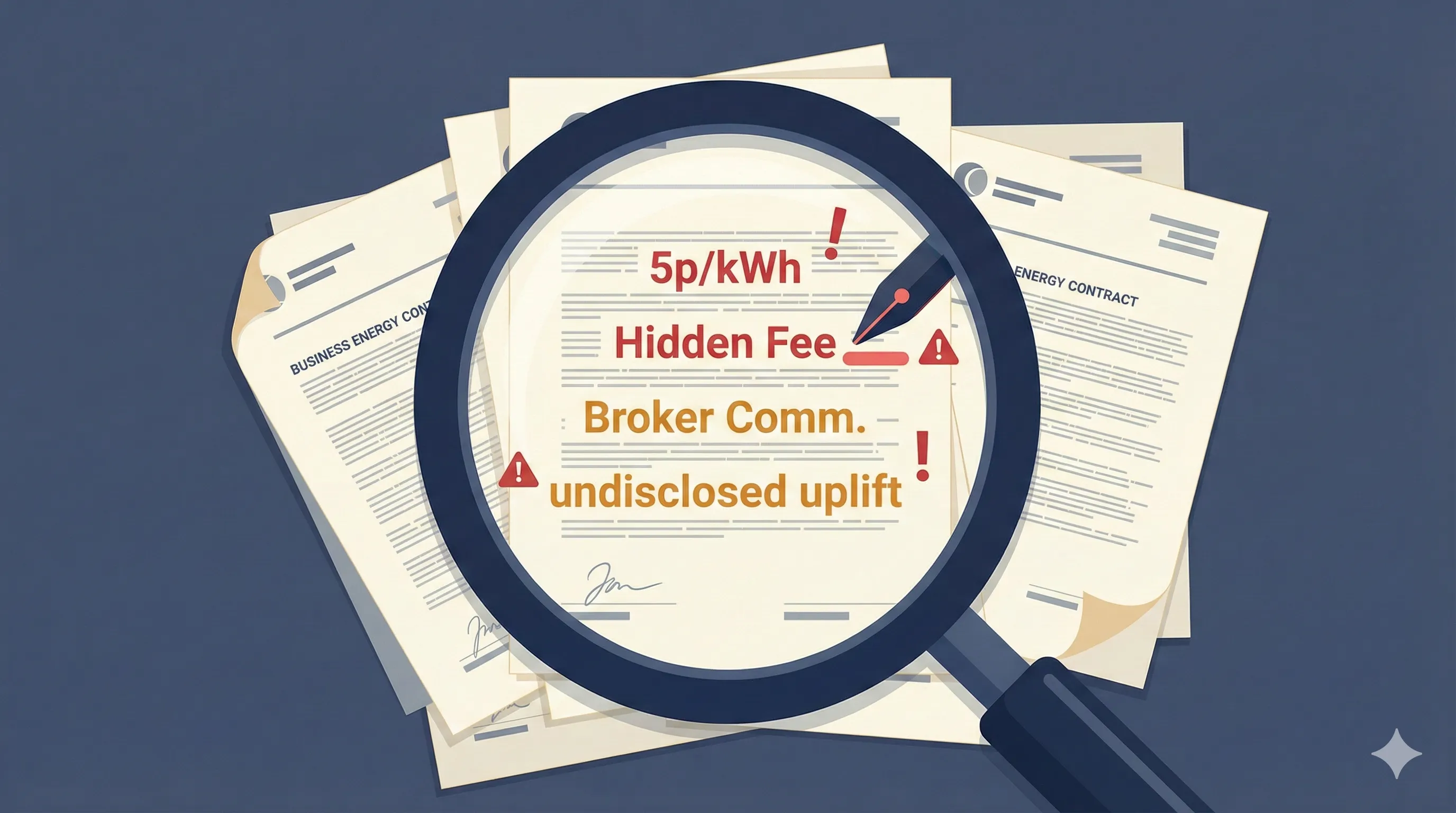
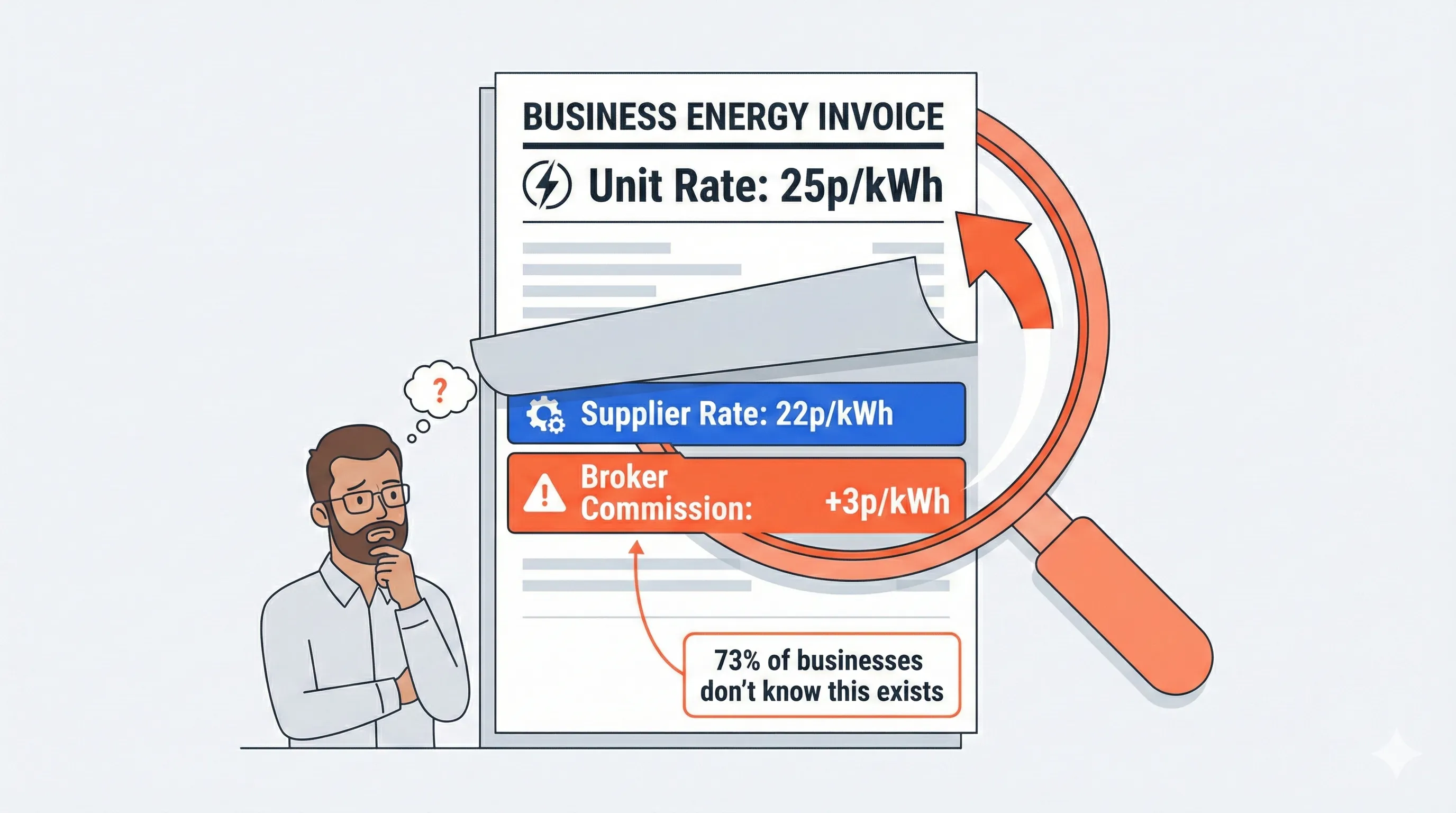
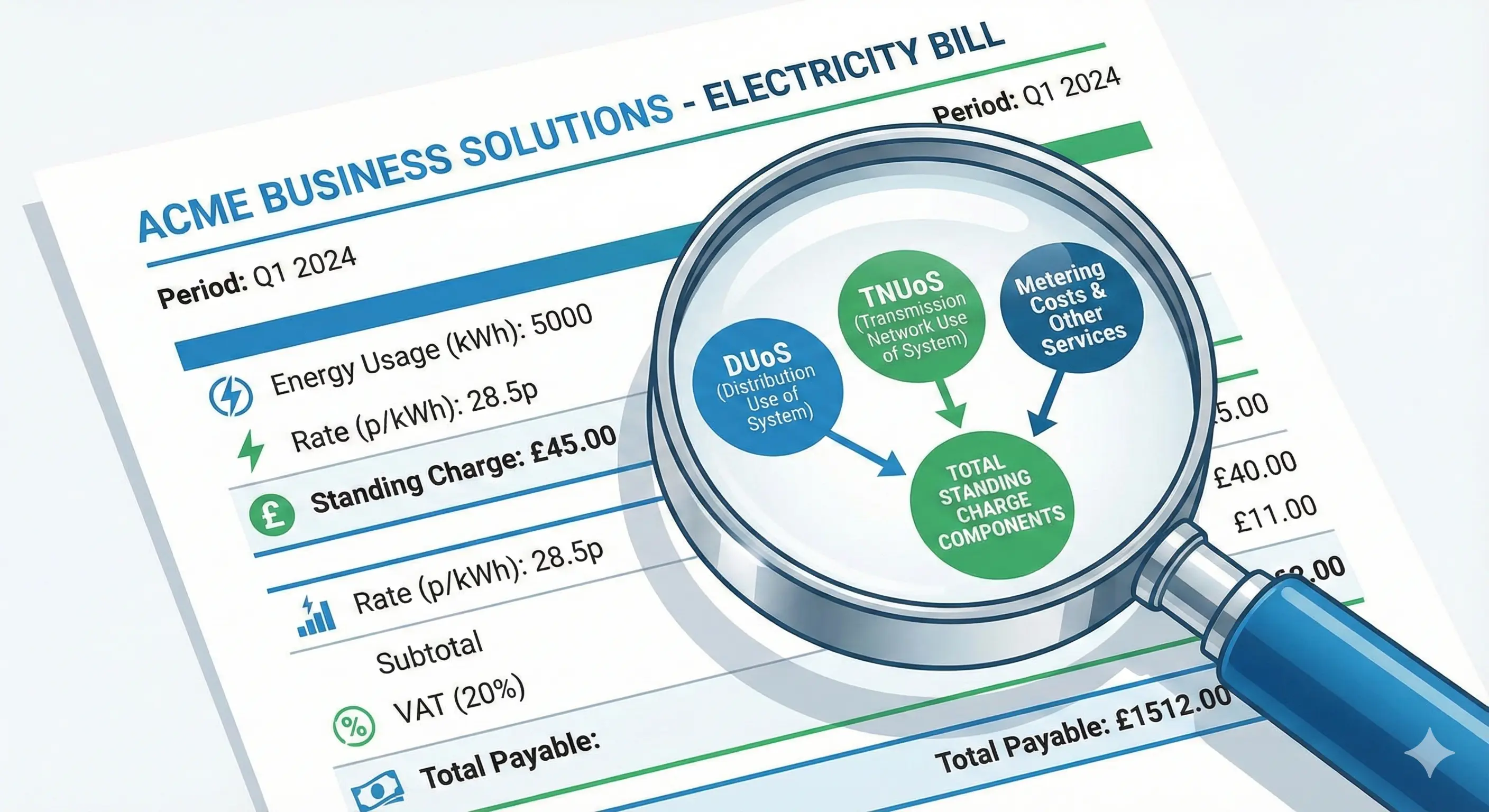
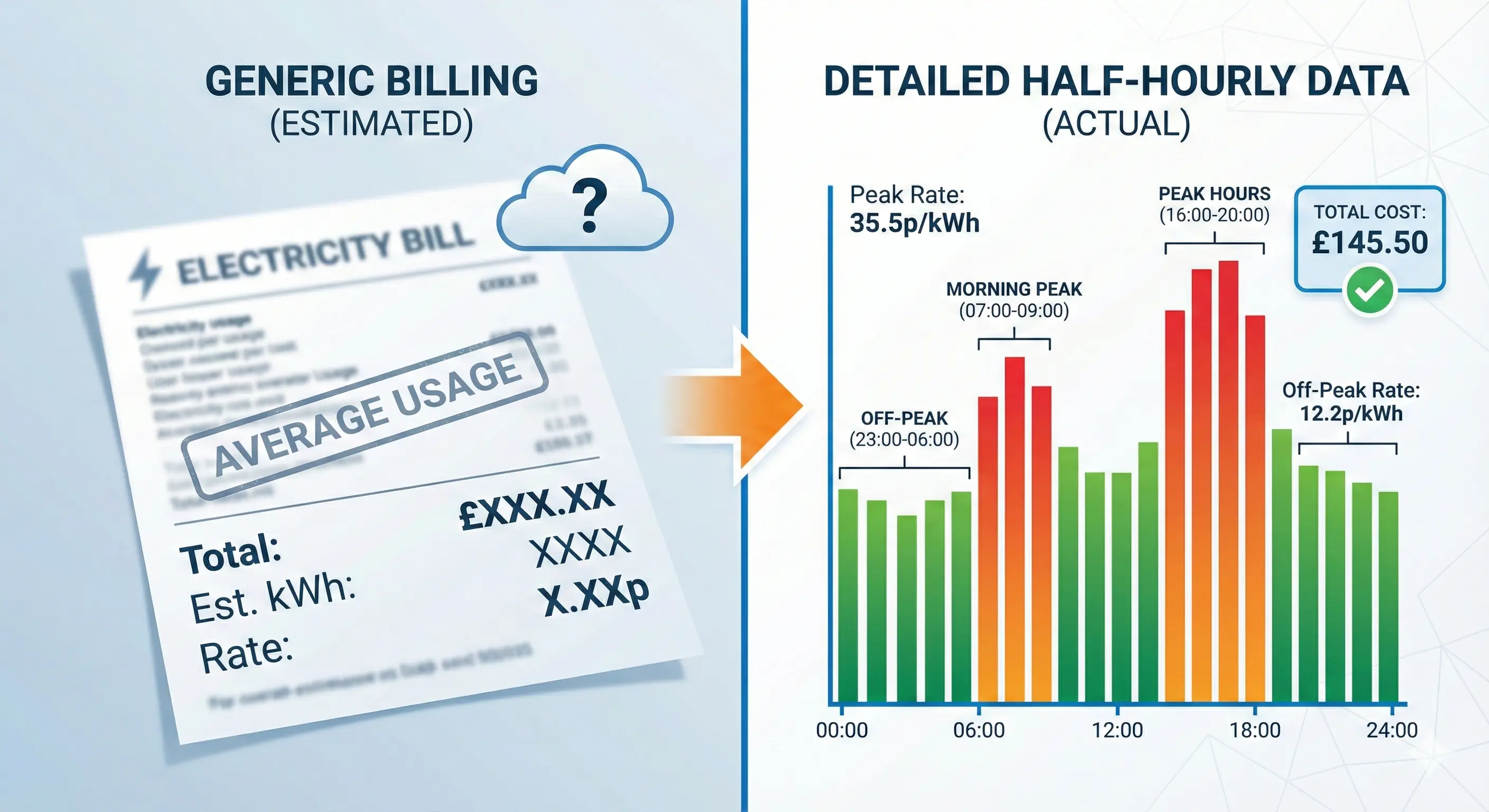
You see a “quote” of, say, 25p/kWh. What you don’t see is that this might comprise:
- Supplier base rate: 22p/kWh
- Bionic/comparison site commission: 3p/kWh
The commission isn’t disclosed upfront on any of these sites. You only discover it in the contract paperwork - and only since Ofgem’s October 2024 transparency rules (opens in new tab) made disclosure mandatory.
4. Auto-Renewal Risks Apply to All
Bionic’s “Do It For You” (DIFY) renewal service has attracted significant criticism, including a BBC Watchdog investigation (opens in new tab) in 2024.
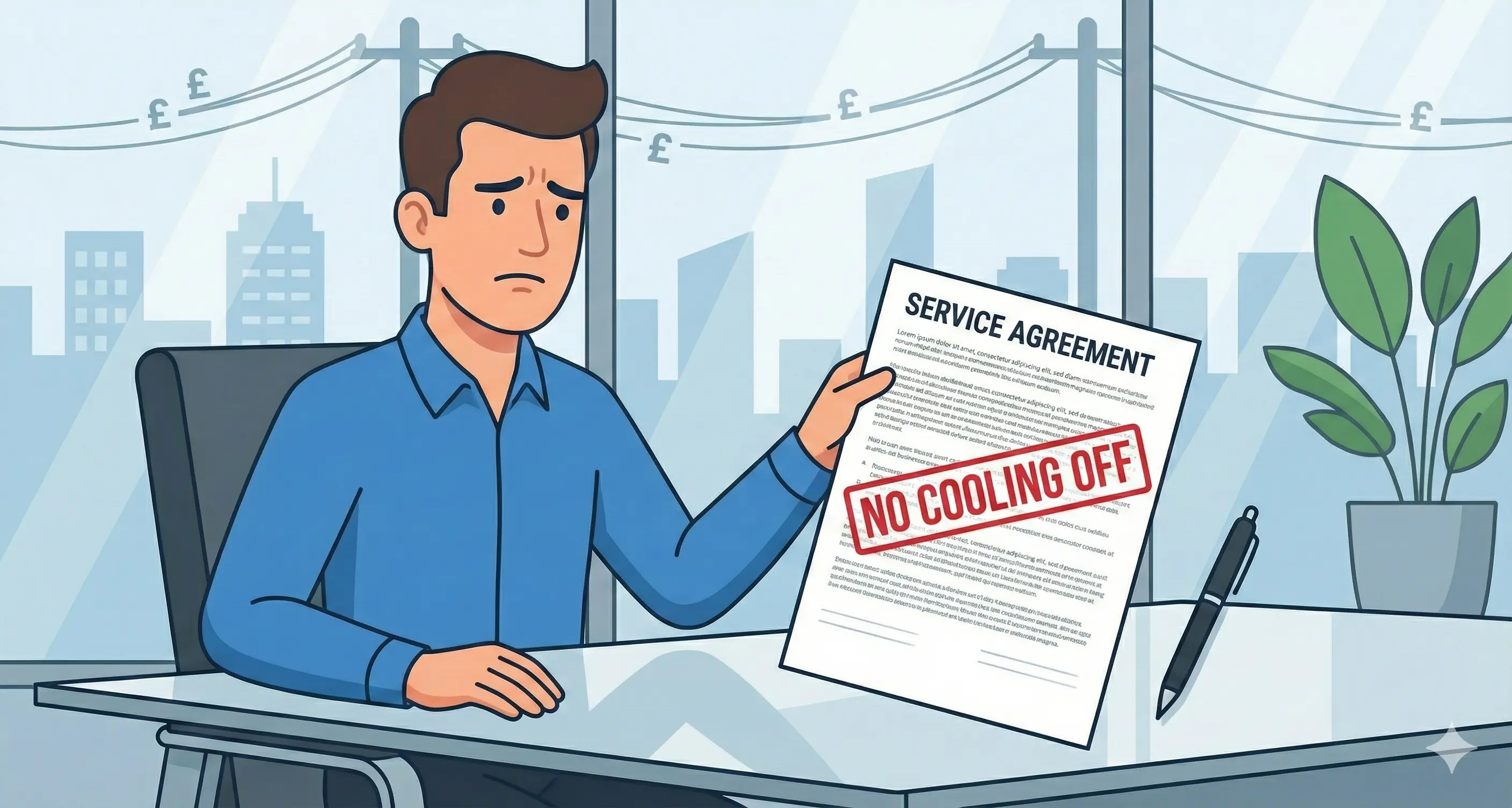
The concern: when you switch via any Bionic-powered site, you may sign a Level 2 Letter of Authority allowing Bionic to renew your contract automatically - and even sign new contracts on your behalf. Bionic claims they send opt-out notifications, but many businesses report being locked into new deals without seeing these communications.
According to Business Energy Claims (opens in new tab), approximately two-thirds of their mis-selling enquiries in early 2024 involved Bionic.
This risk applies regardless of which comparison site you originally used. The clause is in Bionic’s terms, not the comparison site’s branding.
The Five Sites: Same Service, Different Packaging
Let’s examine each comparison site and how their business energy service actually works.
Uswitch for Business
The Brand: Uswitch launched in 2000 and is now part of the RVU group (which also owns Confused.com). It’s one of the UK’s best-known comparison brands, particularly for domestic energy and broadband.
The Reality: Uswitch’s business energy service is powered by Bionic. Their website collects your details, then Bionic’s team calls to present quotes.
The Reviews: Uswitch’s main Trustpilot profile shows 4.7/5 from 33,000+ reviews - but these mostly reflect domestic services. The specific “Uswitch for Business” Trustpilot page tells a different story: 2.1/5 from 14 reviews, with 86% being 1-star.
Customer complaints include:
- “Nasty pushy cold calling hard sell… handed over to a subsidiary called Bionic - nothing like what you expect from Uswitch”
- “Can’t get quote online… they clearly just want to harvest data”
- “Took ages for the calls to stop”
One reviewer discovered their Uswitch quote was 40% higher than what the supplier offered directly - presumably due to the embedded broker commission.
MoneySuperMarket Business Energy
The Brand: MoneySuperMarket is a FTSE-listed comparison giant, well-known for insurance and finance products. They’ve operated since 1993 and have strong consumer trust.
The Reality: MoneySuperMarket explicitly states they’ve “teamed up with Bionic” for business energy. Their website uses smart data to retrieve your meter details, then Bionic’s team contacts you.
The Reviews: Bionic’s overall Trustpilot (4.5/5 from 18,000+ reviews) is often cited, but this masks concerning patterns. Around 12% are 1-star reviews - over 2,000 unhappy customers.
A recent review (January 2026) states: “They sneakily signed me up to a renewal at the end of the first contract… to get the commission without asking me to confirm. When I phoned to question it, the response was ‘you’re tied in for 4 years and can’t get out of it.’”
Compare the Market Business Energy
The Brand: Compare the Market is famous for its meerkat advertising and has built strong consumer recognition. It’s part of the BGL group.
The Reality: Compare the Market’s business energy page routes to Bionic. They describe Bionic as a “trusted partner” whose experts find the right plan for customers.
The Reviews: Reviews are indistinguishable from other Bionic-powered services, because they’re all served by the same call centre and processes.
Common themes include:
- Positive: Friendly staff, quick process when it works well
- Negative: Auto-renewal surprises, pressure to decide quickly, hidden commission only visible at contract stage
Confused.com Business Energy
The Brand: Confused.com launched in 2002 as the UK’s first comparison site. It’s now part of RVU (same group as Uswitch) and is based in Cardiff.
The Reality: Confused.com’s business energy is provided by Bionic Services Limited - stated explicitly in their website footer. Same service, same team, same concerns.
The Reviews: Confused.com’s overall Trustpilot (4.3/5 from 9,800 reviews) primarily reflects insurance products. Business energy-specific feedback mirrors the Bionic patterns seen elsewhere.
GoCompare Business Energy
The Brand: GoCompare launched in 2006 and is famous for its Gio Compario advertising character. Now owned by Future plc (since 2021), it’s based in Cardiff and primarily known for insurance comparisons.
The Reality: GoCompare’s business energy service is powered by Bionic. While GoCompare claims to show quotes from 30+ suppliers, the backend - quote generation, sales support, contract handling - is all Bionic. GoCompare acts as an introducer and receives a share of Bionic’s commission.
The Reviews: GoCompare’s main Trustpilot shows 4.7/5 from 155,000+ reviews - but that’s overwhelmingly insurance. The dedicated GoCompare Energy profile for business energy tells a different story: 1.8/5 from 14 reviews - even worse than Uswitch Business.
Customer complaints include:
- Being told rates were fixed when they weren’t
- Ending up on more expensive tariffs than before switching
- Poor complaint handling when things go wrong
- One reviewer described the service as absolute garbage, avoid like the plague
The Transparency Issue: GoCompare explicitly states it would not be able to display commission per tariff. By default, it only shows tariffs where it earns commission, with an often-hidden All tariffs option for the rest.
The Comparison Table: Five Brands, One Service
| Factor | Uswitch | MoneySuperMarket | Compare the Market | Confused.com | GoCompare | Meet George |
|---|---|---|---|---|---|---|
| Powered by | Bionic | Bionic | Bionic | Bionic | Bionic | Independent |
| Instant online quotes | No | No | No | No | No | Yes |
| Phone call required | Yes | Yes | Yes | Yes | Sometimes | No |
| Commission visible upfront | No | No | No | No | No | Yes (1p/kWh) |
| Auto-renewal clause | Yes | Yes | Yes | Yes | Yes | Never |
| Self-service switching | No | No | No | No | Partial | Yes |
| AI contract analysis | No | No | No | No | No | Yes |
| Business energy Trustpilot | 2.1/5 | N/A | N/A | N/A | 1.8/5 | Building |
The pattern is stark: all five comparison sites offer functionally identical services under different branding.
Why This Monopoly Developed
The question naturally arises: why do all major comparison sites use the same broker?
Why Comparison Sites Can’t Handle Business Energy Themselves
Business energy is fundamentally incompatible with the comparison site model. Here’s why:
Credit risk changes everything. Unlike domestic customers (who can’t be rejected), every business must pass a credit check before suppliers will quote. A restaurant with three CCJs gets different rates than a solicitor’s firm with pristine credit. Some suppliers won’t quote at all for high-risk businesses. This means comparison sites can’t show “available deals” without running credit checks first - which requires far more integration than their platforms were built for.
Sector complexity is immense. A bakery using 50,000 kWh faces completely different contract considerations than a manufacturing unit using the same amount. Operating hours, peak demand patterns, half-hourly metering thresholds, Climate Change Levy exemptions - all affect pricing and contract suitability. A simple “compare by postcode” approach doesn’t work.
Cost to serve is prohibitive. Domestic switches are largely automated. Business switches require human intervention - verifying meter details, handling objections, managing rollovers, navigating supplier credit teams. The cost per acquisition is 10-20x higher than domestic, with lower conversion rates.
Contract complexity requires expertise. Business energy contracts contain clauses that can cost thousands if you don’t understand them: volume tolerances, deemed rates, pass-through charges, termination windows. Comparison sites aren’t equipped to explain these to customers - they’d need either expensive human advisors or sophisticated AI systems.
The Economics of Outsourcing
Faced with these challenges, comparison sites had a choice: invest heavily in business energy infrastructure, or outsource to someone who already had it.
Building genuine business energy comparison capability requires:
- Supplier relationships - Negotiating with 20+ suppliers
- Pricing APIs - Real-time rate feeds with credit-adjusted pricing
- Compliance infrastructure - Meeting TPI regulations
- Sales teams - Trained advisors who understand business contracts
- Switching capabilities - Managing objections, rollovers, and supplier disputes
Comparison sites built their businesses on domestic products (insurance, home energy, broadband) where online-only comparison works. The infrastructure investment required for business energy simply didn’t make sense.
They chose partnership instead.
Bionic’s Position
Bionic (formerly MakeItCheaper) positioned itself as a white-label solution. Rather than competing with comparison sites, they offered to power them.
The scale of their operation reveals the traditional broker cost structure: Bionic employs approximately 300 salespeople at an estimated £22.5 million annual cost (300 staff × £75,000 fully loaded). This workforce handles 22-minute phone calls, screen-share sessions, manual supplier coordination, and human-driven renewals for their 200,000+ customer base. This cost structure is why traditional brokers must charge 2-4p/kWh in commission - they need the margin to cover their labour costs.
This was commercially brilliant. Bionic gained access to massive traffic from trusted brands without paying for customer acquisition. The comparison sites could offer business energy without building infrastructure.
The losers in this arrangement? SME customers, who believe they’re comparing different services when they’re actually funnelling into one broker.
The Network Effect
Once Bionic established partnerships with major sites, it became harder for alternatives to compete. New entrants couldn’t match Bionic’s scale, supplier panel, or brand partnerships.
The result is effective market consolidation hidden behind the facade of competition.
Bionic isn’t alone in this strategy. Love Energy Savings operates a similar white-label network, powering sites like BusinessEnergy.com and BritishBusinessEnergy.co.uk that appear independent but route to the same sales operation. See: Alternative to Love Energy Savings
The Problem with the “Front Door” Illusion

When SME owners try to “shop around,” they often:
- Visit Uswitch, enter details, schedule a call
- Try MoneySuperMarket, enter details, receive another call
- Check Compare the Market, same process, same outcome
- Maybe try Confused.com for good measure
The result? Multiple calls from the same Bionic sales centre, possibly creating confusion and definitely wasting time.
One forum user described this experience: “I tried three different sites and got essentially the same quotes from the same person calling from the same number.”
This isn’t comparison shopping. It’s the illusion of comparison shopping.
What “Independence” Actually Means
Comparison sites often claim to be “independent” because they aren’t owned by energy suppliers. This is technically true but fundamentally misleading.
Being independent of suppliers doesn’t mean being independent in how they operate. When all major sites outsource to the same broker:
- Quote selection is the same
- Commission structures are the same
- Customer experience is the same
- Renewal practices are the same
The “independence” claim is about ownership structure, not service delivery.
The Regulatory Response
The UK’s business energy broker market has attracted increasing regulatory attention, partly due to practices associated with Bionic and similar firms.
Ofgem’s October 2024 Rules
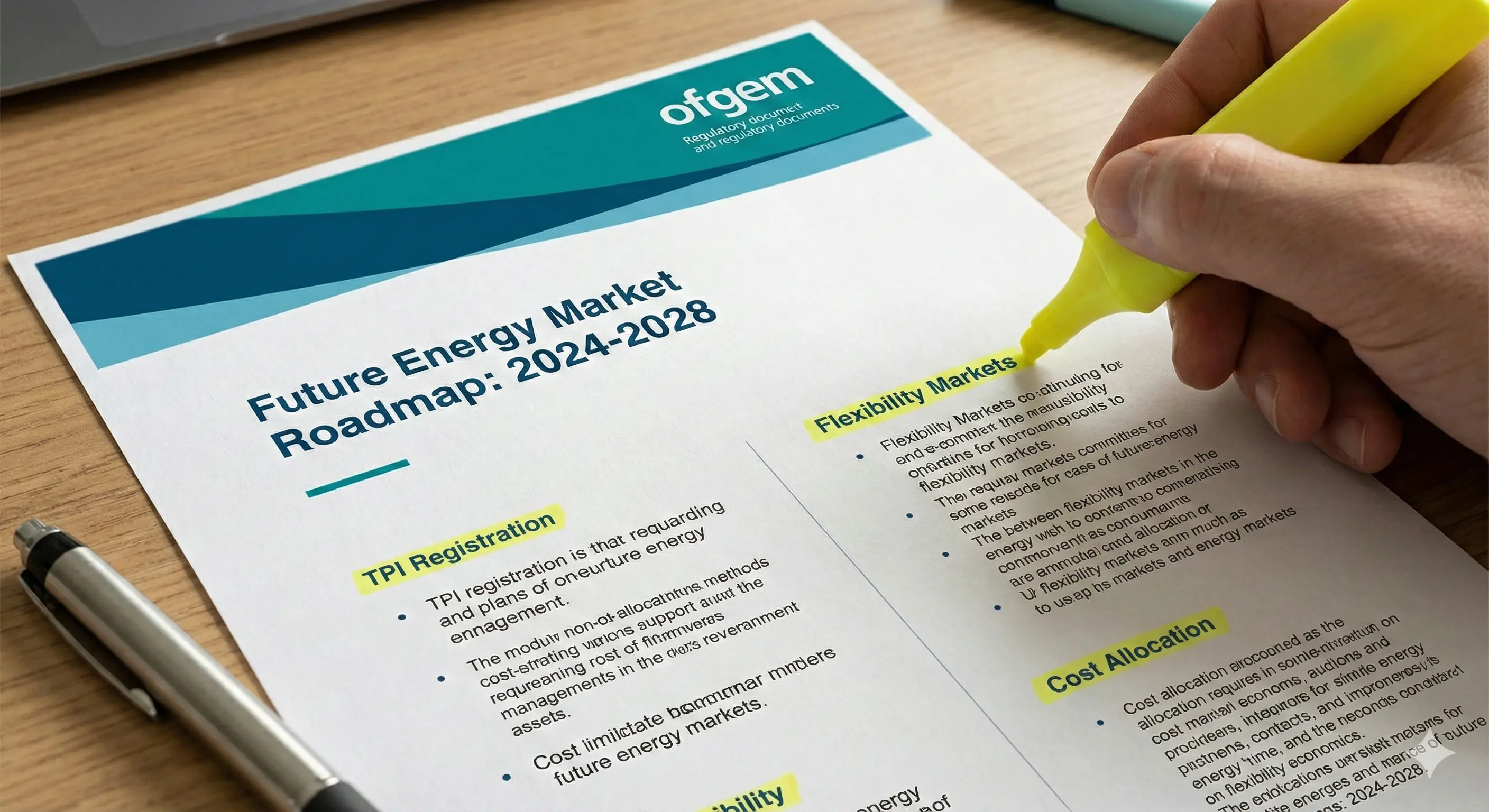
Ofgem’s non-domestic market review (opens in new tab) introduced mandatory commission disclosure. From October 2024, all TPI commissions must be clearly stated in energy contracts.
This means that whether you switch via Uswitch, MoneySuperMarket, or any other Bionic-powered site, your contract must now show the commission amount.
However, this disclosure happens at contract stage - not when you’re comparing quotes. You still don’t see the commission breakdown when deciding which quote to accept.
Upcoming Broker Regulation
The UK government has confirmed plans to directly regulate Third Party Intermediaries (opens in new tab). Under the new regime, Ofgem will gain powers to:
- Require broker registration
- Set conduct standards
- Investigate complaints
- Remove bad actors from the market
This should improve standards across the industry, but it doesn’t address the fundamental structure where multiple brands feed into one broker.
Energy Ombudsman Access
Since December 2024, small businesses (under 50 employees or £6.5m turnover) can take complaints about brokers to the Energy Ombudsman (opens in new tab). Previously, this was limited to microbusinesses.
This provides a dispute resolution route if you’re unhappy with how Bionic (or any broker-powered site) has handled your switch or renewal.
The Alternative: Stepping Outside the Ecosystem
If all major UK comparison sites route to the same place, what are the alternatives for UK SMEs seeking genuinely different options?
Option 1: Go Direct to Suppliers
You can contact energy suppliers directly and request quotes. This bypasses broker commission entirely.
Pros:
- No broker uplift on your rate
- Direct relationship with supplier
- Full control over the process
Cons:
- Time-consuming (calling multiple suppliers individually)
- No single view of the market
- Requires energy market knowledge
- No contract analysis or guidance
This works for businesses with time and expertise, but isn’t practical for most SMEs.
Option 2: Use a Self-Service Platform
This is where Meet George fits in.
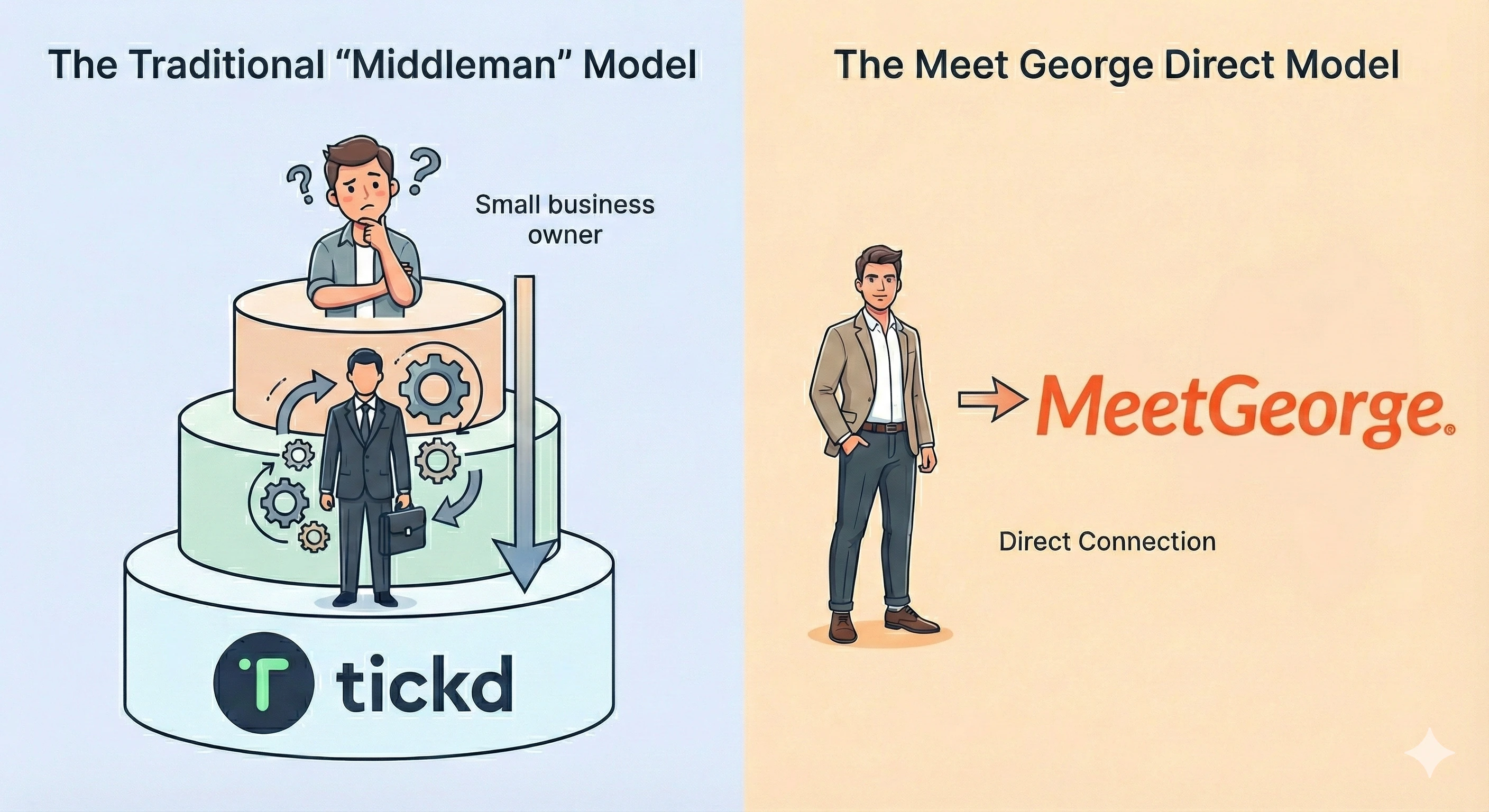
We built Meet George specifically because we saw the comparison site ecosystem for what it is: multiple front doors to the same room.
How Meet George Is Different:
| Factor | Bionic-Powered Sites | Meet George |
|---|---|---|
| Backend provider | Bionic | Independent platform |
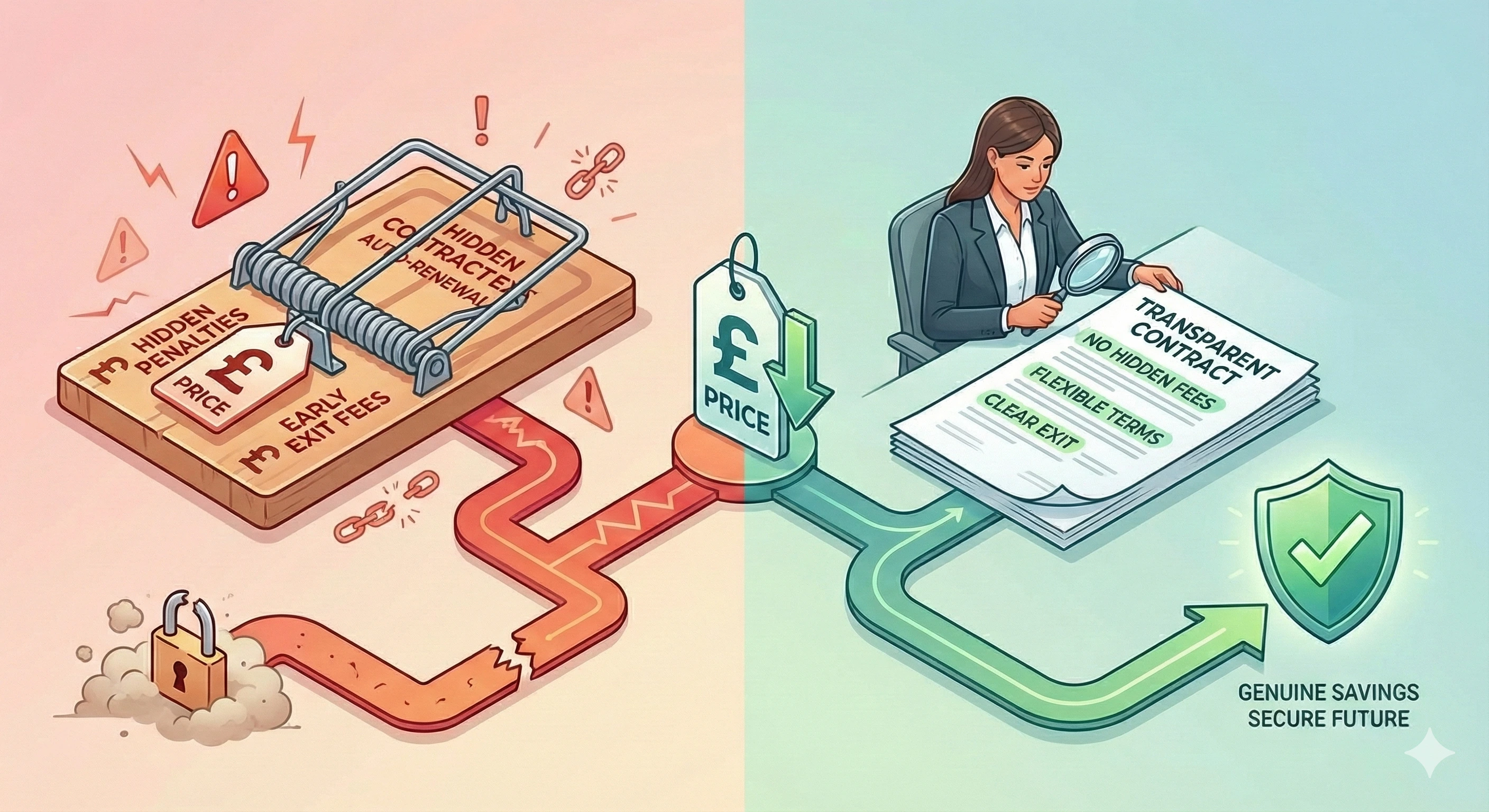
| Business model | Hidden commission in rates | Flat 1p/kWh shown separately |
| Quote process | Phone call required | Instant online quotes |
| Contract analysis | None | AI-powered clause-by-clause review |
| Renewals | ”Do It For You” auto-renewal | You control every decision |
| Sales pressure | Commission-incentivised agents | No sales team - AI guidance only |

Why AI Changes Everything
Here’s the critical insight: the complexity that makes business energy impossible for comparison sites to automate is exactly the kind of problem that agentic AI is able to solve.
What is agentic AI? Unlike traditional chatbots that simply respond to questions, agentic AI systems can reason through multi-step problems, use specialised tools, and take actions on your behalf. Think of it as the difference between asking someone for directions versus having a knowledgeable guide who walks with you, checks the map, calls ahead to confirm opening times, and adjusts the route when they spot roadworks.
In energy switching, this means an AI that doesn’t just answer “what’s a standing charge?” - but one that can analyse your actual bill, compare it against market rates, read contract clauses, flag risks specific to your business type, and guide you through the entire switching process step by step.
Those contract clauses that require expensive human advisors to explain? Agentic AI can read them, understand the context, and explain them in plain English - instantly, for every customer, at near-zero marginal cost.
Credit risk variations across different business types? An AI system can factor these into recommendations and explain why certain suppliers might not quote for certain businesses.
Sector-specific considerations - operating hours, peak demand patterns, metering requirements? A multi-agent AI system can hold this context, ask the right clarifying questions, and tailor advice accordingly.
The traditional broker model requires human sales teams because the work requires expertise and judgement. But AI systems have reached the point where they can provide that expertise and judgement at scale - without the commission incentives that distort human advice.
This is why Meet George exists. The same complexity that forced comparison sites to outsource to Bionic creates a massive opportunity for an AI-first platform that can handle that complexity directly.
Why We Can Charge Less
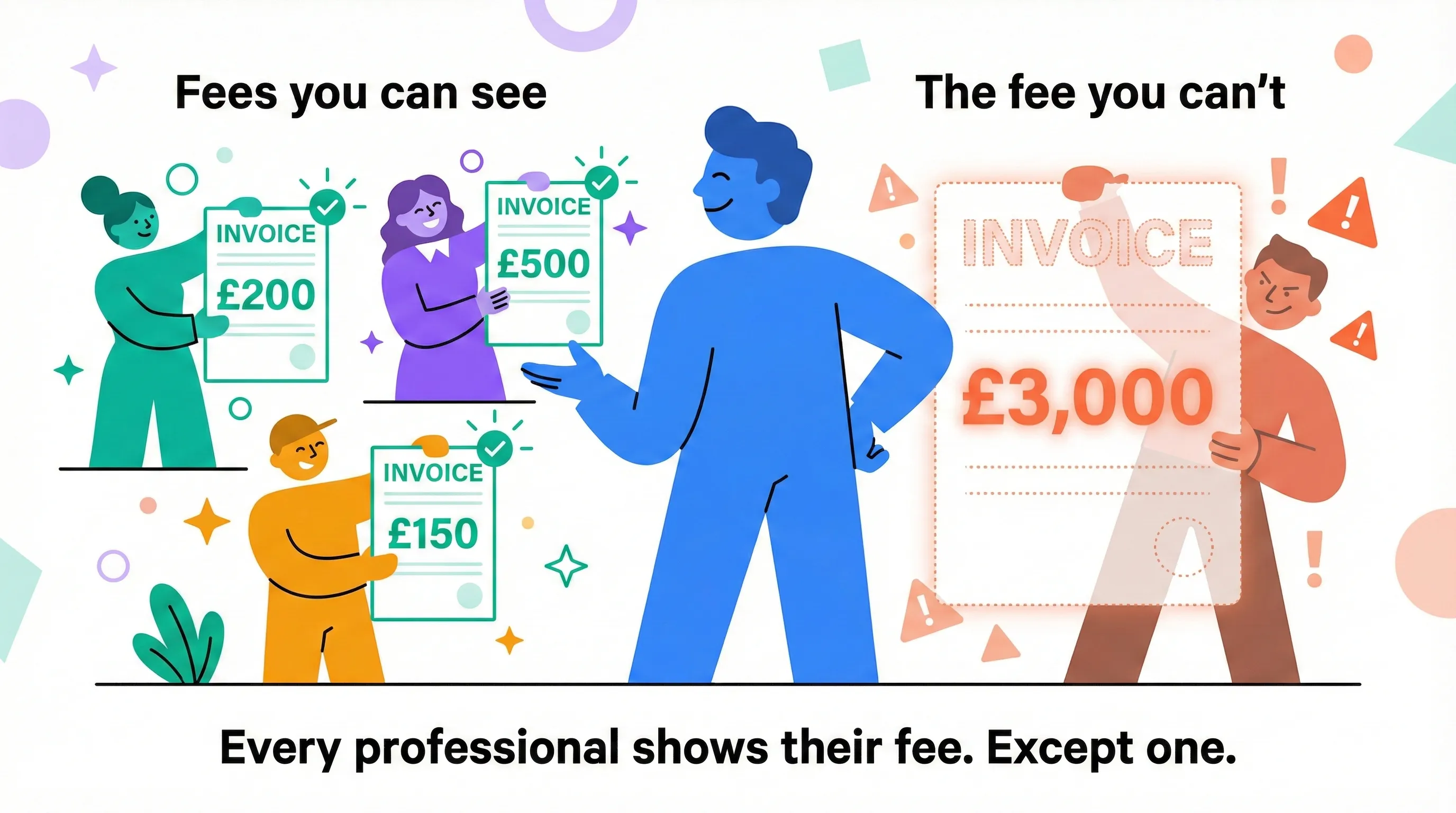
Bionic-powered sites typically embed 2-4p/kWh commission. Meet George charges 1p/kWh - shown separately from the supplier rate.
This isn’t loss-leader pricing. It’s possible because:
- No sales team - Our AI assistant George handles questions, not commission-hungry sales reps
- No white-label overhead - We don’t pay to power comparison sites
- Technology-first approach - AI contract analysis at a fraction of human cost
- Direct relationships - No middleman taking a cut
On a typical 25,000 kWh contract over 3 years, that’s £750 with us versus £1,500-£3,000 with a traditional broker - a difference of up to £2,250 just in commission.
Meet George: AI That Actually Helps
Traditional brokers employ salespeople who earn commission on every deal. Their incentive is to close sales, not necessarily to find the absolute best deal for you.
George - our AI assistant - has no commission incentive. His job is to:
- Read every contract clause and explain what it means
- Flag risks like unusual volume tolerances or hidden exit fees
- Answer your questions without sales pressure
- Compare deals objectively based on your actual usage patterns
Ask George “Is this standing charge normal?” or “What happens if my usage drops?” and get instant, informed answers - not a sales pitch.
When Comparison Sites Might Still Work for UK Businesses
In fairness, the Bionic-powered model isn’t without merit. Consider staying with comparison sites if:
You Want Human Guidance
Some business owners genuinely prefer speaking to a person who can explain options. The Bionic sales team, whatever their incentives, can answer questions about contract terms, meter types, and switching processes.
If you’re uncomfortable with technology or prefer phone-based service, this remains an option - just understand you’re getting the same service regardless of which site you start on.
You Have Complex Multi-Site Needs
Larger businesses with multiple meters, different contract end dates, or unusual metering arrangements may benefit from broker expertise. Bionic has handled complex portfolios and has experience with half-hourly metering and multi-site consolidation.
For these cases, the commission may be worth paying for the expertise - though you should still negotiate transparency and be wary of auto-renewal clauses.
You’re Comfortable with the Trade-Offs
If you understand that:
- Commission is embedded in rates
- Auto-renewal clauses may apply
- The same service underlies all major comparison sites
…and you’re okay with that, comparison sites remain a convenient option. Just don’t waste time trying multiple sites expecting different results.
Making an Informed Decision
The purpose of this guide isn’t to attack comparison sites - they’ve helped many UK businesses find competitive deals. It’s to expose the reality that “comparison shopping” across Uswitch, MoneySuperMarket, Compare the Market, and Confused.com is an illusion.
Questions to Ask Any Provider
Before switching via any service, ask:
-
“Who actually handles my switch?” - If the answer is Bionic, you’re getting the same service regardless of which brand you came through.
-
“What is the total commission on this quote?” - Get the specific amount, not just “it’s included in the rate.”
-
“Will you ever sign contracts on my behalf?” - Understand the auto-renewal terms before signing anything.
-
“Can I complete this entirely online?” - If phone calls are mandatory, factor that into your decision.
-
“What happens at renewal?” - Clarify whether you’ll be auto-renewed or contacted with options.
The Transparency Test
A simple test for any energy switching service: can you see exactly what commission is being charged before you agree to a quote?
- Bionic-powered sites: No - commission is revealed only in contract paperwork after you’ve decided
- Some independent brokers: Yes - published flat rates
- Meet George: Yes - 1p/kWh shown separately from supplier rate in all quotes
Transparency isn’t just about ethics - it helps you make informed decisions and compare true costs.
Looking for an Alternative? Here’s What UK Businesses Need to Know
If you’ve arrived here searching for an alternative to one of the major comparison sites, here’s the bottom line for each:
Alternative to Uswitch Business Energy
Uswitch’s business energy service routes to Bionic, with a separate Trustpilot rating of just 2.1/5. UK business owners report pushy sales calls and contact continuing even after abandoning forms. If you want instant online quotes without phone calls, Meet George offers a genuine alternative - transparent 1p/kWh pricing, AI-powered contract analysis, and no sales pressure.
Alternative to MoneySuperMarket Business Energy
MoneySuperMarket explicitly partners with Bionic for business energy. While the brand is trusted for home insurance and domestic energy, UK SMEs get the same Bionic experience as everywhere else - phone calls required, commission hidden in rates, potential auto-renewal clauses. For a truly different experience, look for platforms that show commission upfront and let you complete the switch online.
Alternative to Compare the Market Business Energy
Despite the memorable meerkats, Compare the Market’s business energy is powered by Bionic. UK businesses receive the same quotes, same sales process, and same “Do It For You” renewal risks as other Bionic-powered sites. The cute branding masks an identical underlying service. If you want genuine choice, you need to step outside the comparison site ecosystem entirely.
Alternative to Confused.com Business Energy
Confused.com’s business energy service is provided by Bionic Services Limited (stated in their footer). As part of the RVU group alongside Uswitch, it’s another front door to the same room. UK business owners seeking transparency and self-service switching won’t find it here - but alternatives like Meet George offer exactly that.
Alternative to GoCompare Business Energy
GoCompare’s business energy has the worst dedicated Trustpilot rating of any major comparison site - just 1.8/5. UK business owners report being misled about fixed rates and ending up on more expensive tariffs than before. The service is powered by Bionic, with GoCompare acting merely as an introducer taking a share of commission. If you want to avoid the same Bionic experience repackaged under another brand, consider a platform that’s genuinely independent.
Conclusion: Beyond the Illusion
The UK’s business energy comparison market presents an illusion of choice. Five major brands - Uswitch, MoneySuperMarket, Compare the Market, Confused.com, and GoCompare - all route to the same broker, offering the same quotes, the same sales process, and the same potential pitfalls.
This isn’t necessarily deceptive (the partnerships are disclosed if you dig into the fine print), but it means that “shopping around” across comparison sites is largely pointless. You’re just entering different doors to the same room.
For SMEs seeking genuinely different options, the answer lies outside the comparison site ecosystem:
- Go direct to suppliers (time-consuming but commission-free)
- Use transparent independent brokers with published fees
- Try self-service platforms like Meet George with AI-powered guidance
The energy market is changing. Ofgem regulation is tightening. Commission disclosure is now mandatory. And new alternatives are emerging that prioritise transparency over hidden margins.
The question for your business: do you want to keep walking through different front doors to the same room, or try a genuinely different path?
Ready to see the difference? Learn how Meet George’s transparent pricing works or explore our complete guide to switching business energy.
Looking for context on broker regulation? Read our analysis of Ofgem’s 2026 roadmap for broker oversight or understand how hidden commissions work.
Ready to switch with full transparency? Join the Meet George platform waitlist - no hidden margins, no sales calls, no surprises.