

guides 17 min
Business Energy Renewal Wave: Crisis Contracts Expiring
Crisis-era business energy contracts signed at 50-60p/kWh are expiring now. Rates have dropped significantly - here's how to avoid deemed rates and renew smartly.
Read
The Meet George Blog
No sales pitch. No hidden agenda. Just clear, practical guides to help UK businesses cut energy costs and avoid the traps brokers won't tell you about.

Every business energy comparison site routes to a phone call. We're building AI that actually completes the switch - no salespeople, no undisclosed commissions.

The 5-step process to switch business energy for pubs, salons, gyms, cafes, and all SMEs. Move from deemed rates to contracted rates in 10 minutes.

50 articles total
Crisis-era business energy contracts signed at 50-60p/kWh are expiring now. Rates have dropped significantly - here's how to avoid deemed rates and renew smartly.
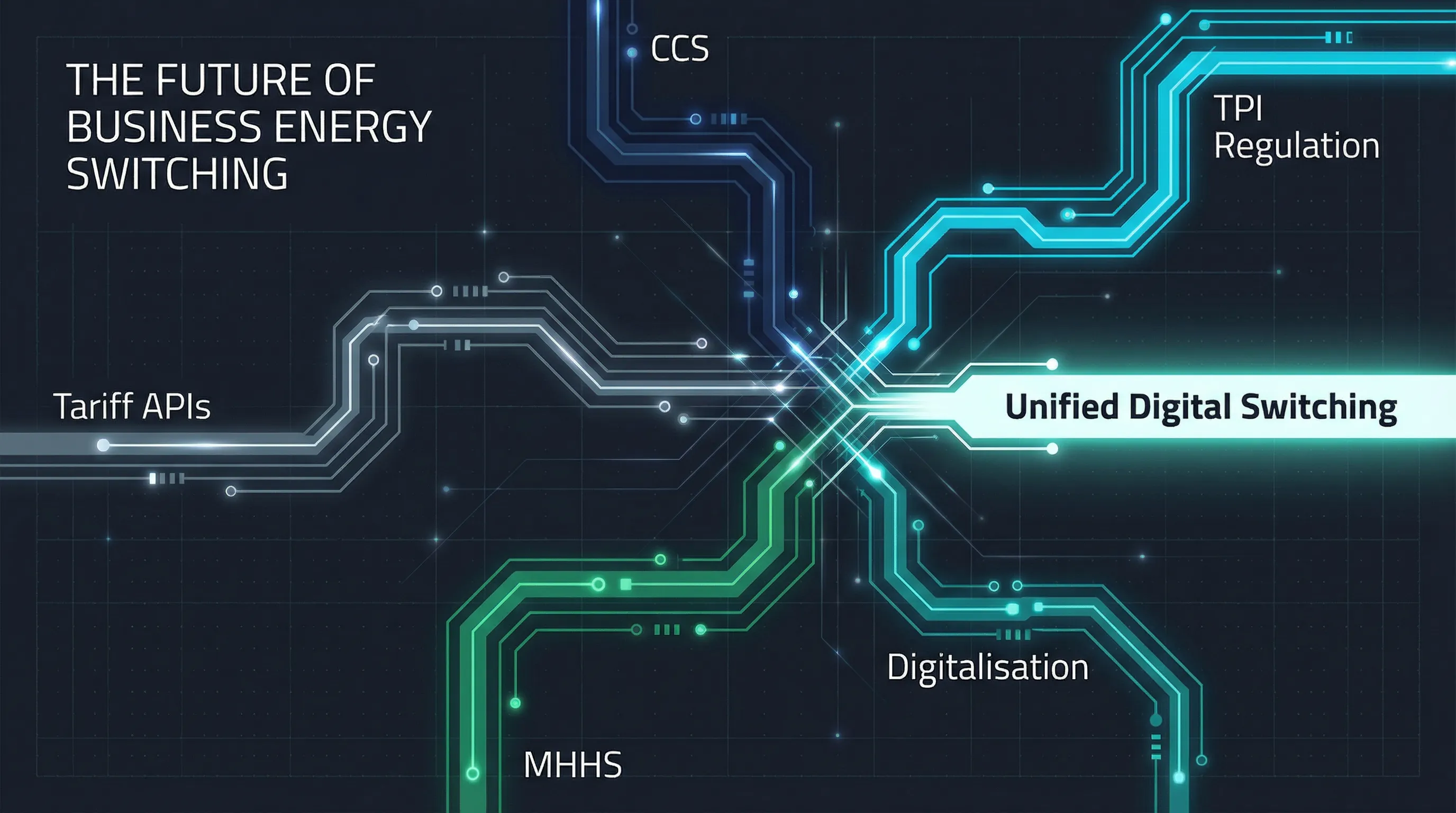
Five government programmes are rebuilding how UK businesses switch energy. Here's what's coming, why it matters, and what it means for SMEs.
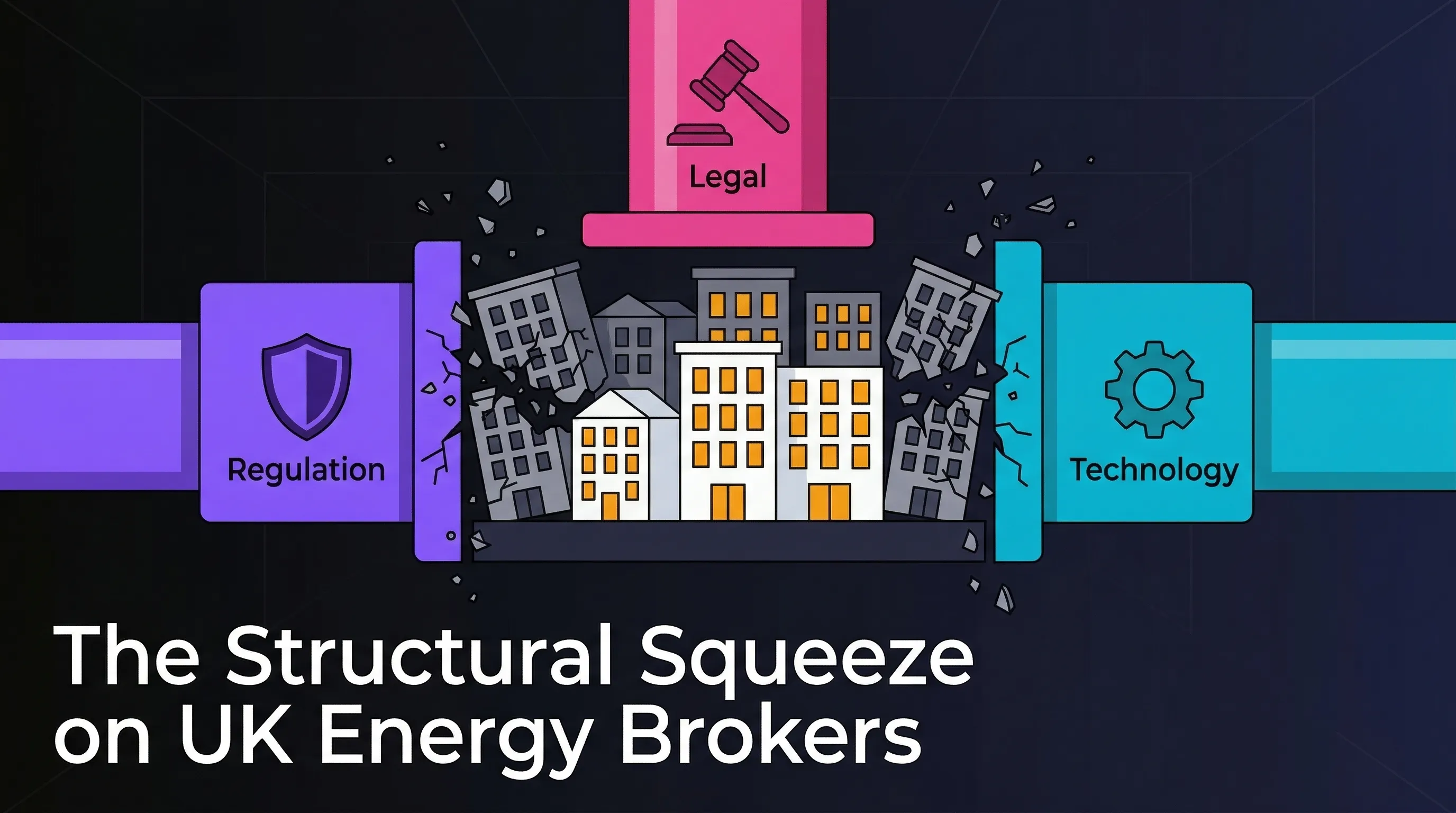
Three forces are squeezing UK energy brokers simultaneously. Here's the evidence for 20-40% market contraction by 2028 - and what it means for your business.
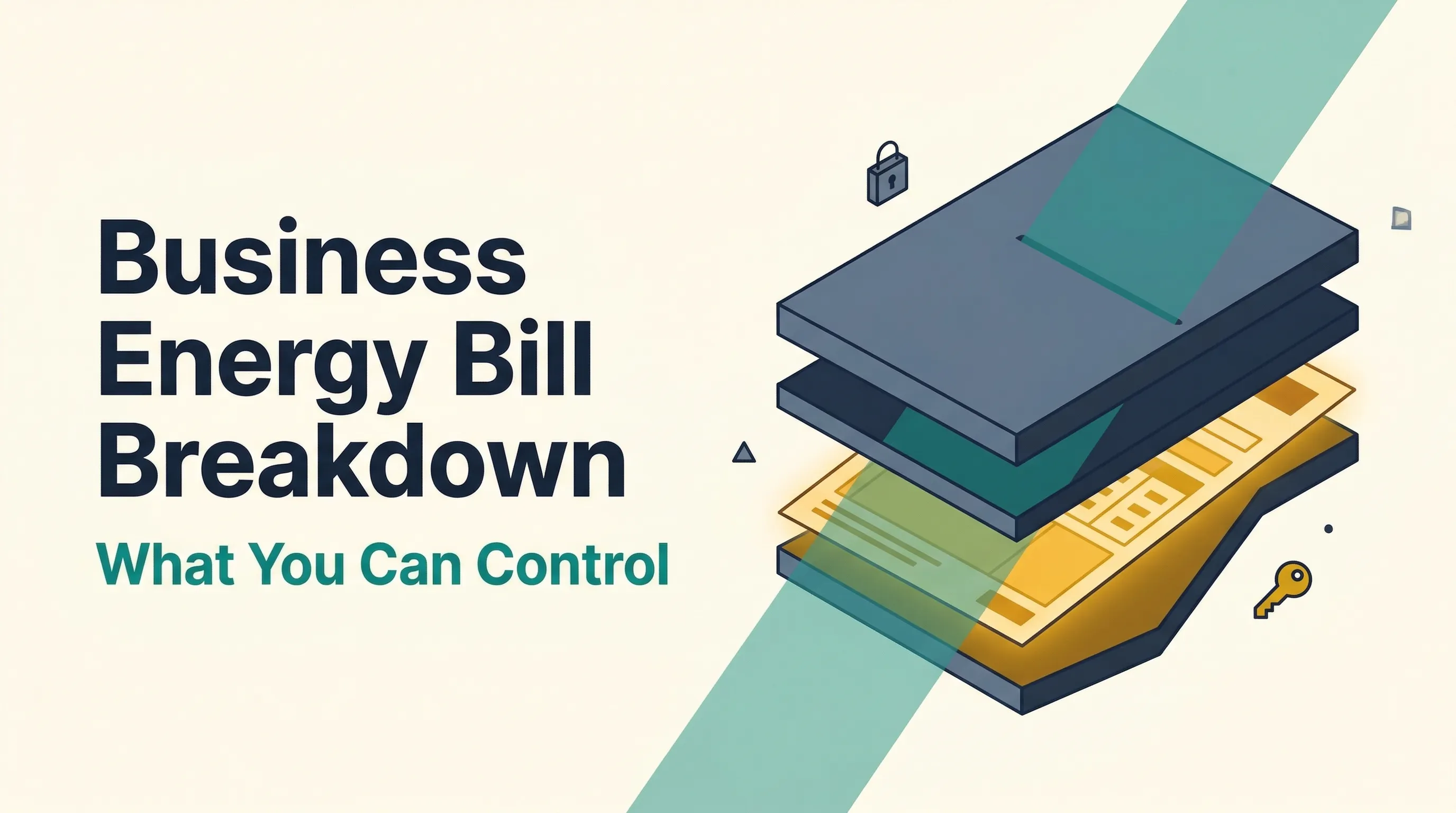
62% of your business electricity bill is costs you can't change. Here's what makes up the other 38% - and why that's where switching and broker fees matter most.
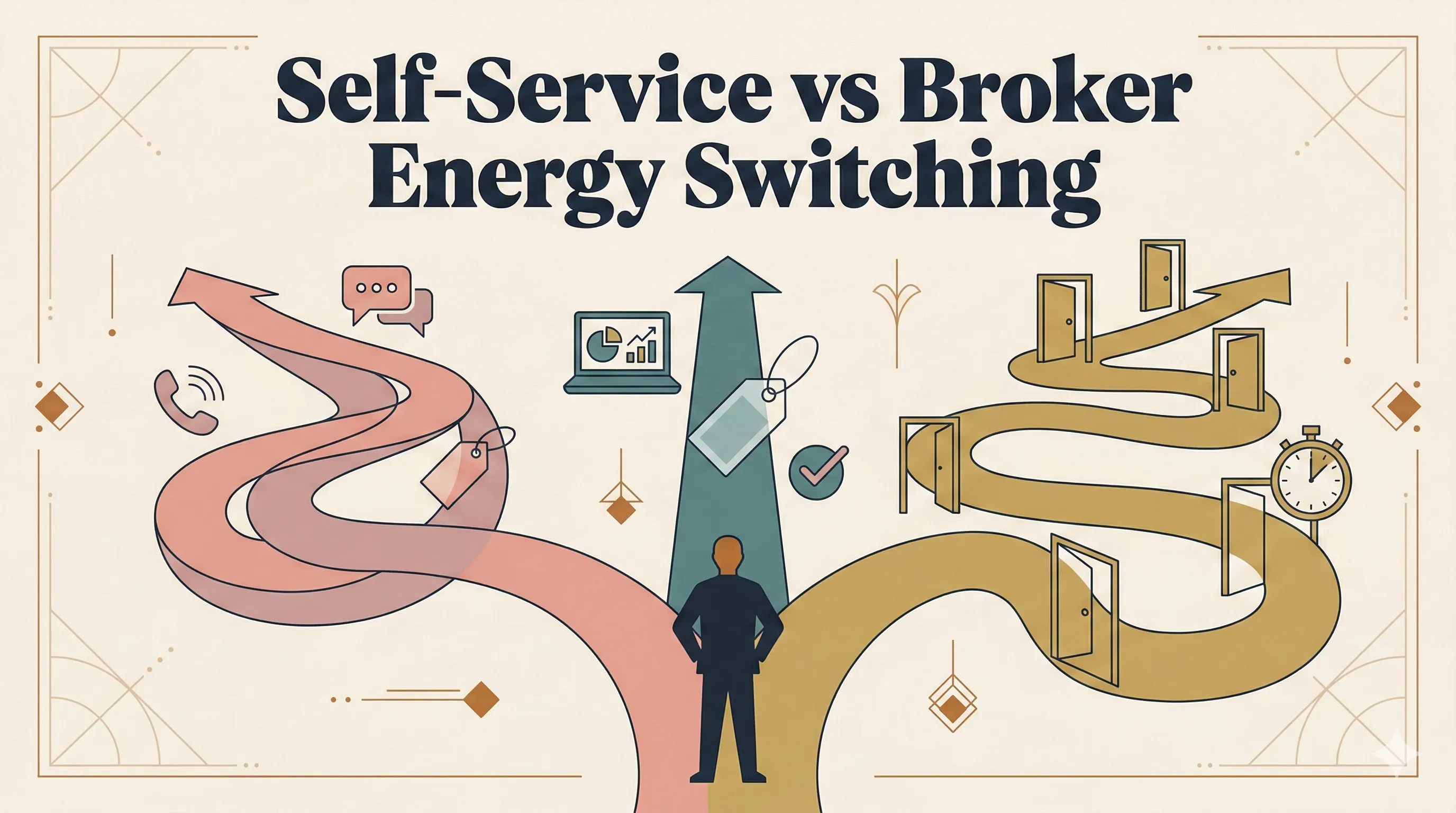
An honest comparison of broker-assisted and self-service business energy switching. When each model works, what they cost, and how to decide which suits your business.
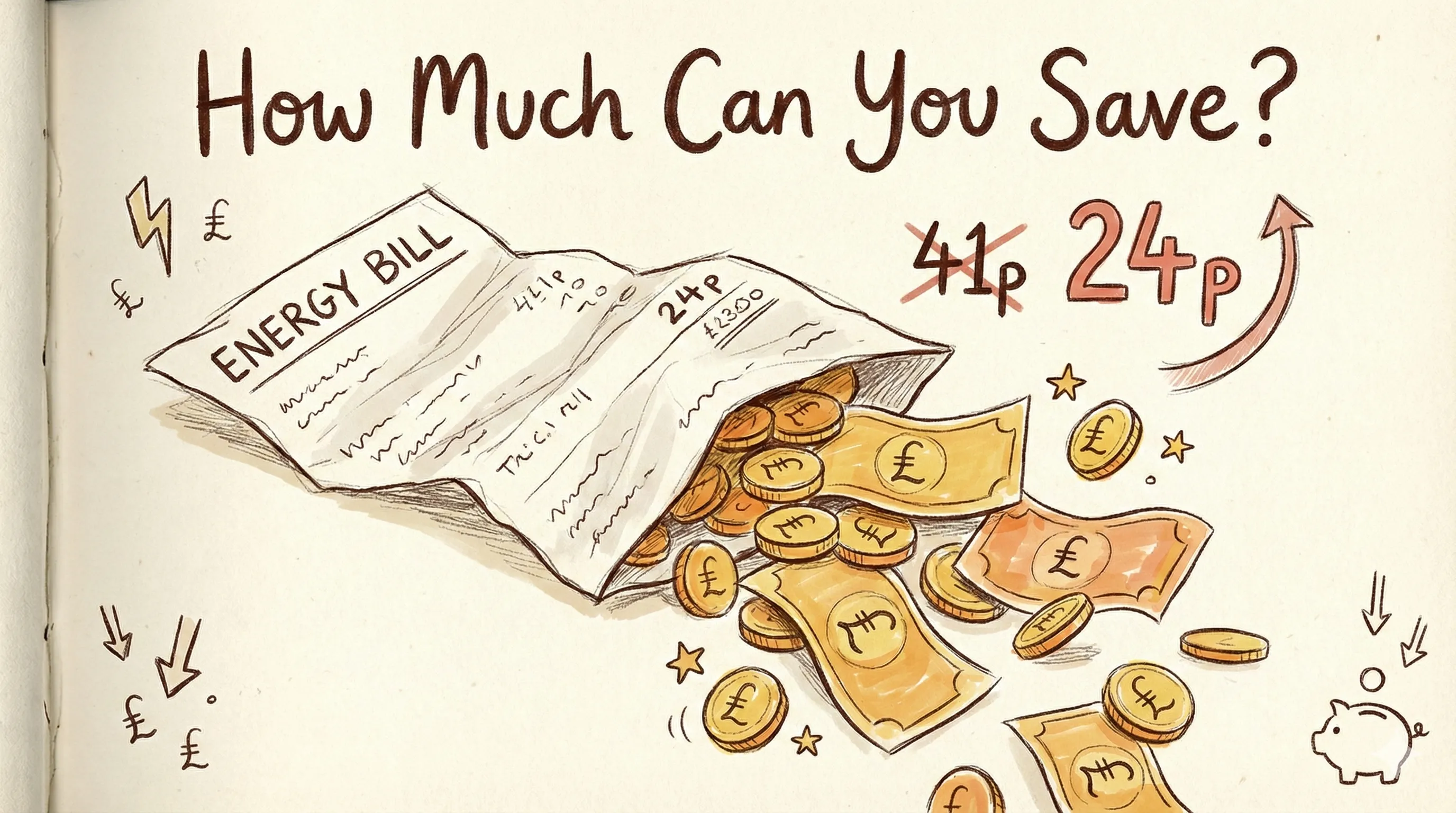
Real savings data for UK SMEs switching electricity and gas. DESNZ pricing by size band, deemed rate penalties, and what a 20,000 kWh business actually saves.
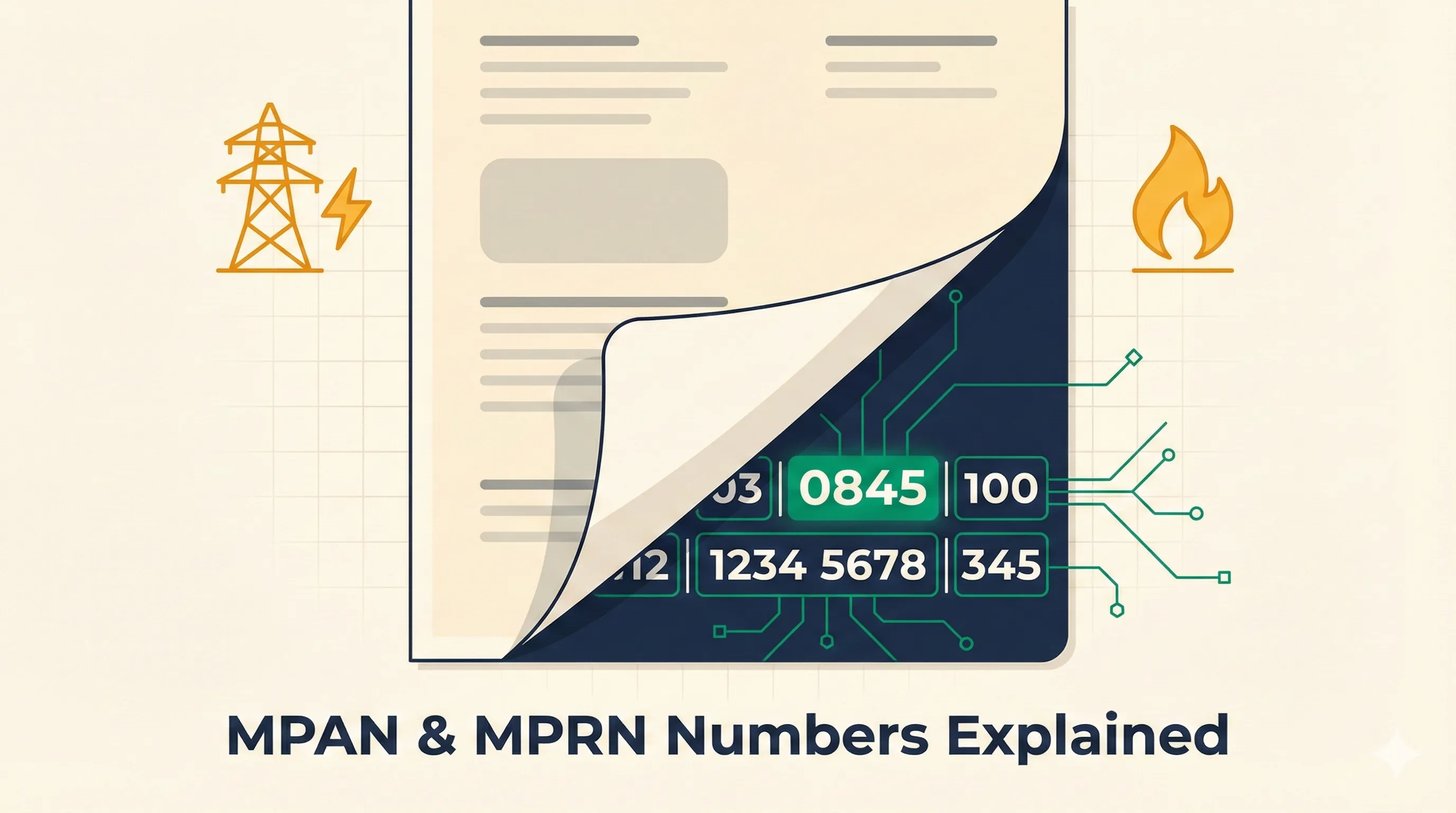
Find your MPAN and MPRN numbers, understand what they mean, and learn why your MPAN top line is changing from 8 to 9 digits under MHHS.

MHHS is migrating every UK business meter to half-hourly settlement. Here are the 5 extra charges SMEs need to know about - and how to manage them.
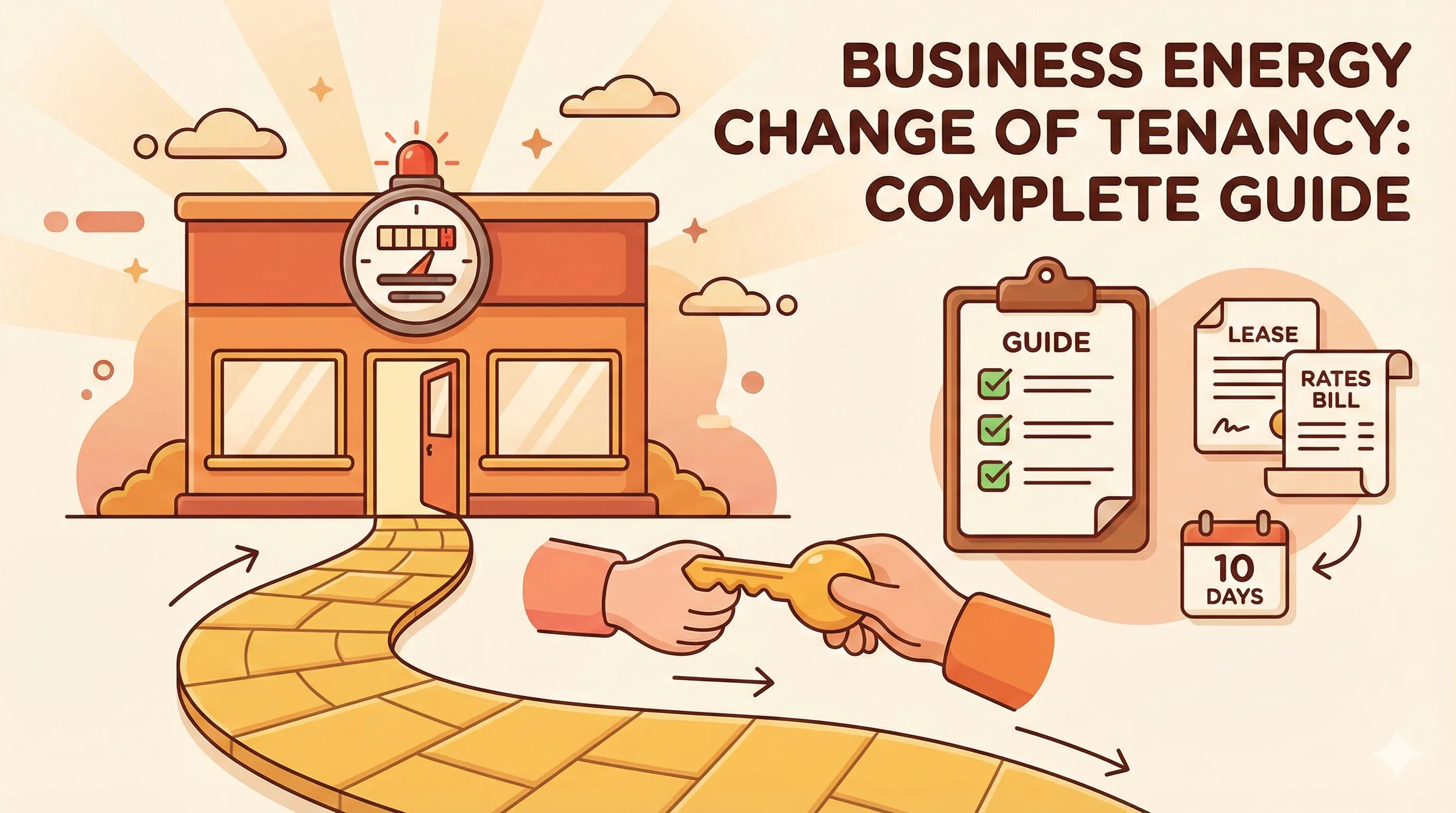
Moving business premises? Your step-by-step guide to the CoT process, what documents you need, your rights under REC Schedule 33, and how to avoid the deemed rates trap.
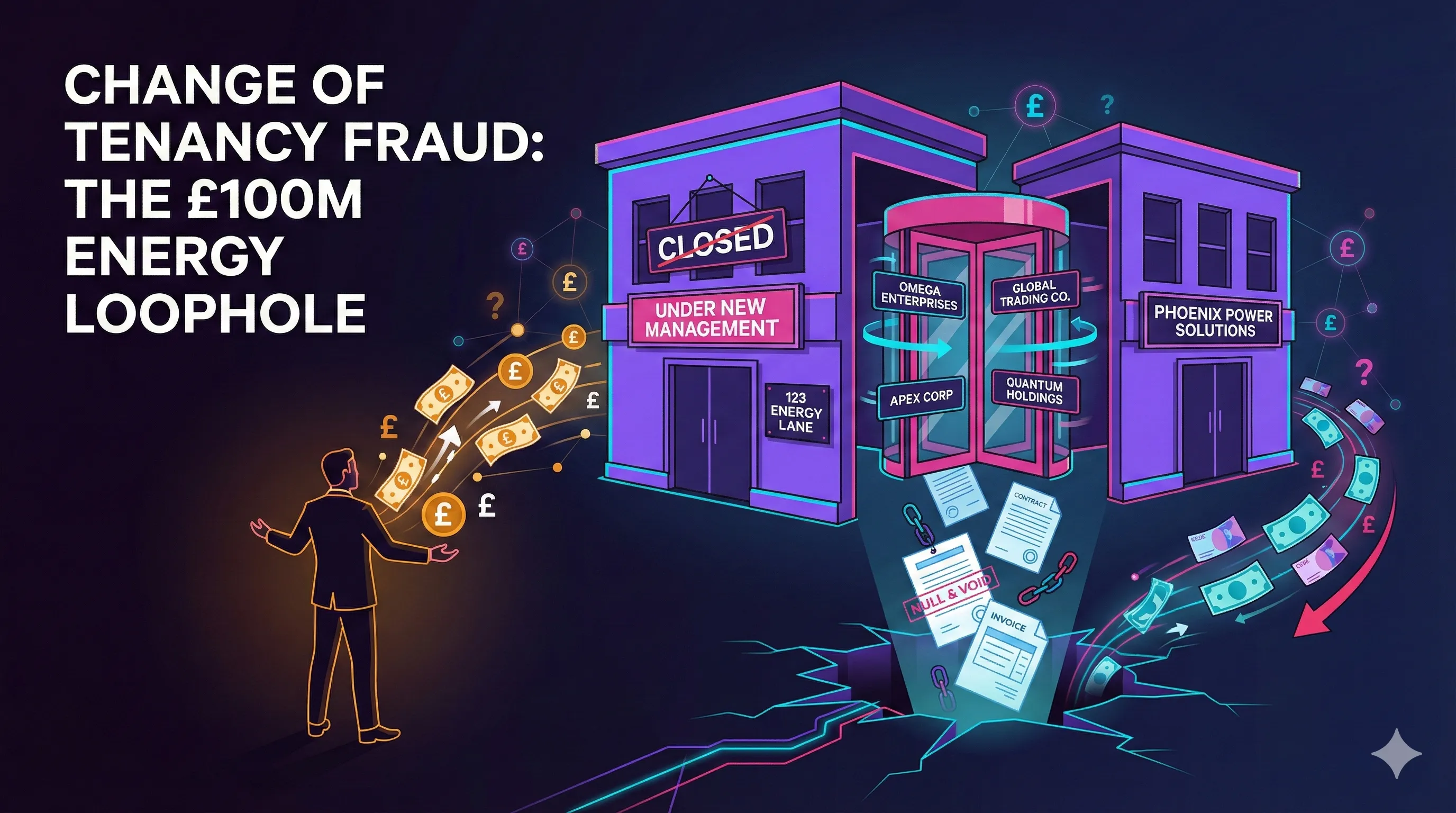
Experian found 1,500 directors linked to £100m+ in energy debt via fake change of tenancy claims. How the CoT process is being exploited - and who pays.
We analysed T&Cs from 9 UK business energy suppliers. These 7 contract clauses cost SMEs thousands - and most owners never read them.
UK broker commissions range from 0.1p/kWh (large industrial) to 5p+ (SMEs). We explain what rates mean, why size matters, and what you should actually pay.
DESNZ data shows small businesses pay double for electricity. We break down the three overlooked factors - and 5 steps to cut your costs.
From a Liverpool restaurant paying 70.64p/kWh to a care home charged £68,126 in broker fees. The documented cases that exposed the UK's broker mis-selling scandal.
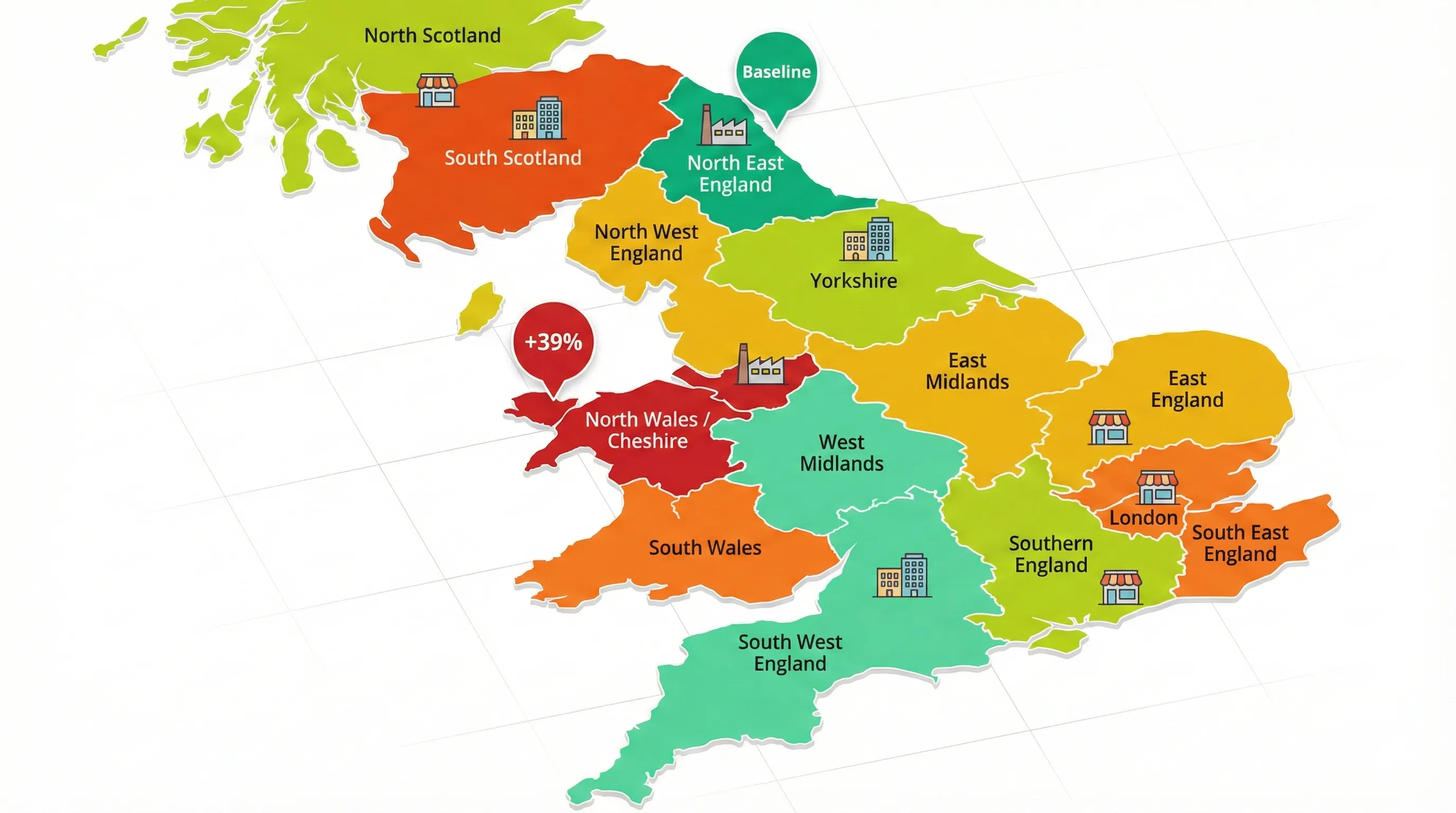
Business energy prices vary up to 39% across UK regions. We break down the POWWR data, explain why, and show what you can do about it.

The definitive annual report on UK energy brokers. Data on market structure, complaints, commissions, transparency, and regulation from official sources.
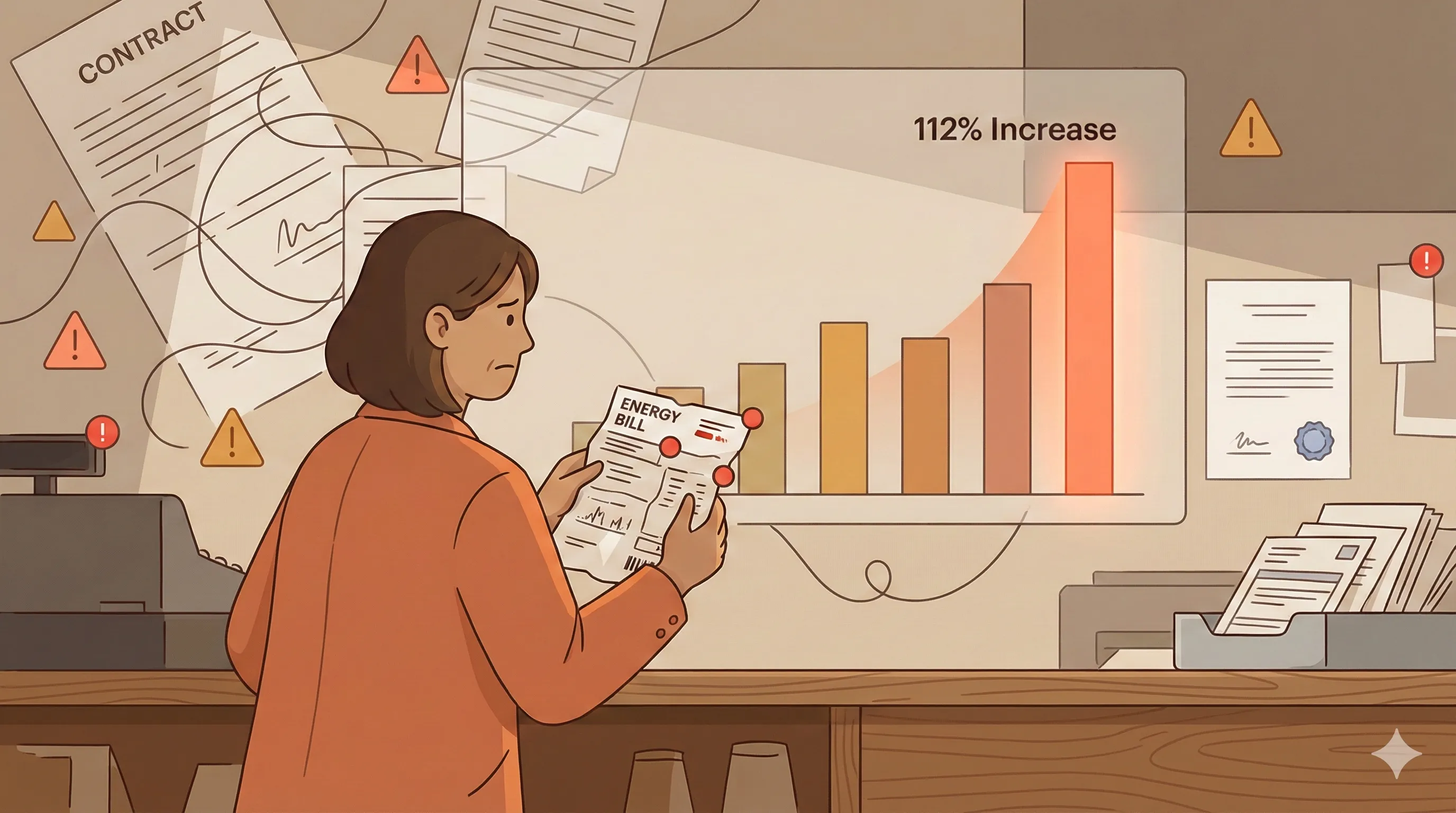
Official Ombudsman data reveals 1,568 energy broker complaints in 2024, a 112% increase. 58% upheld, 88% sales-related. What UK businesses should know.
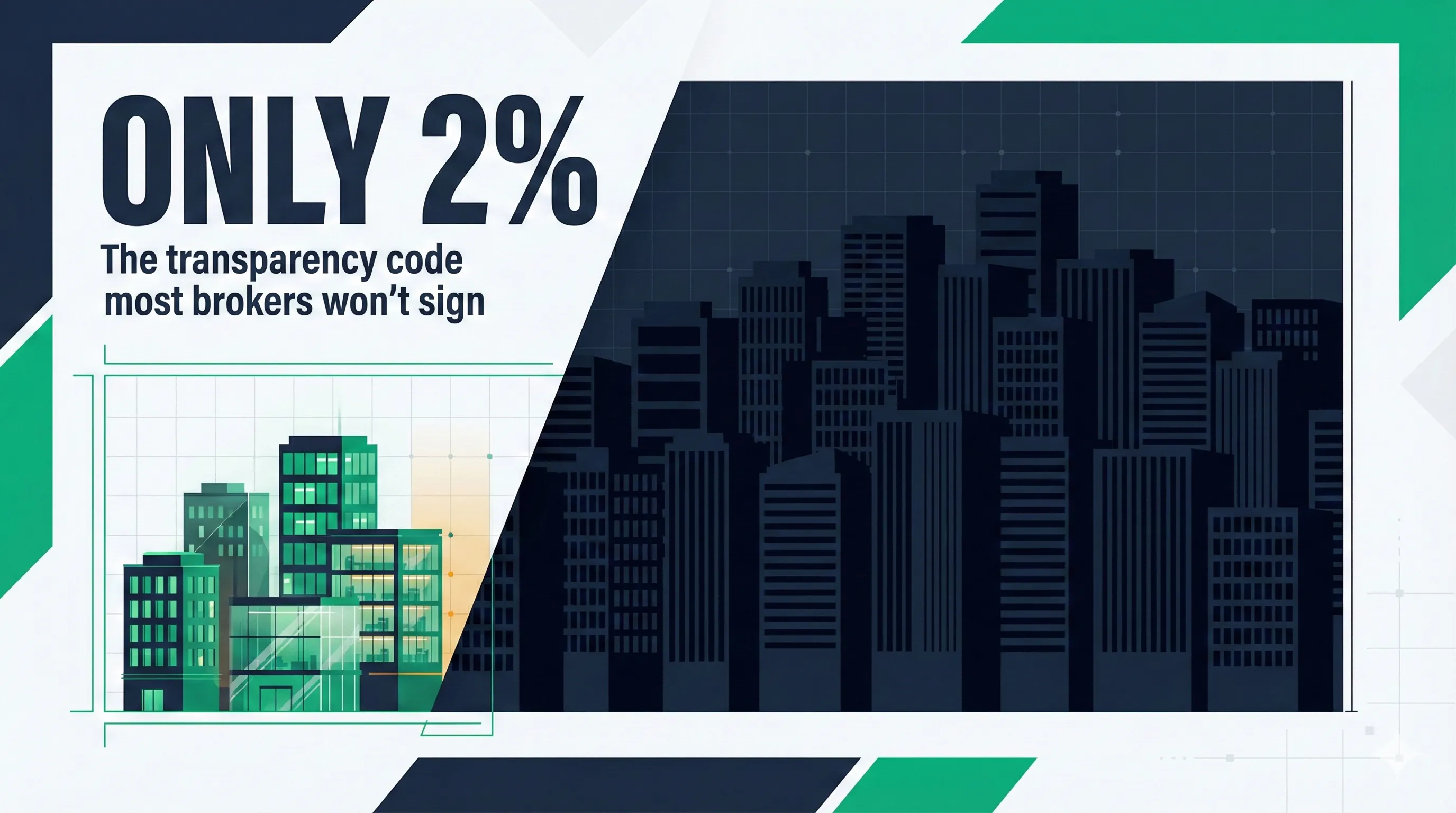
The TPI Code of Practice sets transparency standards for energy brokers. We analysed the signatory data to reveal why 98% of the industry hasn't signed.
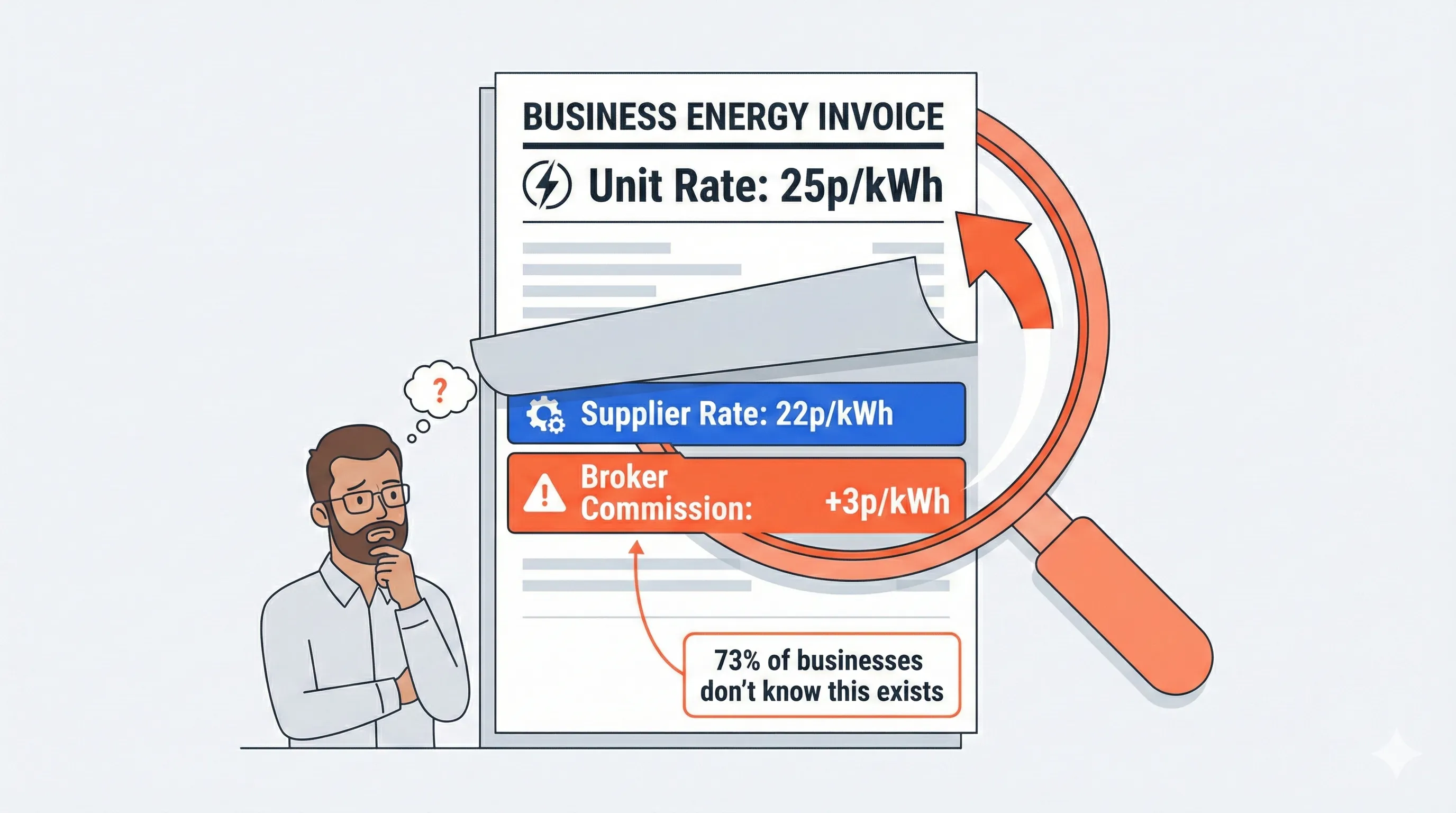
Most UK businesses believe energy brokers don't charge fees. They're wrong. Learn how undisclosed commissions work, what you're really paying, and how to protect yourself.
United Gas & Power is Meet George's founding supplier partner. Learn about UGP's 4.9-star service, fixed all-inclusive tariffs, and how to access their quotes.
Your business energy supplier has failed. Don't panic. Here's exactly what happens next, how Ofgem protects your supply, and how to avoid costly deemed rates.
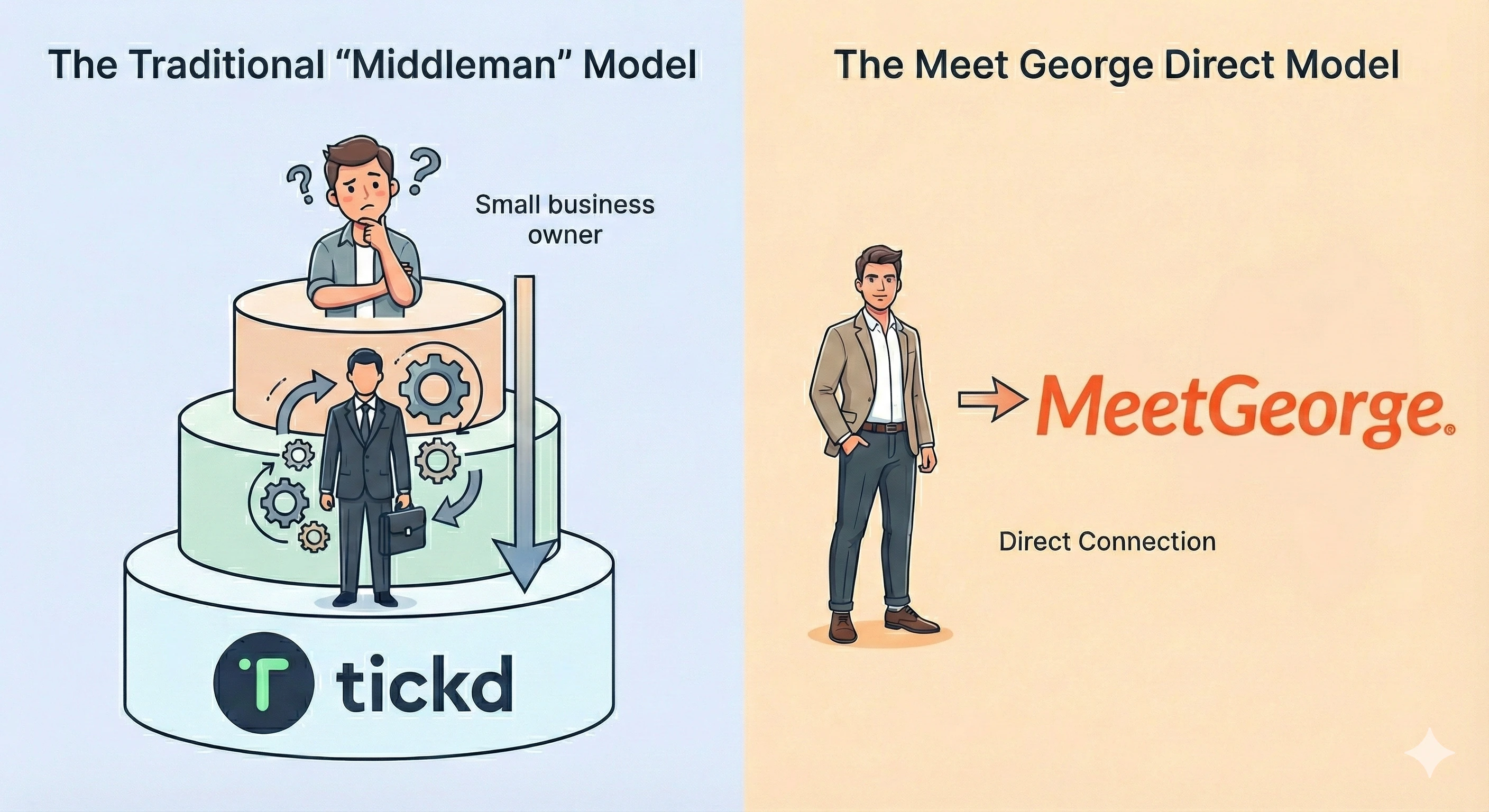
Comparing Tickd and Meet George for business energy switching. One powers brokers, one works directly for you. See which model saves SMEs more money.
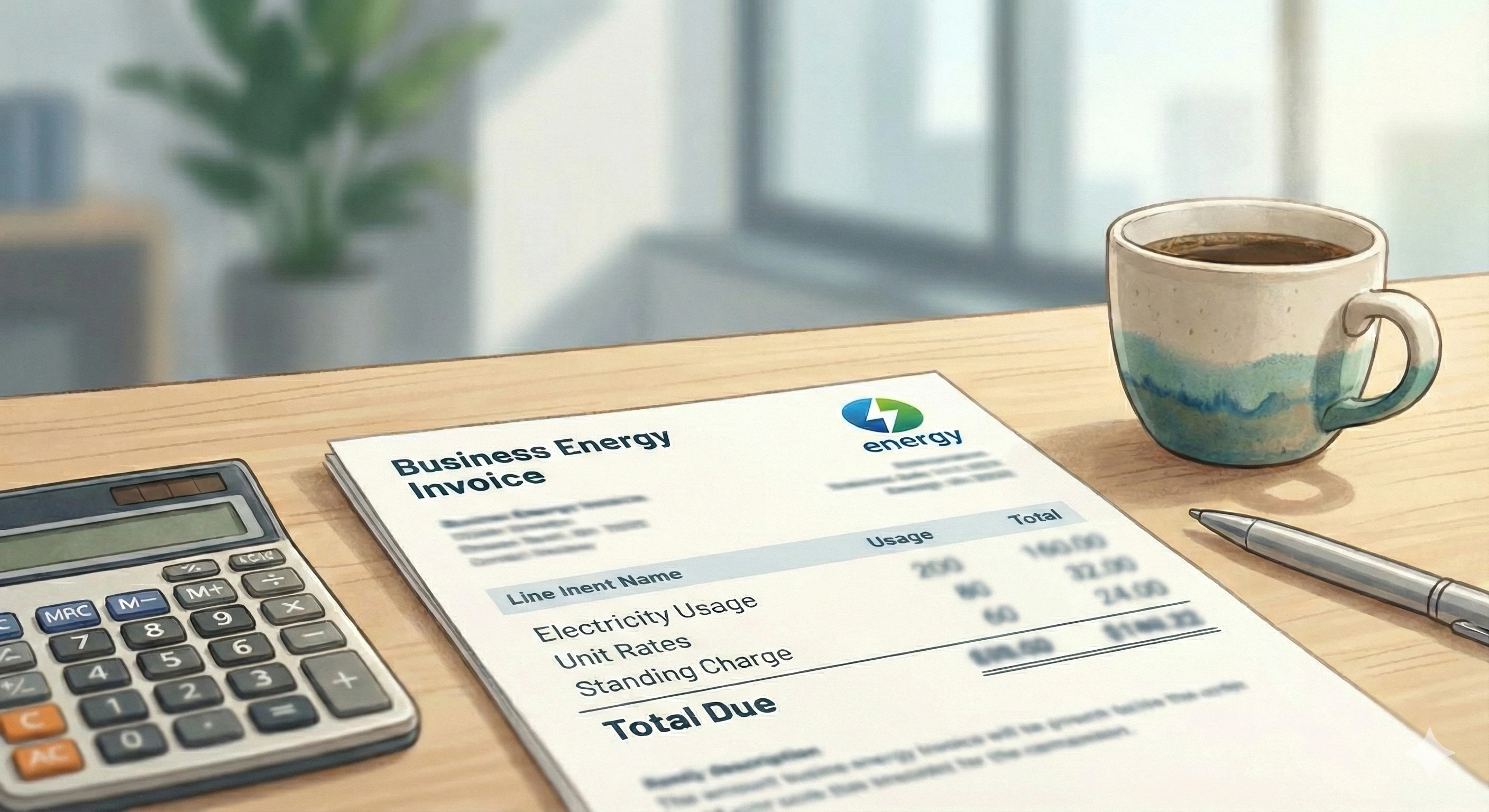
Confused by your business energy bill? Learn what every charge means - unit rates, standing charges, CCL, TNUoS, DUoS - plus how to spot errors costing you hundreds.
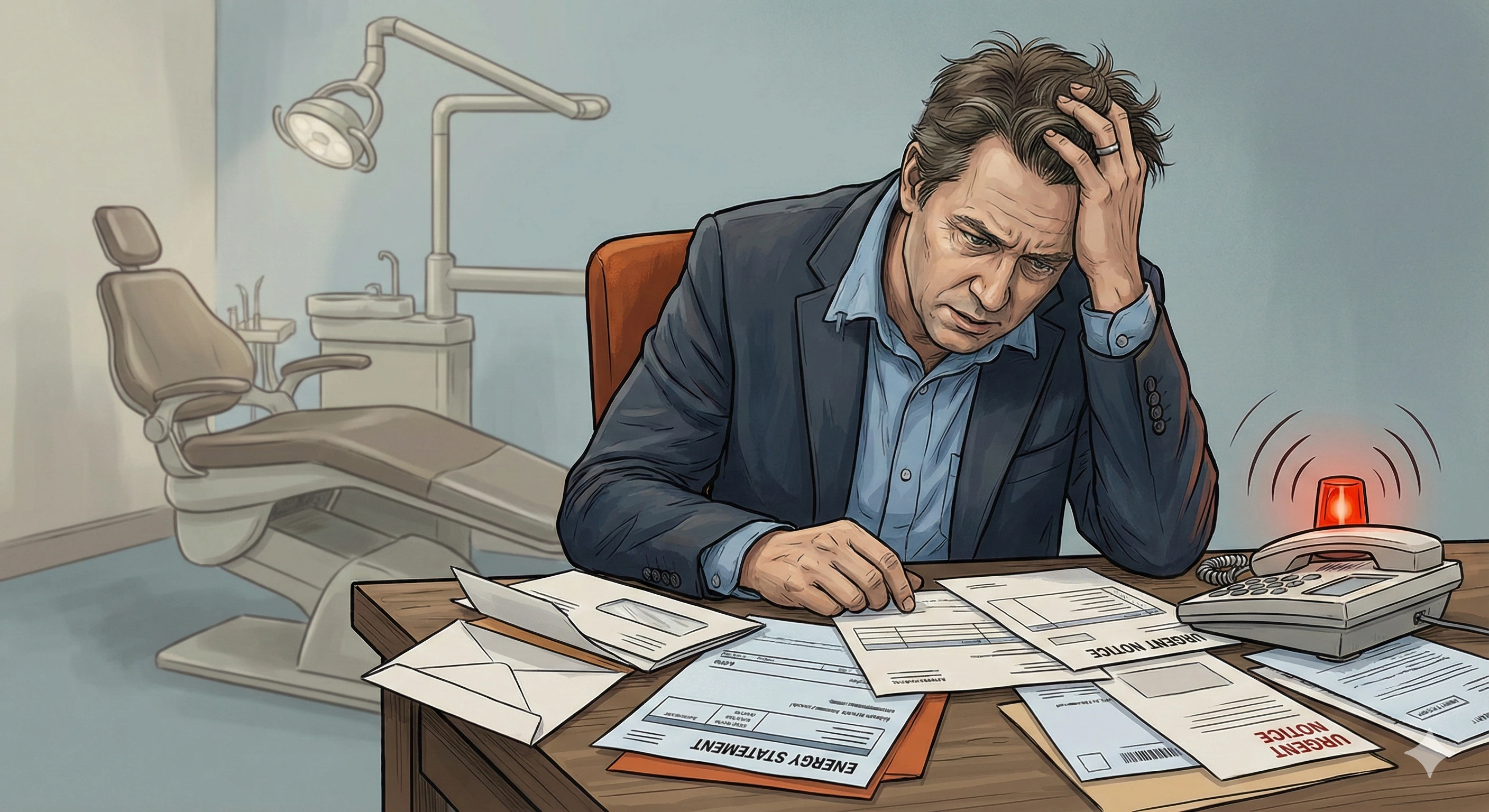
38% get unwanted cold calls, 36% feel stressed, and 70% want commission caps. Here's why business energy switching is broken - and what you can do about it.
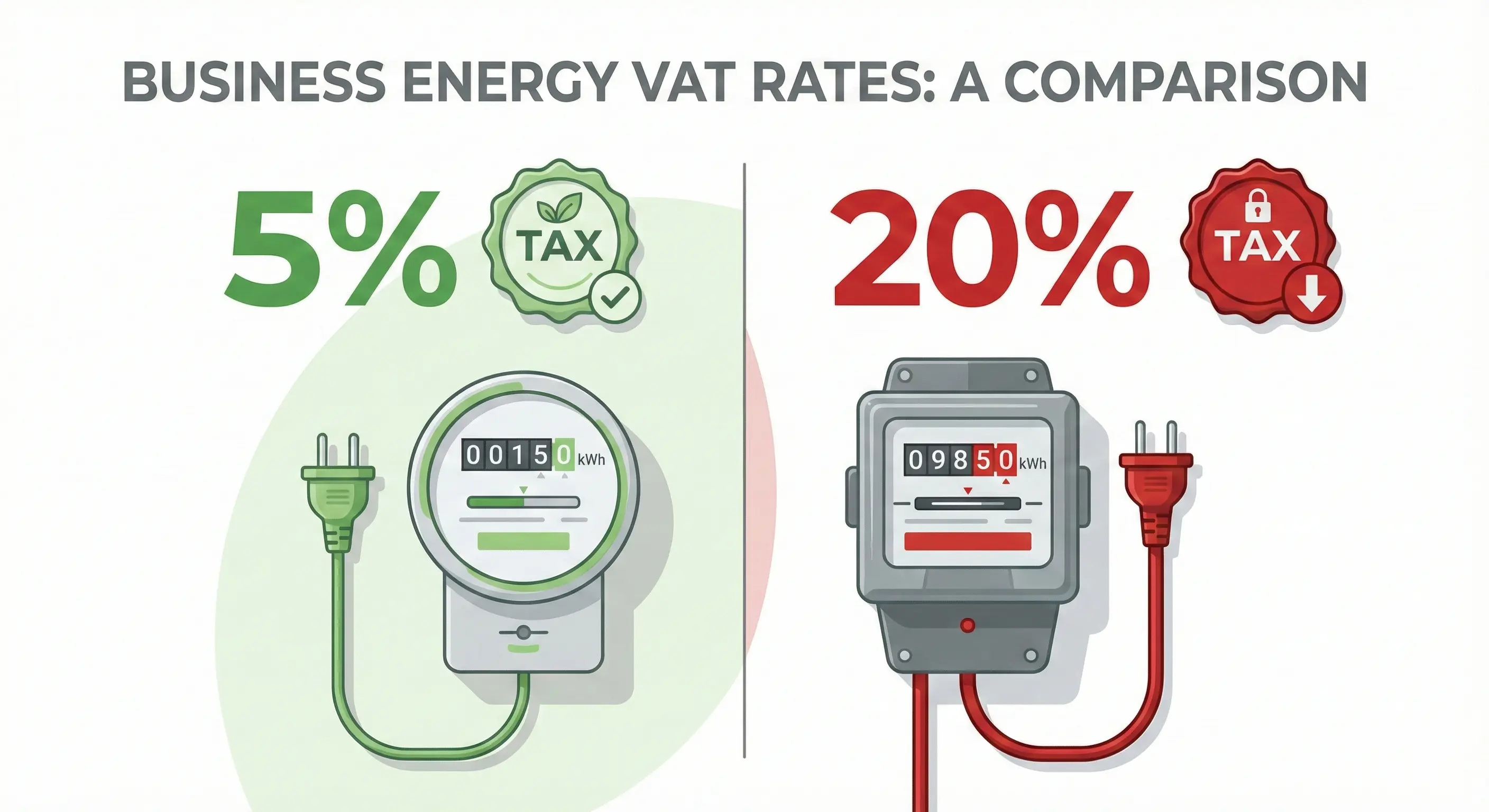
Most UK businesses pay 20% VAT on energy but many qualify for 5%. Learn the de minimis thresholds, who qualifies, and how to claim back overpaid VAT.

The Energy Switch Guarantee promises 5-day switches - but only for households. UK businesses have no equivalent protection. Here's what you need to know.
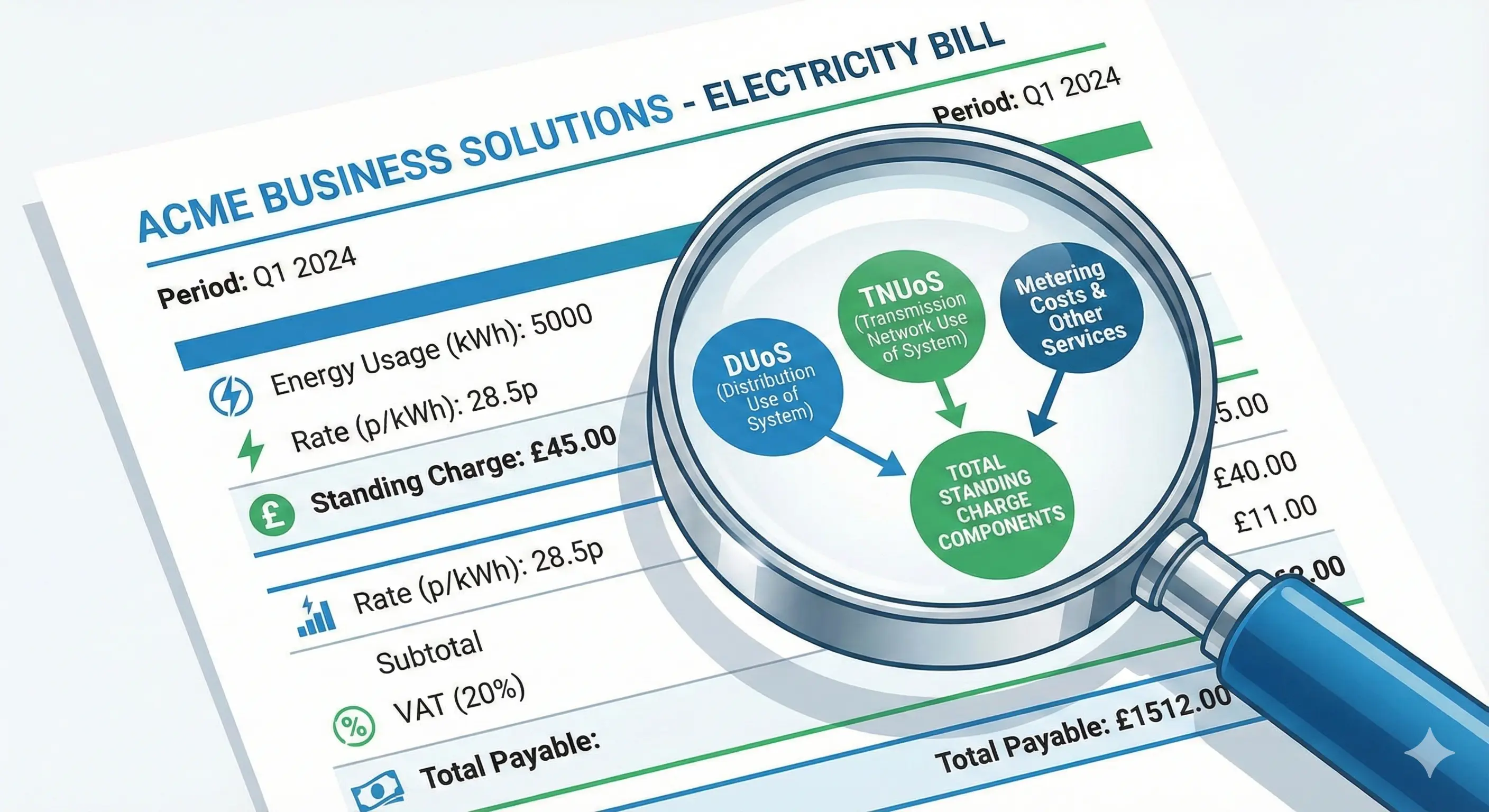
UK business standing charges explained: what they cover, typical costs (40p-£20/day), how brokers can inflate them, and practical ways to reduce your fixed daily energy fees.

UK business energy broker market share data for 2026. Compare 20+ suppliers, learn which brokers dominate the market, and avoid undisclosed commission fees.
Meet George partners with Tem Energy, the AI-powered supplier offering up to 30% cheaper renewable energy. Access corporate-level PPAs through their RED platform.

Meet George partners with UrbanChain, the UK's first Ofgem-approved P2P energy exchange. Buy renewable power directly from generators - no wholesale middleman.

The truth about smart meters for UK businesses: privacy myths, SMETS1 vs SMETS2, MHHS, and the proposed 2027 contract shift - plus a practical checklist.
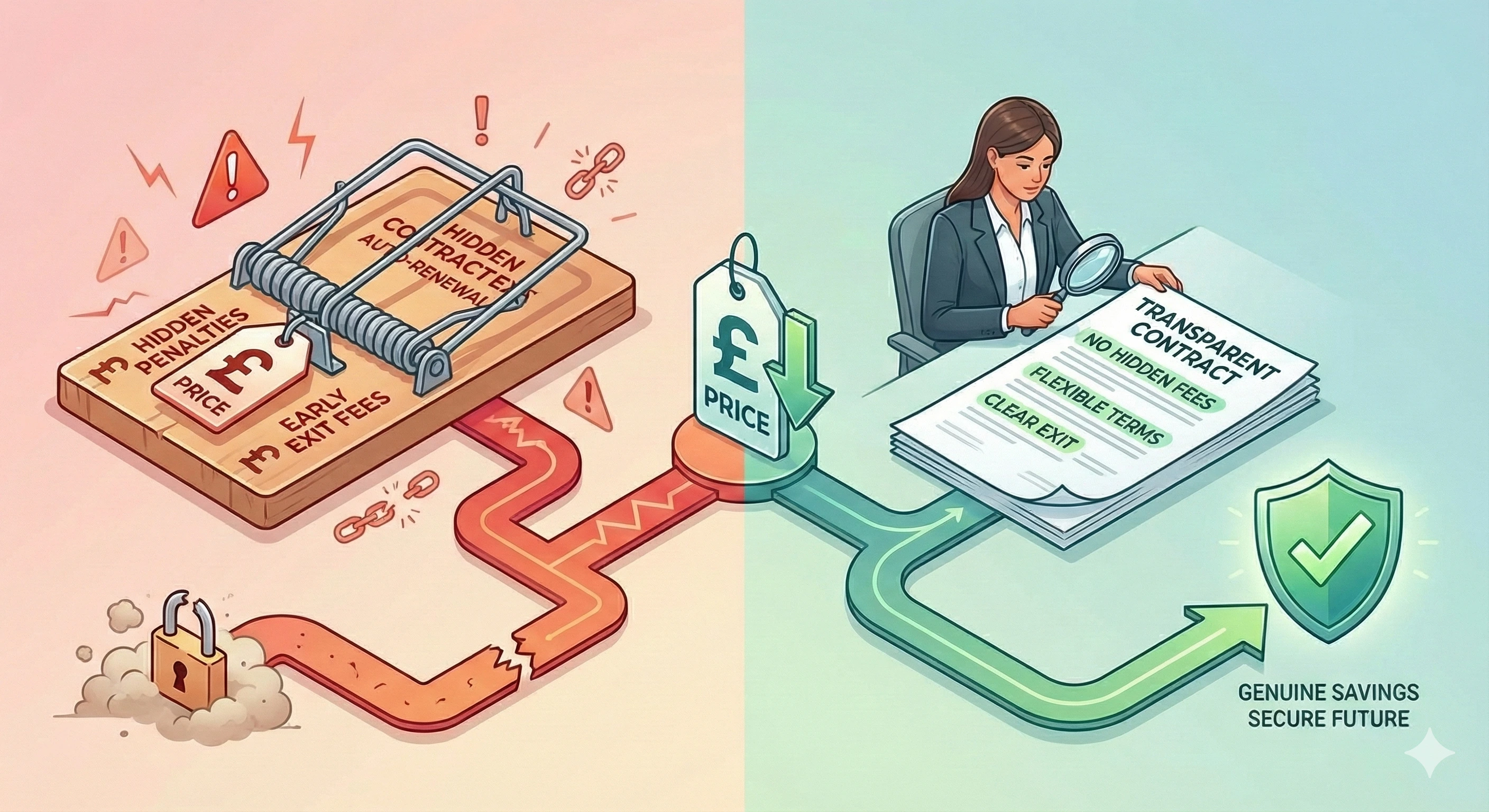
Volume tolerance clauses can turn the 'best deal' into a trap. Learn how Take-or-Pay terms work, spot dangerous thresholds, and avoid penalties on your next switch.
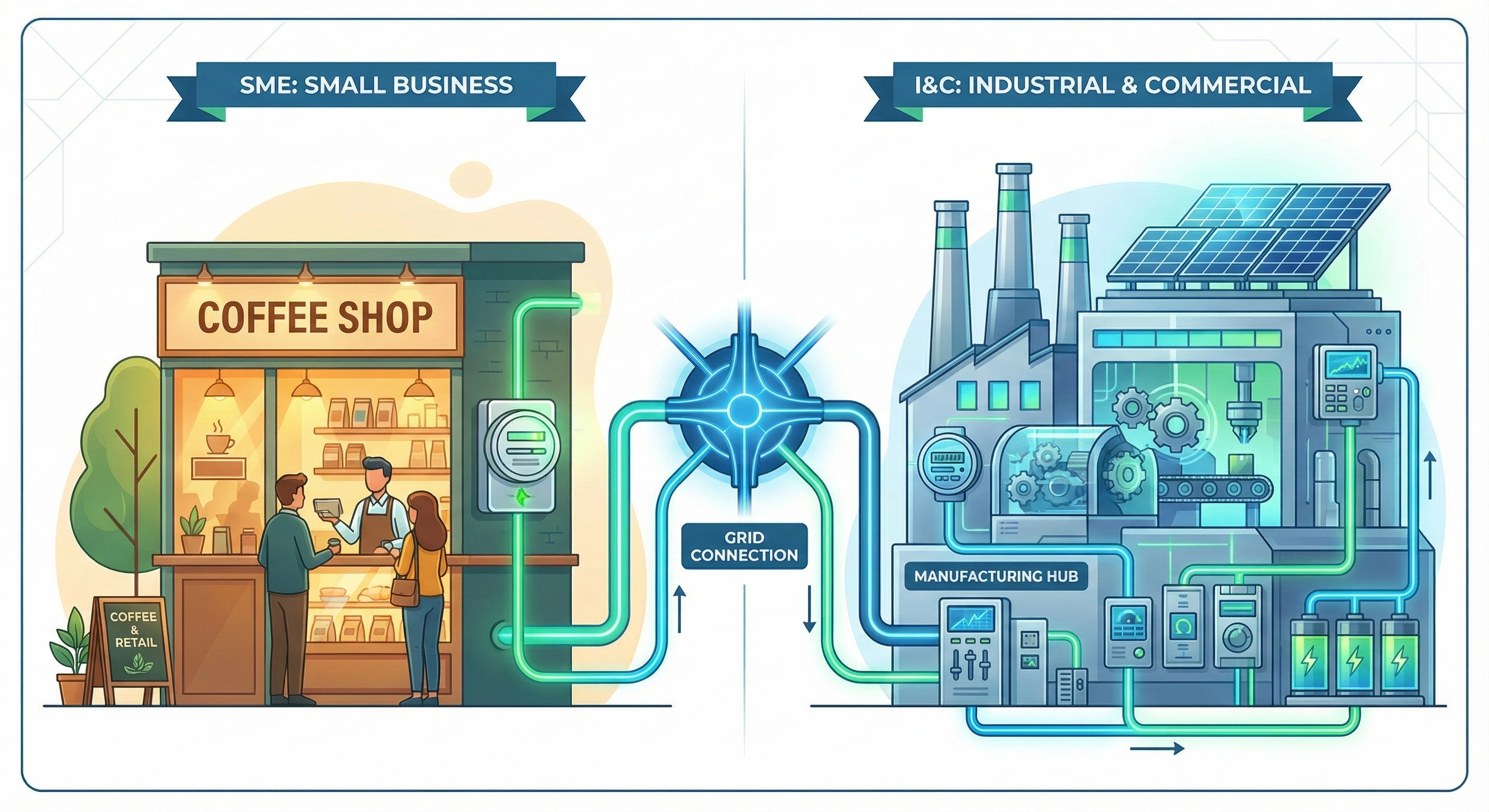
Energy brokers charge SMEs £3,000+ for services designed for factories. Learn when brokers add value, when they just add cost, and how to get fair pricing.

The new Load Control Licence brings cyber security standards and consumer protections to energy flexibility. Here's what SMEs need to know about the 2027 regulations.

The Government just announced £2m in Made Smarter funding for SME solar, heating, and insulation. Here's how to get to the front of the queue before it runs out.
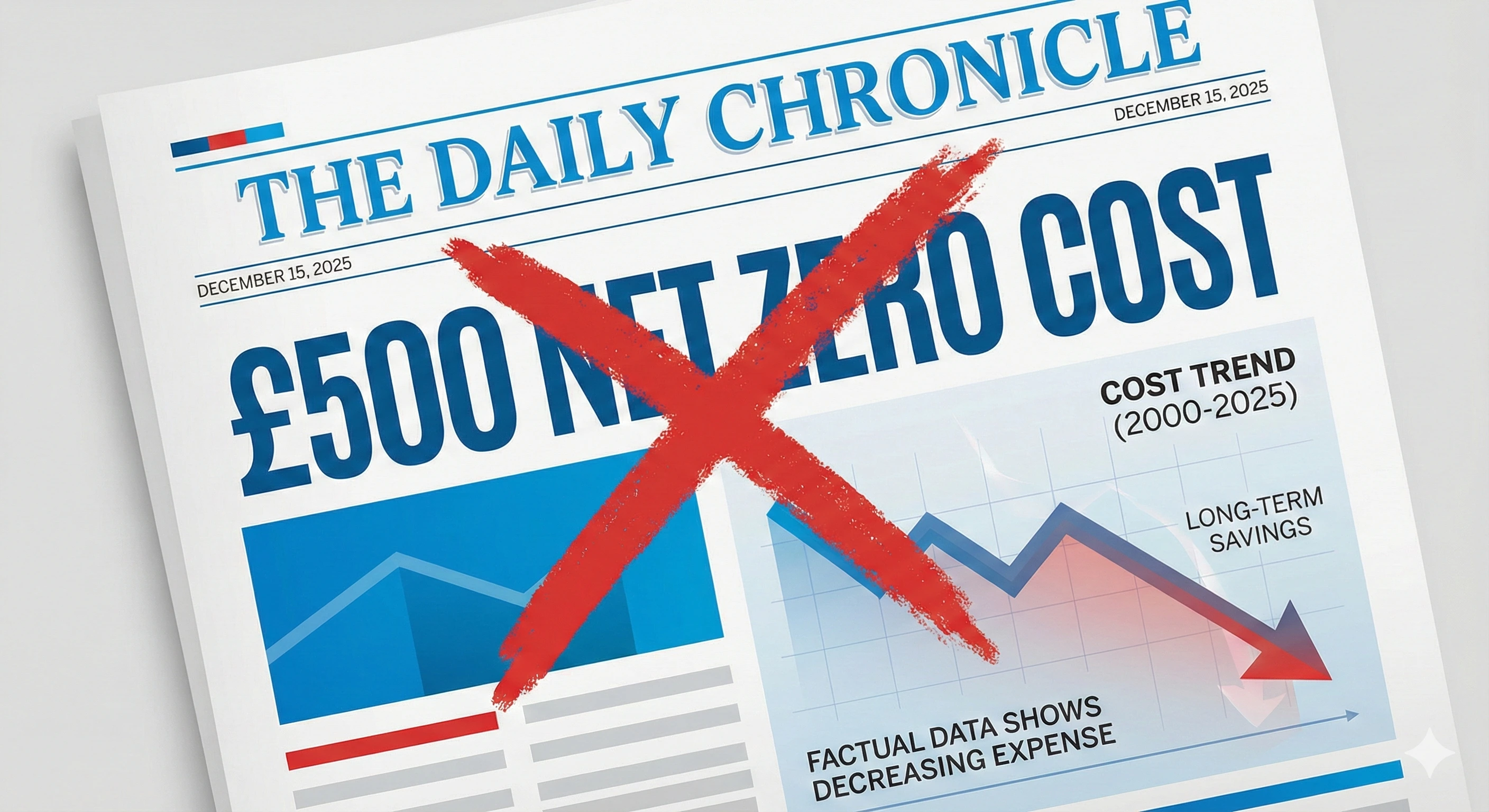
Headlines claim Net Zero will cost households £500/year. The NESO report actually proves the opposite. Here's what the data means for your business energy bill.
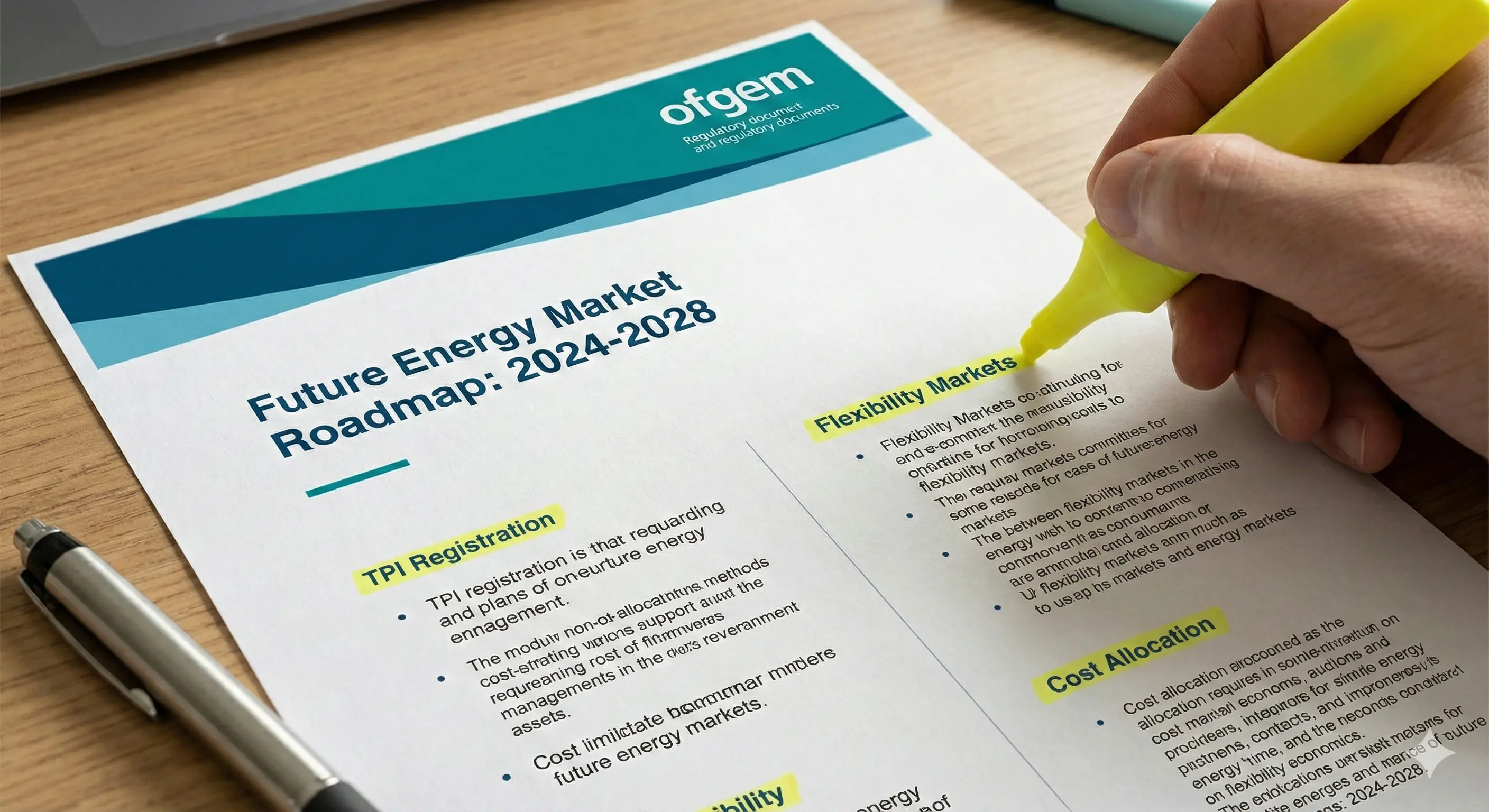
Ofgem's 2026 roadmap brings TPI registration, P483 flexibility reforms, and cost allocation changes. Here's what the broker crackdown means for your business.
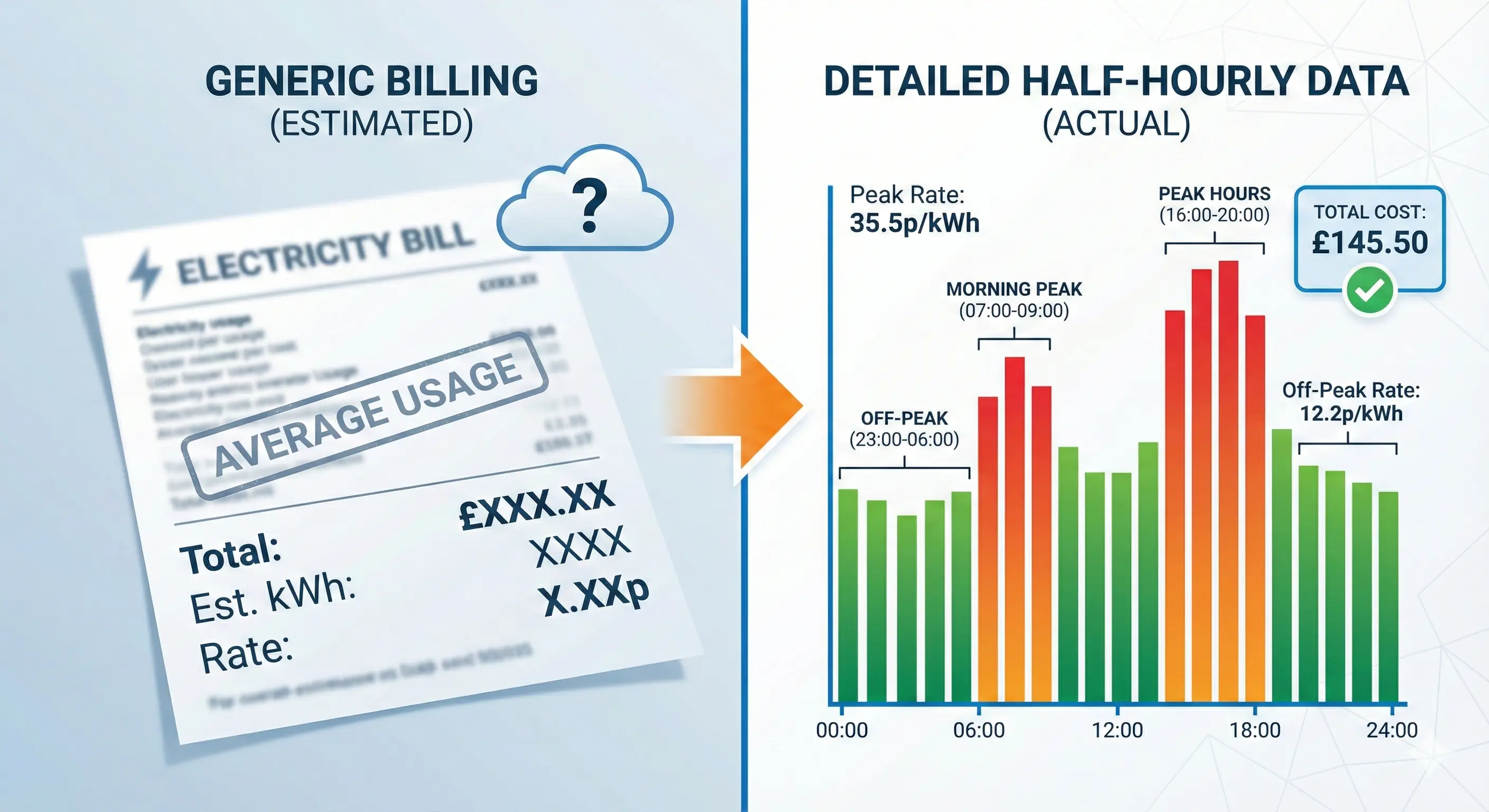
From October 2025, UK businesses move to half-hourly billing. Learn how MHHS creates winners and losers, and why your load shape now determines your costs.

Auto-renewal emails and digital consent traps are locking SMEs into expensive energy contracts. Learn how to spot the traps, revoke broker authority, and protect your business.
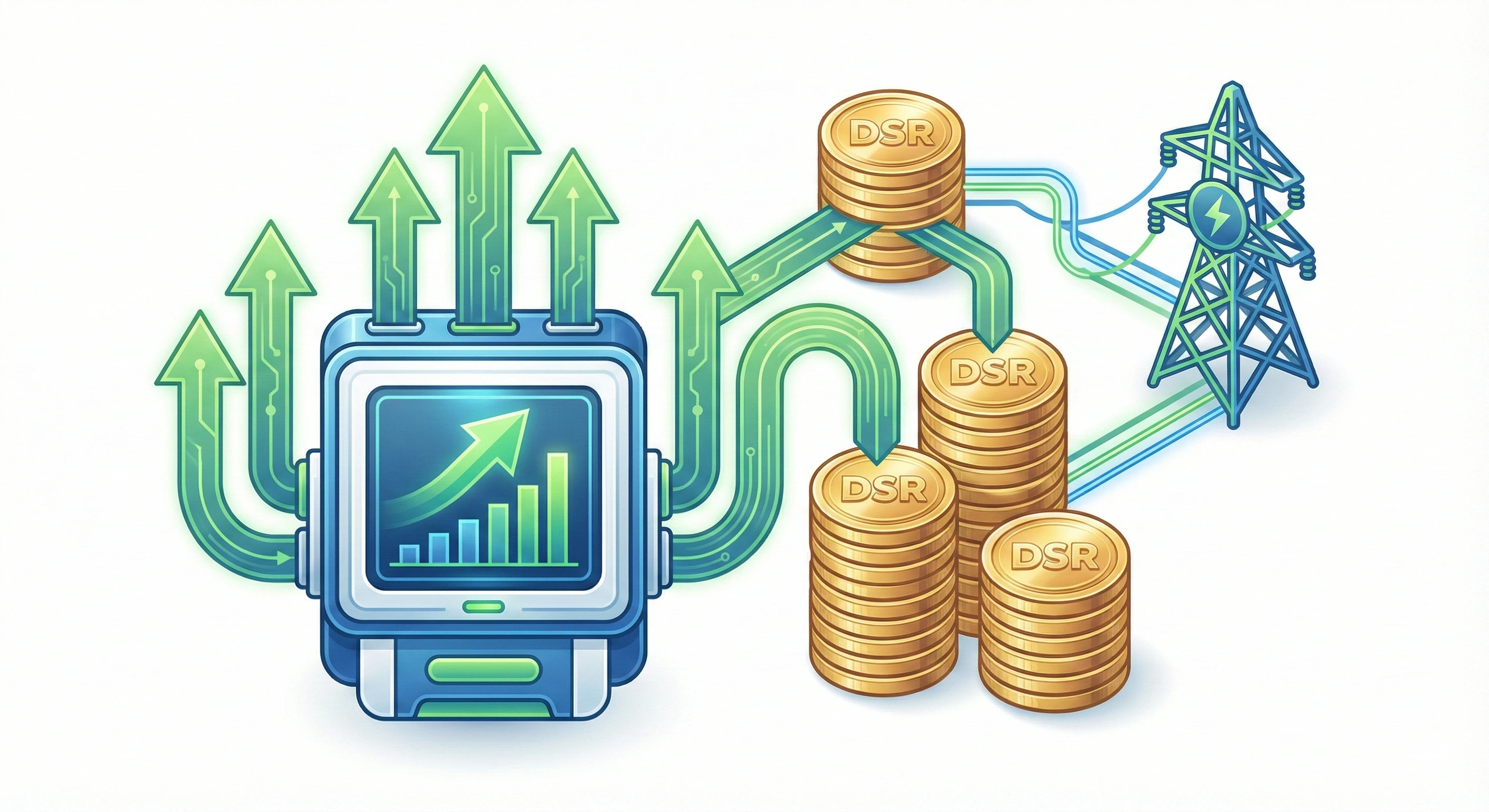
UK SMEs can earn thousands yearly from Demand Side Response. 2025 rules let smaller businesses stack revenue from the Capacity Market, DFS, and battery export.

Security deposits can lock up thousands in working capital. Learn why suppliers demand them, how to negotiate, and tactics to avoid paying upfront cash.
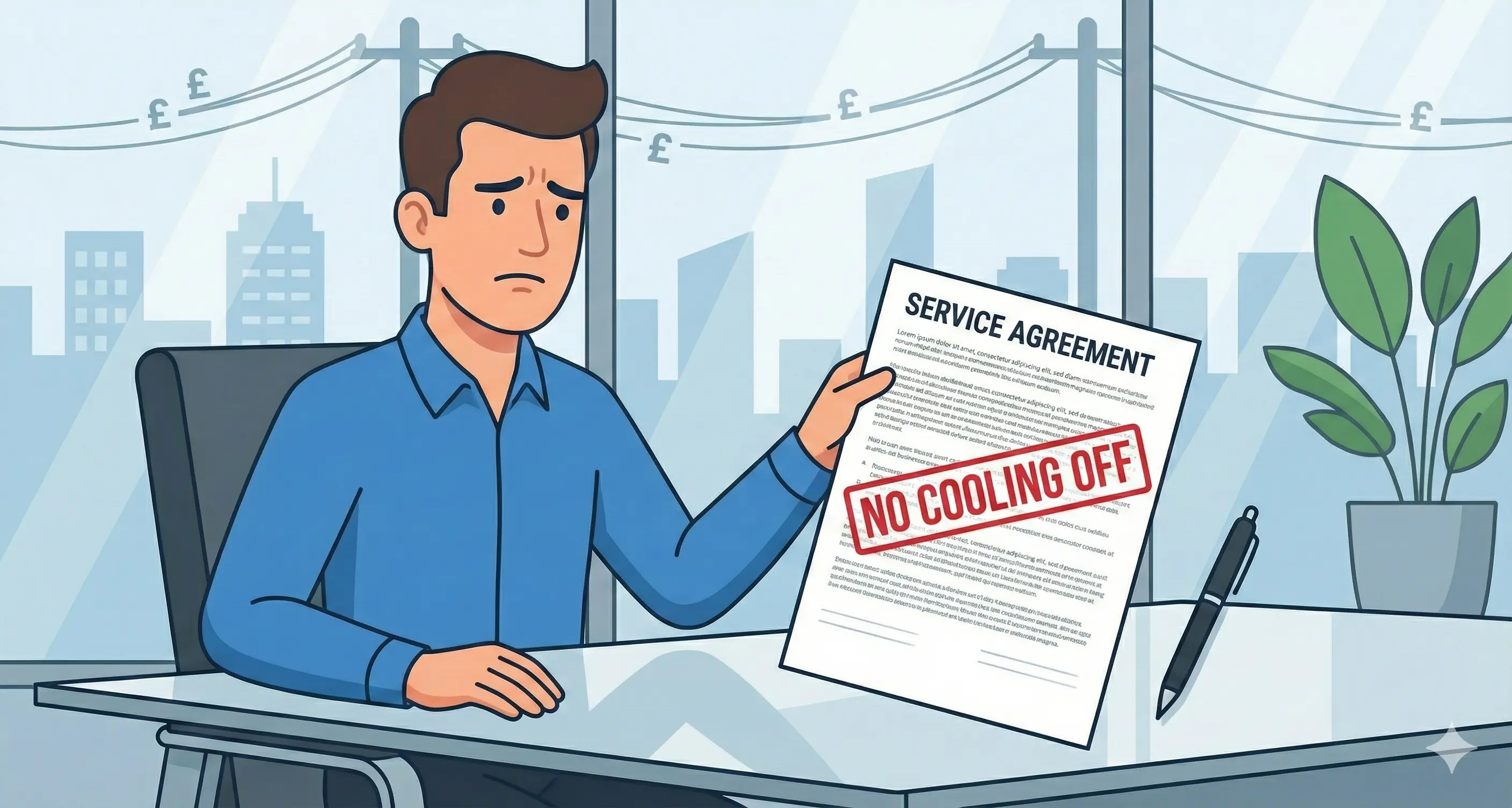
No cooling-off period for business energy contracts. Learn about exit fees, Change of Tenancy rules, and Mark to Market charges before signing.
Ofgem will regulate energy brokers from 2025, ending undisclosed commissions and cowboy tactics. Here's how to prepare your business for the TPI crackdown.
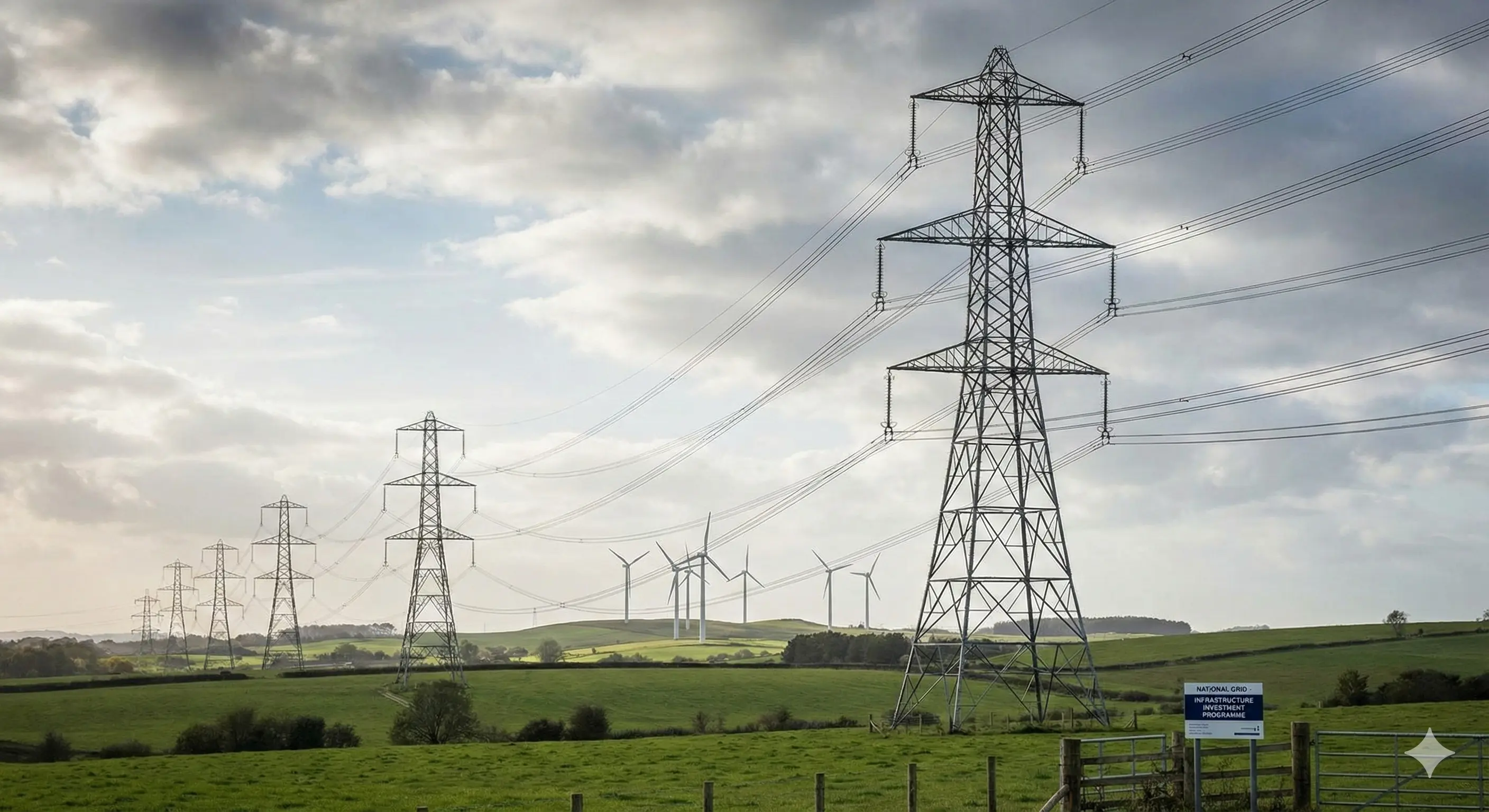
Ofgem's £28.1bn grid upgrade will add up to £9,760/year to business energy bills by 2031. Learn how Pass-Through vs Fully Fixed contracts affect your costs.

Discover how MHHS (Market-wide Half-Hourly Settlement) eliminates estimated billing and learn to avoid costly Volume Tolerance penalties on your business energy contract.
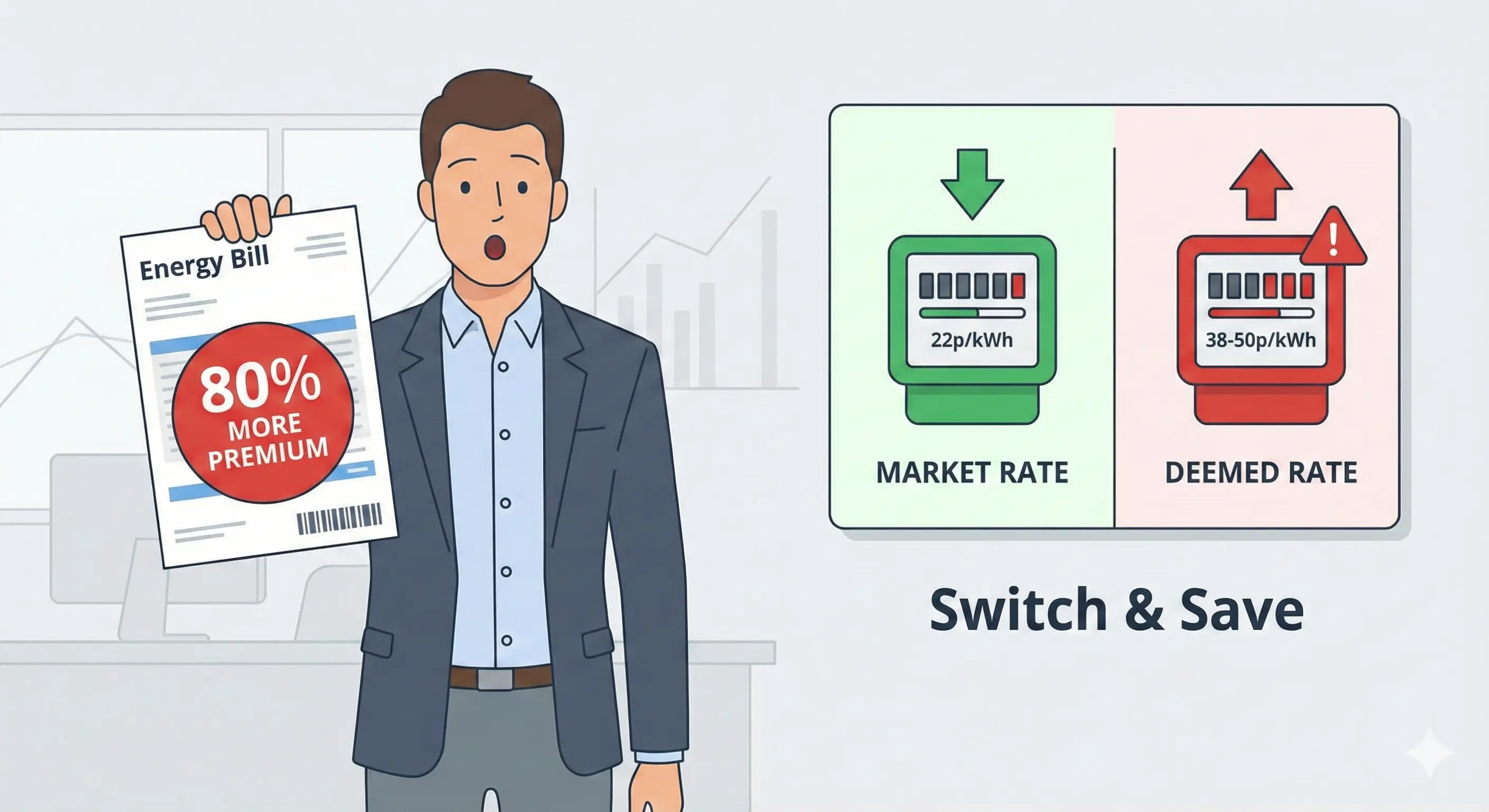
Deemed price means the default energy rate when your contract expires - typically 38p/kWh vs 22p fixed. Learn how to check if you're trapped and switch with no exit fees.
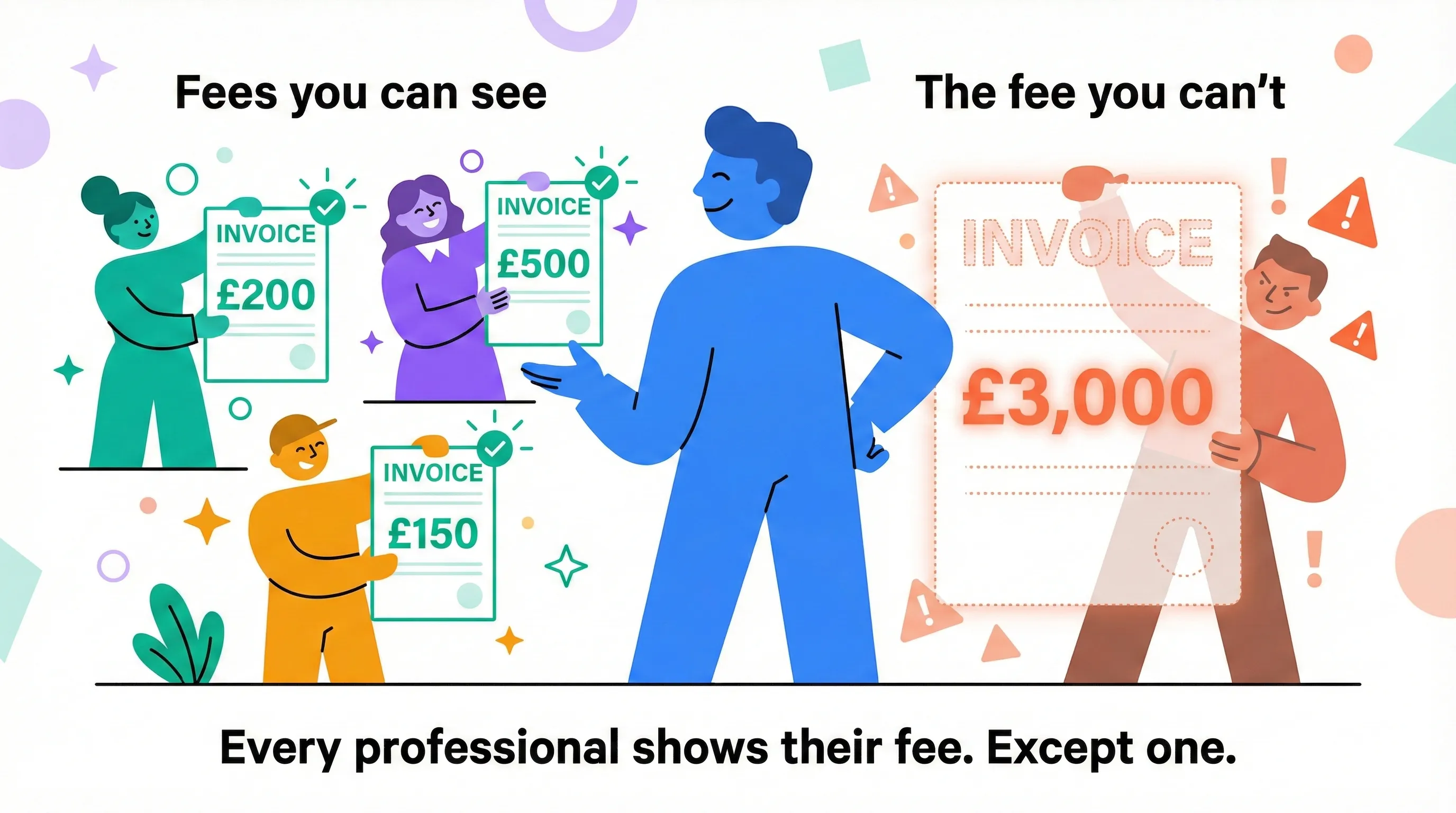
What is an uplift charge? Business energy brokers embed fees in your unit rate. Learn how uplift charges cost you thousands and why transparent pricing matters.

LOA stands for Letter of Authority. In business energy, it lets brokers access your data. Level 2 LOAs let them sign contracts without your consent - know the difference.
We're launching Q2 2026. Drop your email and we'll let you know the day the platform goes live. One email. That's it.
Get Notified at LaunchNo sales calls. No spam. No broker nonsense.


