
Are You Paying for £4.4bn of Bad Debt?
Plus: The 'Boiler Tax' 2.0 is back, and your energy bill is about to go 'real-time'.

Joshua Winterton
November 2nd, 2025

A quick note from me (Josh):
Welcome to The George Briefing. Each week, my co-founder Lu and I use our tech-focused lens to go directly to the source of change in the UK energy market, the official publications from Ofgem and the UK Government. Our goal is to cut through the noise and deliver the key regulatory developments and changes that will impact your business's bottom line, all explained in simple, actionable terms.
This weeks developments are:
Ofgem's £4.4bn Debt Plan: Why Your Business is Footing the Bill
The 'Boiler Tax' 2.0: What the CHMM Update Means for Your Capex
Your Bill is Going 'Real-Time': Decoding the MHHS & REC Overhaul
This Week's B2B Market Pulse
Hidden Gems Also Worth Reading
LATEST DEVELOPMENTS
Ofgem
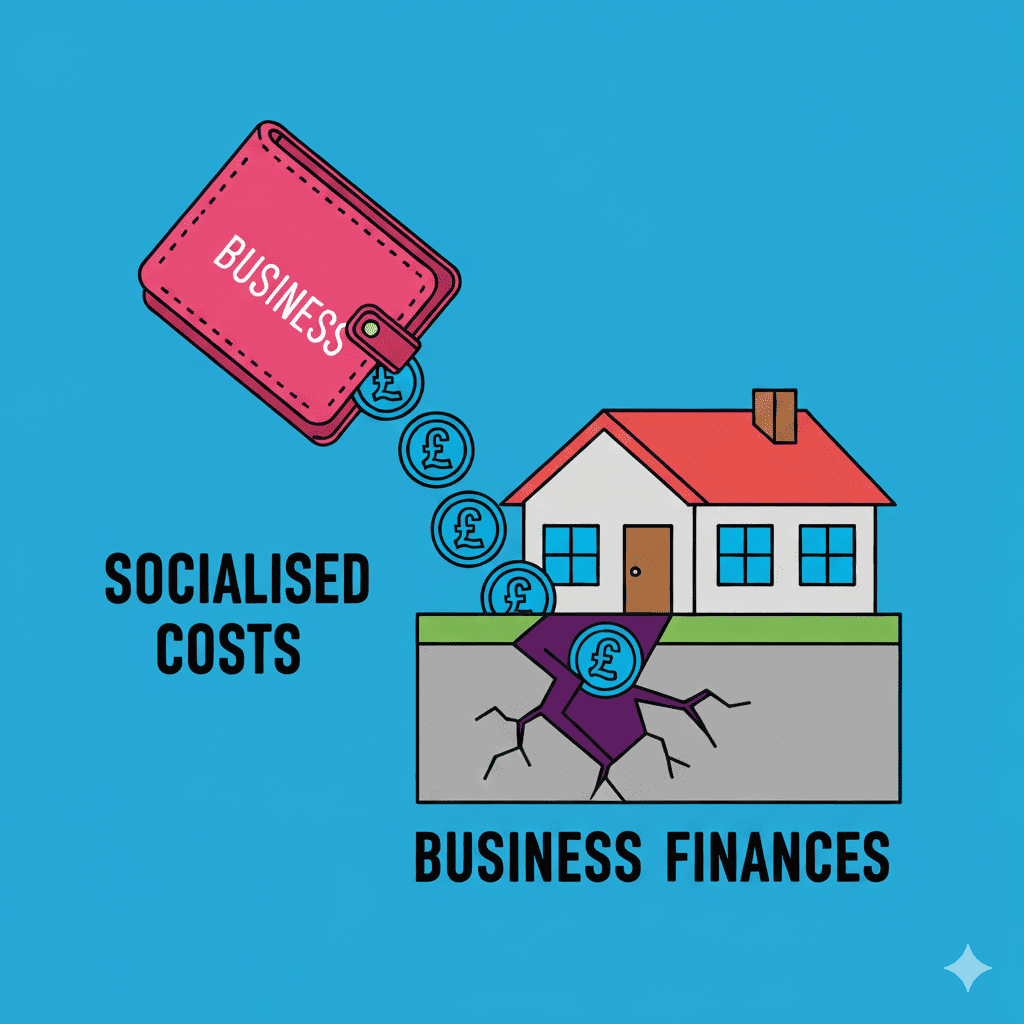
Image source: Gemini / Meet George
The Spark: Ofgem's new plan to tackle £4.4bn in household energy debt matters to your business because you're helping to pay for it through hidden charges on your bills.
The details:
Ofgem is launching a Debt Relief Scheme to write off up to £500m of debt for around 195,000 vulnerable households, starting in early 2026.
The total energy debt in the system has reached £4.4bn, and the cost of recovering this is spread across all customer bills.
Up to a third of this debt (£1.1bn - £1.7bn) is linked to anonymous 'occupier' accounts, created when people move into a property without registering with a supplier.
The regulator is proposing changes to the move-in process to prevent this type of debt from accumulating in the future.
Why it matters: This announcement is focused on household debt, but the real-world impact for your business is buried in the details: the cost of this £4.4bn debt is "spread across everyone’s bills." This is a classic example of socialised costs, where bad debt from the domestic market is recovered through the non-commodity charges on your business's energy bill. While tackling this debt is essential for market stability, it's a reminder that a portion of your operational costs is directly subsidising issues in the consumer market, impacting your P&L without you having any control over it.
What you can do:
If you manage multiple properties or have vacant units, review your process for handling utility accounts during void periods to ensure you're not inadvertently creating 'occupier' debt.
Ask your energy supplier or broker for a detailed breakdown of your non-commodity costs to understand how much you're contributing to system-wide charges like bad debt allowances.
Department of Energy Security and Net Zero

Image source: Gemini / Meet George
The Spark: The government is fine-tuning its 'boiler tax' policy, a move that will directly influence the future cost and availability of heating systems for your business.
The details:
The government has opened a consultation on revisions to the Clean Heat Market Mechanism (CHMM) for its second year, which runs from 2026 to 2027.
The CHMM requires manufacturers of fossil fuel boilers to sell a certain quota of heat pumps relative to their boiler sales or face financial penalties.
This policy is the government's key strategy for growing the UK's heat pump market and reducing reliance on natural gas for heating.
The consultation indicates the government is committed to the policy's long-term goal but is adjusting the mechanics based on market performance and feedback.
Why it matters: Let's cut through the jargon. The 'Clean Heat Market Mechanism' is often called a 'boiler tax', and while it isn't a direct tax on your business, the impact on your P&L is much the same. Manufacturers who miss their heat pump sales targets face fines, and those costs will inevitably be passed on to customers through higher prices for new gas boilers. This policy is a clear, long-term signal that directly impacts your capital expenditure strategy. It's designed to skew the market, making heat pumps more competitive and influencing the total cost of ownership calculation the next time your business needs to replace its heating system.
What you can do:
If your commercial heating system is over 10 years old, schedule a review in your next capex planning cycle to budget for its eventual replacement.
When you next request quotes for heating, insist on a Total Cost of Ownership (TCO) comparison for both a new gas boiler and a heat pump system, factoring in installation, running costs, and available grants.
Task your operations manager or facilities team with researching the feasibility of a heat pump for your premises now, so you have a clear plan before your current system fails.
Department of Energy Security and Net Zero
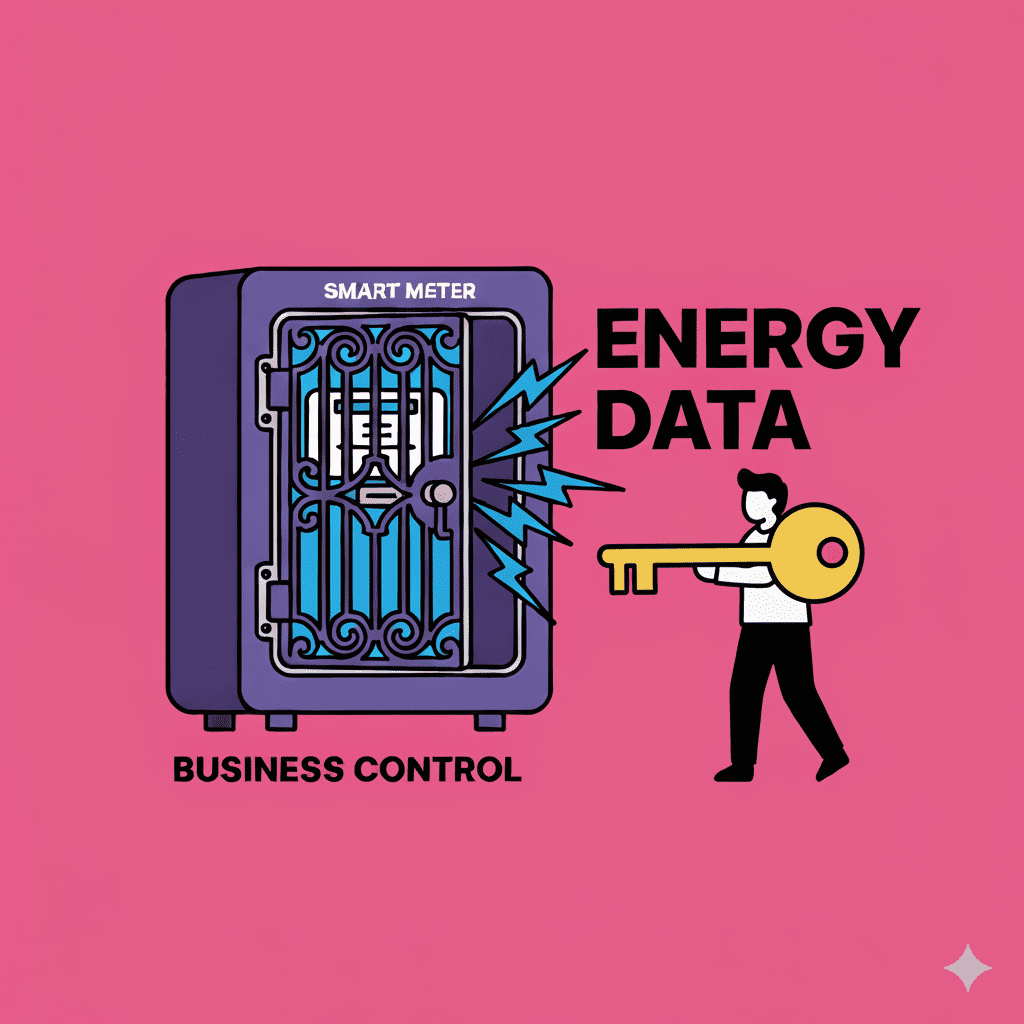
Image source: Gemini / Meet George
The Spark: The technical rulebook governing the UK's retail energy market is being overhauled, laying the groundwork for mandatory half-hourly billing and new data consent models that will directly affect your business.
The details:
The Retail Energy Code (REC), which sets the rules for suppliers, is undergoing significant reform, including transitioning to a new licensed status as Code Manager.
Market-wide Half-Hourly Settlement (MHHS) was a key topic, signalling the continued industry-wide push towards settling and billing all customers based on their consumption in every 30-minute period.
A new 'Consumer Consent Solution' is being developed to standardise how customers give permission for their energy data to be shared, impacting how businesses interact with brokers and switching services.
Other technical topics like 'Tariff Interoperability' were discussed, aiming to make it easier for smart tariffs to work seamlessly even when a business switches supplier.
Why it matters: This is a prime example of the industry talking to itself, but the jargon hides changes that really matter for your P&L. The Retail Energy Code is essentially the 'plumbing' of the energy market, and it's being completely upgraded. The shift to Market-wide Half-Hourly Settlement (MHHS) isn't just a technical change; it fundamentally alters the business case for energy management. It moves electricity pricing closer to a real-time market, creating a direct financial incentive to shift when you use power. The 'Consumer Consent' work is about making it safer and easier for you to share your smart meter data with trusted third parties to find better deals. While this article is a dry summary of an event, the initiatives it covers are the essential backend work that will create a more complex, but potentially much more rewarding, energy market for proactive businesses.
What you can do:
If you have a smart meter, ask your supplier for access to your half-hourly consumption data now. Getting familiar with your usage patterns is the first step to benefiting from future time-of-use tariffs under MHHS.
Review the current Letter of Authority (LoA) you have with any energy broker. Understand exactly what data you are consenting for them to access and for how long, as new industry-wide rules for data sharing are coming.
Ask your current supplier or broker what their roadmap is for MHHS and how they plan to help your business manage the transition to mandatory half-hourly billing.
LATEST MARKET NUMBERS
⚡ B2B Market Pulse
Wholesale Electricity Price (weekly avg.):
6.03 p/kWh(📈+0.11 p/kWh / +1.8%) Prices held firm and edged up slightly, even as renewable output hit new highs, suggesting gas and carbon costs are creating a new price floor.Wholesale Gas Price:
2.77 p/kWh(📈+0.03 p/kWh / +1.0%) Gas prices crept up, a minor move but enough to stop the electricity price from falling and demonstrate its underlying influence.UK Carbon Price (UKA):
£56.51 per tonne(📈+£1.95 / +3.6%) Carbon costs saw a significant jump, directly increasing the cost of generation for the thermal power plants needed to top up the grid.Wind + Solar Generation (Share of UK Mix):
56.3%(📈+7.8 pts / +16.1%) Another monster week for renewables, which supplied well over half of all UK electricity and built on the previous week's rebound.
The Meet George Take
If last week was about renewables crushing the price, this week is about finding the floor.
The data tells a more complex story: despite renewable generation hitting a massive 56.3% share (even higher than last week's rebound), power prices didn't fall further. They actually firmed up, rising 1.8%. This proves that while weather is the primary driver of volatility, it's not the only factor.
The modest but simultaneous rise in both gas (+1.0%) and, more importantly, carbon (+3.6%) created a higher "cost-to-run" for the thermal power plants still needed to balance the grid. This acted as an anchor, preventing prices from collapsing again.
For your business, this is the other side of the volatility coin. High wind provides a huge benefit (prices are at 6 p/kWh, not 9), but it doesn't guarantee a race to the bottom. This reinforces the core value of a fixed contract: it's not just about protecting your P&L from the price spikes, it's about insulating your budget from this complex, daily battle between weather, commodities, and carbon policy.
ALSO ON OUR RADAR
📰/📊 News also worth reading
A PLUG FOR GEORGE 🔌
Enjoying the briefing? The same philosophy - cutting through the noise to find what impacts your bottom line - is at the heart of what we're building.
At Meet George we’re building AI-powered business energy switching, launching Q1 2026. While we complete the full automation platform, we're offering manual forensic analysis by our founding team - the same insights our platform will deliver instantly, just delivered by humans within 5 business days.
Request a free analysis and we'll uncover hidden broker fees, inflated unit rates, standing charges, and potential overspend. Transparent 1p/kWh commission, shown separately. No sales pressure.


